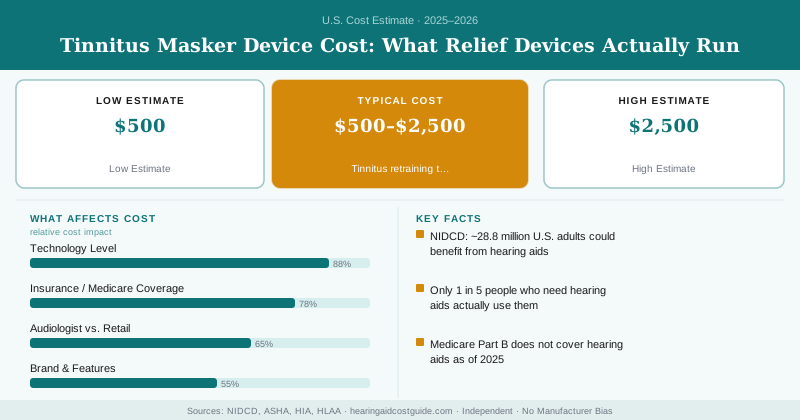
What does it actually cost to quiet the ringing? For tinnitus, the answer ranges enormously — from a free smartphone app to a $3,900 combination device — and the right price point depends heavily on how much your tinnitus is actually disrupting your life.
Tinnitus Masker Cost Options
| Device Type | Typical Cost |
|---|---|
| Free tinnitus relief app | $0 |
| White noise machine (bedside) | $30–$80 |
| Standalone wearable masker | $50–$400 |
| Combination hearing aid + masker (per device) | $1,500–$3,900 |
| Combination pair (both ears) | $3,000–$7,800 |
| Tinnitus retraining therapy (professional program) | $500–$2,500 total |
Why Combination Devices Cost the Same as Hearing Aids
Many people with bothersome tinnitus also have some degree of hearing loss, and the two conditions interact — untreated hearing loss can make tinnitus more noticeable because there’s less ambient sound to mask it. Combination devices address both simultaneously: they amplify external sound like a standard hearing aid while also generating a customizable masking sound (white noise, nature sounds, or fractal tones) to help make the tinnitus less noticeable. Because they contain full hearing aid hardware plus additional sound generation programming, they’re priced the same as standard hearing aids of comparable technology tier — $1,500 to $3,900 per device.
When a Standalone Masker Is Enough
If your hearing is largely normal and tinnitus is your only concern, a standalone wearable masker (worn like an earbud, generating masking sound only, without amplification) is a lower-cost option worth trying first, typically $50 to $400. These devices won’t help with any underlying hearing loss, but for tinnitus relief specifically, they can be effective and don’t require the hearing aid price tag.
Before spending money on any device, try a free tinnitus relief app or a basic white noise machine for a few weeks, especially if your main concern is sleep disruption. Many people get meaningful relief from free or low-cost sound masking without needing a dedicated wearable device at all. If a free option provides adequate relief, there’s no need to spend more.
Tinnitus Retraining Therapy: A Different Cost Model
For more severe or persistent tinnitus, some audiologists offer structured tinnitus retraining therapy (TRT) — a combination of counseling and sound therapy delivered over months, designed to help your brain habituate to the tinnitus sound and reduce its perceived intrusiveness. This is billed as a professional service program rather than a device purchase, typically running $500 to $2,500 total depending on program length and whether a masking device is included as part of it.
According to the American Speech-Language-Hearing Association (ASHA), tinnitus affects a significant portion of U.S. adults, and while there’s no cure, sound therapy combined with counseling shows meaningful benefit for reducing tinnitus-related distress for many patients.
Be cautious of any device or supplement marketed as a tinnitus “cure.” There is currently no medical cure for most forms of tinnitus — management approaches like masking, retraining therapy, and hearing aids reduce the perceived impact, but claims of a permanent cure via a specific device or product should be treated skeptically and verified with your audiologist or ENT before purchasing.
Choosing the Right Starting Point
Start with the lowest-cost option that matches your situation: free apps or a white noise machine if tinnitus mainly disrupts sleep, a standalone masker if it’s a daytime nuisance with normal hearing, or a combination device if you also have documented hearing loss that would benefit from amplification. Escalate to professional tinnitus retraining therapy if simpler approaches aren’t providing adequate relief after a few weeks of consistent use.
Frequently Asked Questions
Standalone tinnitus masking devices, worn like an earpiece and generating soothing sound, typically cost $50 to $400. Combination devices that function as both a hearing aid and a tinnitus masker cost $1,500 to $3,900 per ear, similar to standard hearing aid pricing.
Coverage is inconsistent. Some insurance plans cover tinnitus maskers when prescribed as part of a documented tinnitus treatment plan, particularly combination hearing aid/masker devices for patients with both hearing loss and tinnitus, while standalone consumer maskers are rarely covered.
Free apps and white noise machines can provide meaningful relief for some people with mild tinnitus, especially for sleep, but dedicated wearable masker devices offer more portable, customizable, all-day relief and are often recommended when tinnitus significantly disrupts daily functioning.