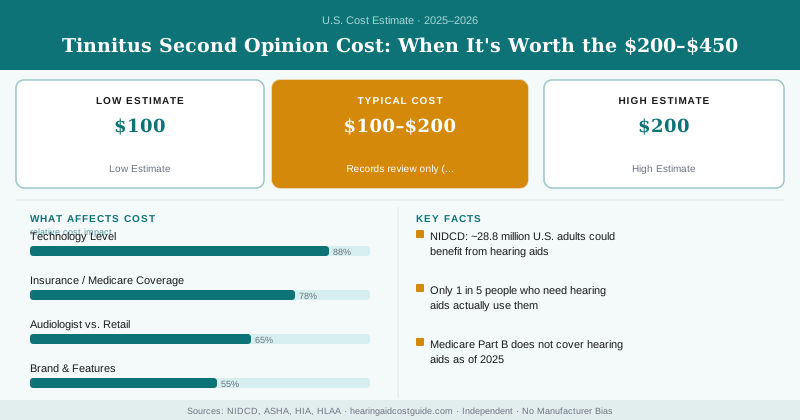
You were told “there’s nothing we can do, just live with it.” If that sounds familiar, you’re in large company — and you may want a second opinion. The American Tinnitus Association estimates roughly 50 million Americans live with tinnitus, and the quality of advice they get varies wildly. A second opinion usually costs $200 to $450 out of pocket. The real question is whether yours is one of the cases where that’s money well spent.
What a Tinnitus Second Opinion Costs
| Provider | Typical Cost |
|---|---|
| ENT (otolaryngologist) consult | $250–$450 |
| Neurotologist (ear/brain specialist) consult | $300–$500 |
| Audiologist tinnitus evaluation | $100–$300 |
| Academic medical center tinnitus clinic | $300–$600 |
| Telehealth second opinion | $75–$250 |
| Records review only (no new tests) | $100–$200 |
If new testing is ordered — repeat audiogram, imaging — the total climbs. A straightforward consult-and-review usually lands in that $200–$450 zone.
When a Second Opinion Is Worth It
Get one if:
- You were dismissed with “nothing can be done” and offered no management plan at all.
- Your tinnitus is pulsatile, one-sided, or came on suddenly — these deserve careful workup, and a thorough specialist may catch something the first provider missed.
- You’ve been pushed toward an expensive device (like a $4,000 neuromodulation unit) without a full evaluation first.
- Your tinnitus is paired with hearing loss, dizziness, or vertigo that wasn’t fully addressed.
The NIDCD is clear that tinnitus is a symptom, not a diagnosis — so a good evaluation should always hunt for an underlying cause. If your first visit didn’t do that, a second opinion can.
A tinnitus second opinion runs $200–$450. It’s worth it if you were dismissed without a plan, if your tinnitus is pulsatile/one-sided/sudden, or if someone’s selling you a pricey device without a proper workup. It’s less useful if you’ve already had a thorough evaluation and just don’t like the answer.
When You Probably Don’t Need One
If you’ve already had a complete workup — full history, exam, audiogram, appropriate imaging — and multiple providers agree there’s no fixable cause, a third or fourth opinion rarely changes anything. At that point your money is better spent on actual management.
A second opinion isn’t a search for someone who’ll promise a cure. There is no proven cure for most tinnitus. Beware any clinic that guarantees one — that’s a red flag, not a breakthrough.
How to Get the Most From It
- Bring your records. Hand over prior audiograms and imaging so you’re not paying to repeat tests.
- Write down your questions. What’s the suspected cause? What’s the management plan? What are cheaper options first?
- Ask about a tinnitus clinic. Academic centers often have multidisciplinary teams worth the slightly higher fee.
- Consider telehealth for the review. A $75–$250 virtual second opinion can confirm whether in-person testing is even needed.
What Should Come Out of It
A solid second opinion should leave you with a real plan — which is where the broader tinnitus treatment cost options come in. If hearing loss is part of the picture, expect a discussion of hearing aids for tinnitus. For distress-driven tinnitus, you might be pointed toward tinnitus retraining therapy.
If you haven’t had recent baseline testing, a fresh hearing test and audiologist visit may be part of the new evaluation.
The Bottom Line
A tinnitus second opinion costs $200 to $450 — not nothing, but cheap insurance against a missed cause or an oversold device. Get one if you were brushed off or if your symptoms are unusual. Skip it if you’ve already had a thorough workup and you’re just hoping for different news.
Frequently Asked Questions
A tinnitus second opinion typically costs $200 to $450 out of pocket. The exact amount depends on the specialist type (audiologist vs. ENT), whether testing is included, and your location, with urban areas generally charging higher rates than rural regions.
Most insurance plans cover a second opinion if referred by your primary care doctor, though you'll typically pay a standard specialist copay of $30–$75. However, if you seek an independent second opinion without a referral, many insurers classify it as out-of-network care, leaving you responsible for the full $200–$450 cost.
A second opinion is worth getting if your first provider said there's nothing that can be done, if you have sudden-onset tinnitus, or if you suspect an underlying medical condition wasn't properly evaluated. Most specialists can provide a thorough second-opinion assessment in a single 60–90 minute appointment.