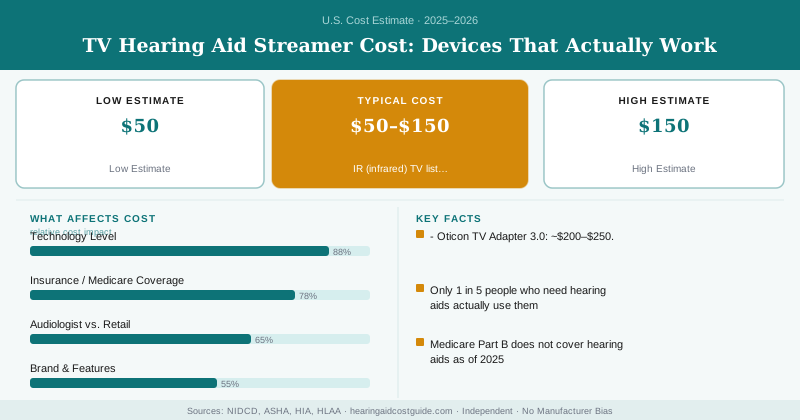
Turning up the TV so loud the neighbors can hear it — that’s the joke. But for the 48 million Americans with some degree of hearing loss (NIDCD, 2023), it’s a real daily frustration. A TV hearing aid streamer sends audio directly to your hearing aids, and your family can watch at normal volume while you hear clearly.
These devices are genuinely useful. Here’s what they cost and what to look for.
TV Streamer Cost by Category
| Device Type | Price Range | Best For |
|---|---|---|
| Brand-name TV connector (Phonak TV Connector, Oticon TV Adapter) | $150–$280 | Users with matching brand hearing aids |
| Universal Bluetooth TV transmitter | $30–$100 | General Bluetooth hearing aids / OTC aids |
| Neck loop / telecoil streamer | $80–$200 | Hearing aids with telecoil (T-coil) |
| Amplified TV speaker (separate unit) | $50–$250 | Non-hearing-aid users, or shared rooms |
| Sound bar with hearing aid pairing | $200–$600 | Premium whole-room solution |
| IR (infrared) TV listening system | $50–$150 | Single-viewer, older technology |
Brand-Specific TV Connectors
Most major hearing aid brands sell a proprietary TV connector. These plug into your TV’s audio output and stream directly to compatible hearing aids — no Bluetooth pairing required, no lag, excellent sound quality.
- Phonak TV Connector: ~$200. Works with Roger-compatible Phonak/Unitron aids. Streams stereo audio up to 49 feet.
- Oticon TV Adapter 3.0: ~$200–$250. Compatible with Oticon hearing aids with 2.4 GHz connectivity.
- Signia StreamLine TV: ~$200. Works with Signia Nx, Pure, and Styletto series.
- Starkey TV Streamer: ~$150–$180.
- Widex TV Play: ~$150–$200.
The catch: these only work with the matching brand. If you switch hearing aid brands, the streamer doesn’t follow.
Universal Options
If your hearing aids have Bluetooth or a telecoil, you have more flexibility:
Bluetooth transmitters (Avantree Orbit, 1Mii B06TX): $30–$100. Plug into the TV’s optical or 3.5mm jack, pair with Bluetooth devices. Most modern OTC hearing aids (Jabra, Sony CRE, Lexie) work with these.
Neck loops with telecoil: $80–$200. If your hearing aids have a T-coil setting, a Bluetooth neck loop picks up audio from your phone or TV and transmits via the neck loop’s magnetic field. Works even with older hearing aids.
Check your hearing aid manual or ask your audiologist. Many behind-the-ear (BTE) models and some custom aids include a T-coil. Enabling it opens access to hearing loops in theaters, churches, airports, and neck loop streamers — at no extra cost beyond the external device.
What to Check Before Buying
- TV audio output type — Does your TV have optical (TOSLINK), HDMI ARC, RCA, or 3.5mm output? Check before ordering.
- Hearing aid compatibility — Is it branded for your specific hearing aid model, or does it claim “universal Bluetooth”? Read the fine print.
- Latency — Some cheap Bluetooth transmitters have a 100–300ms delay. Watching someone talk while the audio is half a second off is maddening.
- Range — Brand-name connectors typically stream 30–50 feet. Some generic Bluetooth devices drop out at 10 feet.
ASHA Guidance on TV Listening
The American Speech-Language-Hearing Association recommends that hearing aid users use assistive technology like TV streamers to reduce listening effort and fatigue. Straining to understand speech over background TV noise contributes to cognitive fatigue — a real issue documented in research on hearing loss and daily functioning.
Is a TV Streamer Worth It?
At $150–$250 for a brand-matched device, most hearing aid users find it worthwhile within the first week. Consider:
- Family members no longer need to tolerate high TV volume
- You hear dialogue more clearly than with speakers at any volume
- Reduces captions-only dependency for those who prefer audio
- Most connect in minutes with minimal setup
Avoid no-name brands under $30 on Amazon. Latency issues, poor audio quality, and short product lifespans are common complaints. Spend the extra $50–$100 for a recognized brand (Avantree, Sennheiser, or your hearing aid manufacturer’s official accessory).
The Bottom Line
A TV hearing aid streamer is a $150–$280 investment that solves one of the most common complaints hearing aid users have. If you bought a $3,000+ pair of hearing aids, a TV connector from the same brand is worth adding. If you want flexibility, a quality Bluetooth transmitter ($50–$100) paired with Bluetooth-capable aids works well too.
Frequently Asked Questions
TV hearing aid streamers range from $100 to $400 depending on the brand and technology level. Dedicated streamers from major manufacturers like Phonak, ReSound, and Oticon typically fall in the $200–$400 range, while universal or third-party options may cost $100–$200.
Most health insurance plans and Medicare do not cover TV streamers as they are considered accessories rather than hearing aids themselves. You will typically pay the full $100–$400 out-of-pocket, though some supplemental or vision/hearing-specific insurance plans may offer partial reimbursement.
Compatibility depends on your hearing aid model and manufacturer; most name-brand streamers only work with hearing aids from the same company. Universal options exist but often have limited features, so checking your hearing aid brand's compatibility list before purchasing is essential to ensure the device will actually work with your aids.