What does tympanometry actually measure? Not your hearing, despite what the name might suggest. It measures how well your eardrum moves — and that distinction matters more than most people realize when they’re handed a bill for a test they assumed was just “another hearing test.”
Tympanometry is a quick, painless test that pushes small changes in air pressure into your ear canal and records how your eardrum responds. It takes under a minute per ear and requires no active participation — you don’t press buttons or respond to tones like you would during a standard hearing test. It’s a mechanical measurement of middle ear function, not a measurement of your perception of sound.
Tympanometry Cost Breakdown
| Setting | Cost | Notes |
|---|---|---|
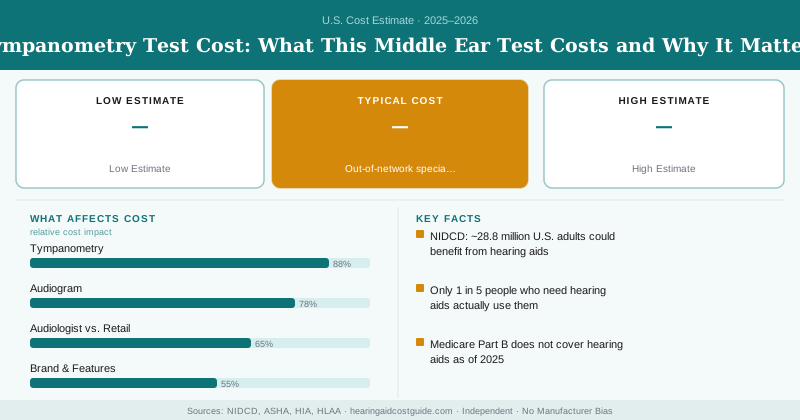
| Standalone tympanometry (no other testing) | $25–$150 | Rare as a solo test |
| Bundled into full audiologist evaluation | $0 additional (included in $150–$350 exam) | Most common scenario |
| Pediatric ENT visit with tympanometry | $50–$200 (visit + test) | Common for recurrent ear infection workups |
| Urgent care/primary care with tympanometry | $75–$250 | Less common setting, higher relative cost |
| Out-of-network specialist | $100–$300 | Varies by region and provider type |
What Tympanometry Actually Detects
The test produces a graph called a tympanogram, and its shape tells your audiologist or ENT specific things:
- Type A (normal) — eardrum moves normally, middle ear pressure is typical
- Type B (flat) — suggests middle ear fluid, a perforated eardrum, or earwax blockage against the probe
- Type C (shifted) — indicates negative middle ear pressure, often from eustachian tube dysfunction
This is exactly why tympanometry gets ordered so often for kids with recurrent ear infections — it can confirm fluid behind the eardrum even when the child shows no obvious symptoms that day, information a simple visual exam alone can’t always provide with certainty.
Why It’s Rarely Billed as a Standalone Test
Tympanometry is almost always performed as one component of a broader hearing evaluation rather than in isolation, because on its own it doesn’t tell you whether someone can actually hear well — only whether their middle ear is functioning mechanically. A comprehensive audiologist visit typically includes tympanometry alongside pure-tone audiometry (the actual hearing test) and otoscopic examination, all under one bundled evaluation fee.
Tympanometry measures middle ear mechanics — how your eardrum moves under pressure. It takes seconds, requires no response from you, and diagnoses conditions like fluid buildup or eustachian tube dysfunction.
Audiogram measures your actual hearing thresholds — the quietest sounds you can detect at different pitches. It takes 20–30 minutes, requires you to respond to tones, and diagnoses hearing loss type and severity.
Both are often done in the same visit because they answer different, complementary questions about your ear health.
When Insurance Typically Covers It
According to ASHA billing guidance commonly used by audiology practices, tympanometry (CPT code 92567) is billed alongside other audiologic function tests and is generally covered by private insurance and Medicare/Medicaid when there’s a documented medical reason — suspected middle ear pathology, hearing loss workup, or follow-up after ear infection treatment. Routine tympanometry without a medical indication, such as a general wellness check with no symptoms, may not be reimbursed and could be billed as an out-of-pocket charge.
Common Reasons a Doctor Orders Tympanometry
- Recurrent ear infections, especially in children, to check for persistent fluid
- Suspected eustachian tube dysfunction — that “plugged ear” feeling that won’t clear
- Pre-surgical evaluation before procedures like ear tube placement
- Unexplained hearing loss where middle ear versus inner ear origin needs distinguishing
- Eardrum perforation monitoring after an injury or prior infection
A normal tympanogram doesn’t rule out hearing loss — it only confirms your middle ear is mechanically functioning properly. Sensorineural hearing loss (inner ear or nerve-related, the most common type in adults) produces a completely normal tympanogram. If you have hearing concerns, insist on a full audiogram in addition to tympanometry, not as a substitute for it.
If your provider recommends tympanometry, ask whether it’s being bundled with a full hearing evaluation or billed separately — knowing that upfront avoids a surprise itemized bill later.
Frequently Asked Questions
A standalone tympanometry test costs $25–$150, though it's frequently bundled at no additional charge into a comprehensive audiologist evaluation ($150–$350), which typically already includes it as a standard component.
Yes, in most cases, when ordered as part of a medically necessary hearing evaluation with an appropriate diagnosis code, such as suspected middle ear fluid, eardrum perforation, or hearing loss investigation. Routine screening without medical indication may not be covered.
Tympanometry measures how your eardrum moves in response to air pressure changes, identifying middle ear problems like fluid buildup, eustachian tube dysfunction, perforations, or stiffness — it does not measure your ability to hear specific sounds, which is what a standard audiogram does.