Unitron and Phonak share the same parent company and the same processing chip — so why are Unitron models typically $500–$1,500 cheaper per pair? The answer comes down to software features, not hardware. Understanding that distinction helps you decide whether Unitron is the smart buy for you or whether the extras in Phonak’s lineup are worth the premium.
What Is Unitron?
Unitron is a Canadian hearing aid brand founded in 1964. In 2000, it was acquired by Sonova Group — the same Swiss company that owns Phonak. Today, both brands run on Sonova’s proprietary chip platform (the Tempus processing engine), but they’re positioned at different price points and market segments.
Phonak targets the premium end. Unitron targets value-conscious buyers: people who want reliable Sonova-quality processing without paying for features they’ll never use. According to the NIDCD, roughly 28.8 million U.S. adults could benefit from hearing aids — but the majority who need them don’t get them, and cost is consistently cited as the top barrier. Unitron’s positioning directly addresses that gap.
Current Models: Vivante Platform
Unitron’s current lineup is the Vivante platform, introduced in 2023 to replace the Discover Next. It’s available in three styles:
- Vivante RIC (Receiver-in-Canal): The most popular option. Rechargeable version available. Suitable for mild-to-severe hearing loss.
- Vivante BTE (Behind-the-Ear): Power option for severe to profound loss. Uses traditional batteries or rechargeable depending on model.
- Vivante ITE (In-the-Ear): Custom-fit options for patients who prefer a less visible style.
The Discover Next — the previous Unitron platform — is still available at many practices, often at a discount as inventory clears. If budget is your primary concern, it’s worth asking about.
Unitron Hearing Aid Prices by Tier
| Technology Tier | Vivante Models | Price Per Pair | Best For |
|---|---|---|---|
| Essential | Vivante 3 | $2,000–$3,000 | Quieter environments, budget priority |
| Standard | Vivante 5 | $3,000–$4,000 | Mixed listening situations |
| Advanced | Vivante 7 | $4,000–$5,500 | Active lifestyle, frequent background noise |
| Premium | Vivante 9 | $5,500–$6,500 | Most demanding listening situations |
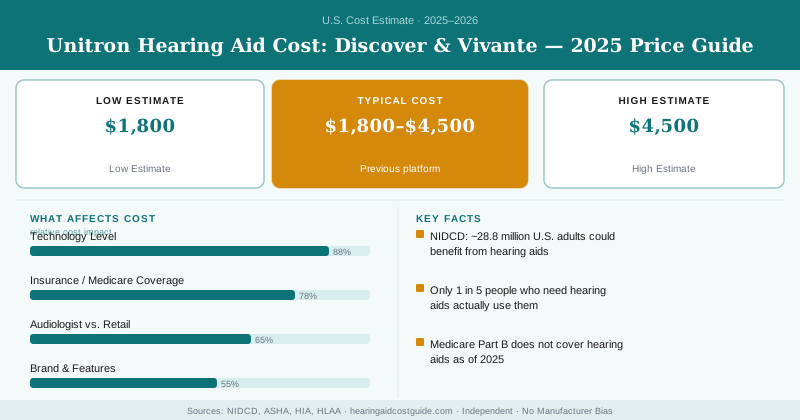
| Previous platform | Discover Next | $1,800–$4,500 | Clearance pricing, value option |
Prices above reflect the typical bundled cost at a private audiology practice — device plus professional fitting and 1–3 years of follow-up visits. Unbundled practices price the device lower but bill separately for each appointment.
Key Technology Features
Tempus chip: The same core processor found in Phonak aids. Handles noise reduction, directional microphone processing, and sound classification in real time. This is the main reason Unitron’s performance at a given price point compares favorably with Phonak’s.
Log It All: A usage logging feature that tracks how you’re hearing in different environments. Your audiologist can review this data at follow-up appointments to fine-tune your settings based on real-world use — not just what you report from memory.
Remote Plus app: Connects to your iPhone or Android device via Bluetooth. Lets you adjust volume and programs, and enables remote fine-tuning sessions with your audiologist without an in-office visit.
Flex:trial is a Unitron-exclusive fitting program with no real equivalent at other brands. Here’s how it works: your audiologist fits you with any Vivante model at any technology tier and you wear it for a trial period — typically 30 to 60 days. You haven’t committed to a technology level or a price yet. At the end of the trial, you and your audiologist review the Log It All data together and decide which tier genuinely improved your hearing. You pay only for what you actually need.
This matters because most patients have no idea which technology tier is right for them before they wear the aids. The standard approach — pick a tier, buy it, hope it works — often leads to either overpaying for features you don’t use or underpaying and struggling unnecessarily. Flex:trial solves that problem. Ask your audiologist whether they offer it.
Unitron vs. Phonak: What You’re Actually Giving Up
Both brands run the same Sonova Tempus chip. At equivalent technology tiers, the core hearing performance — speech clarity in noise, wind noise reduction, directional processing — is nearly identical.
What Phonak’s premium tiers include that Unitron doesn’t:
- Roger compatibility: Phonak’s wireless microphone system (useful in classrooms, restaurants, large meetings) is exclusive to Phonak
- Sphere platform: Phonak’s 2024 Audéo Sphere models feature a second dedicated processor for call and noise handling — not available on Unitron
- Broader Bluetooth ecosystem: Phonak’s direct-connect range is wider
If you’re not a teacher, don’t frequently use microphone accessories, and aren’t in the most demanding listening situations daily, those extras may not matter to you. MarkeTrak 10 data — the industry’s most comprehensive U.S. hearing aid user survey — shows overall satisfaction with value-tier aids is comparable to premium models when fitting quality is high.
A lower Unitron price doesn’t mean lower chip quality — it reflects fewer premium software features, not inferior hardware. The Tempus processor is the same. What varies is how many listening programs, how much noise-environment classification, and how many advanced connectivity features are unlocked at each tier. Don’t assume cheaper means worse sound.
What Unitron Doesn’t Offer
Unitron is not available at Costco. Costco’s Kirkland Signature aids are rebranded Phonak products. If Costco pricing ($1,399–$1,599/pair) is important to you, that’s a different path entirely — and a legitimate one.
Unitron also has a smaller network of fitting audiologists compared to Phonak. In rural areas, finding a practice that carries Unitron may require a bit more searching.
Insurance and Financing
Most private insurance plans that cover hearing aids don’t differentiate by brand — they provide a per-pair benefit ($500–$2,000 typically) that applies to any manufacturer. Veterans’ benefits and Medicaid coverage also typically apply to Unitron models where applicable.
Several Unitron dealers offer financing through CareCredit or similar programs, which can spread the cost over 12–24 months with promotional interest-free periods.
Frequently Asked Questions
Unitron hearing aids typically run $2,000–$6,500 per pair, depending on the technology tier. Essential-level aids start around $2,000–$3,000/pair. Premium Vivante models top out near $6,500/pair. Prices include professional fitting and follow-up at most practices.
Unitron and Phonak share the same parent company (Sonova) and the same core processing chip. At equivalent technology levels, sound quality is nearly identical. Phonak's upper tiers include features like Roger wireless compatibility and the Sphere platform — Unitron doesn't. So if you don't need those extras, Unitron delivers the same Sonova processing at a lower price.
Flex:trial is a Unitron-exclusive program that lets patients trial hearing aids at any technology level for a set period — usually 30–60 days — before committing to a purchase. Your audiologist can start you at a higher tier to see if the extra features genuinely help you, then adjust the final purchase price accordingly. It's one of the more patient-friendly fitting programs in the industry.