Most people assume that faster processing in a hearing aid means it amplifies sound louder or more aggressively. That’s not it at all. What Widex’s ZeroDelay technology actually solves is something subtler — and more annoying: the echo-like distortion that happens when your brain hears both the direct sound traveling through the air and the processed sound from your hearing aid at slightly different times.
That tiny gap — just milliseconds — is enough to make your own voice sound hollow, and music sound artificial. Widex’s Moment platform closes that gap to 0.5 milliseconds. The industry standard is around 5ms. For most conversation in a quiet room, you might not notice the difference. For music listeners and people with acute sensitivity to sound quality, it’s the difference between hearing aids they’ll actually wear and ones they’ll leave in the drawer.
Widex at a Glance
Widex was founded in Denmark in 1956 and remains one of the most respected names in audiological research. In 2019, Widex merged with Sivantos (which makes Signia hearing aids) to form WS Audiology — now one of the world’s three largest hearing aid groups alongside Sonova and Demant. The merger hasn’t changed Widex’s product identity; the two brands still operate independently with different design philosophies and product lines.
Widex’s current flagship platform is Moment Sheer (released 2023), which replaced the original Moment series. It introduced a smaller, more refined form factor while retaining the signature sound processing. The Magnify is the company’s entry-level rechargeable option, aimed at buyers who want the Widex brand at a lower price point.
Widex Moment Sheer: Price Tiers
Widex uses a technology level system — not model names — to differentiate price points. Your audiologist will match the technology level to your lifestyle needs: how much time you spend in complex listening environments (restaurants, theaters, group conversations) determines which tier makes sense.
| Technology Level | Models Available | Price Range (Per Pair) | Best For |
|---|---|---|---|
| Essential (220) | Moment Sheer RIC, BTE | $2,500–$3,500 | Quiet home environments, TV, one-on-one |
| Standard (330) | Moment Sheer RIC, BTE, ITE | $3,500–$5,000 | Occasional restaurants, small groups |
| Advanced (440) | Moment Sheer RIC, BTE, ITE | $5,000–$6,500 | Active lifestyle, frequent social settings |
| Premium (440 IX) | Moment Sheer RIC, BTE, ITE | $6,500–$7,500 | High-demand: music, complex noise, travel |
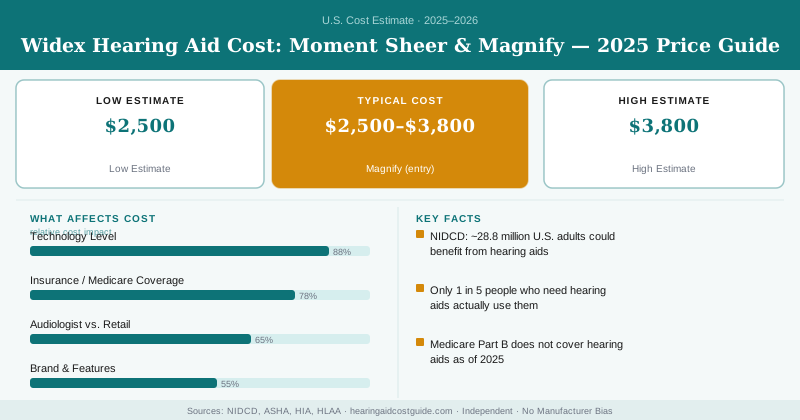
| Magnify (entry) | Magnify RIC rechargeable | $2,500–$3,800 | Budget-friendly rechargeable option |
Prices reflect typical US audiologist retail pricing with professional services bundled. Unbundled device-only pricing can run $300–$800 lower per pair.
What ZeroDelay Audio Actually Does
Sound reaches your eardrum via two pathways simultaneously: the natural air-conduction path (direct from the source), and through your hearing aid (picked up by the microphone, processed, amplified, delivered to your ear canal). In traditional hearing aids, the processing delay is long enough that your brain registers both signals as slightly separate — creating a comb-filtering effect that makes your voice sound hollow and music sound wrong.
Widex cut that processing delay to 0.5ms. At that speed, the two signals arrive close enough together that your brain can’t distinguish them. You get amplification without the artificial artifacts.
For conversation in most environments, you probably won’t notice the difference compared to a premium competitor. For music listening, many audiologists and users report Widex as the clear leader among major brands. That’s not marketing copy — it’s consistent feedback in MarkeTrak surveys, where Widex users score highest among all brands for music satisfaction and sound quality preference.
SoundSense Learn: AI That Adapts to You
The Widex SoundSense Learn feature uses machine learning to personalize your sound settings over time. It works like this: in a given environment, the app presents you with two slightly different sound options (A or B). You pick which sounds better. Over dozens of micro-decisions, the system builds a preference profile specific to your ears and listening habits.
This matters because hearing loss varies — not just in degree, but in which frequencies are affected and how. No audiologist can predict exactly what sounds “natural” to your auditory system. SoundSense Learn lets the system learn from you directly.
The SoundSense Learn feature requires the Widex SmartRic app (iOS and Android) and a compatible smartphone.
Widex is especially worth considering if you play music, attend live performances, or find that other hearing aids make music sound “tinny” or artificial. The 0.5ms ZeroDelay chip is the reason — music has rapid, complex transients that expose processing latency in ways that speech doesn’t. If music quality isn’t a priority, you’ll find comparable speech-in-noise performance from Phonak, Oticon, or Starkey at similar price points.
Widex and Hearing Loss Research
The NIDCD estimates that approximately 28.8 million U.S. adults could benefit from hearing aids — yet fewer than one in three adults over 70 who have hearing loss actually uses one. Treatment gap studies consistently identify cost as the primary barrier, which is why understanding exactly what you’re paying for matters.
MarkeTrak data — the most comprehensive consumer survey of hearing aid satisfaction in the U.S. — consistently shows Widex among the top-rated brands for overall satisfaction and, specifically, for music and sound quality ratings. Users of premium Moment Sheer aids report higher rates of all-day wear compared to lower-tier alternatives, which audiologists note is a meaningful outcome measure: a hearing aid that stays in your ear is a hearing aid that actually helps.
Where to Buy (and Where Not To)
Widex hearing aids are sold exclusively through licensed audiologists and hearing instrument specialists. This is a deliberate distribution policy — not an accident of the market.
If you see new Widex hearing aids for sale on eBay, Amazon third-party sellers, or overseas websites at below-retail prices, don’t buy them. Widex’s manufacturer warranty (typically 3 years) is non-transferable and requires purchase through an authorized dispenser. Unauthorized “gray market” aids may be previously returned units, counterfeit devices, or aids programmed for foreign markets with different software. There’s no way to know — and no recourse if they fail.
Financing and Assistance Options
At $2,500–$7,500 per pair, Widex aids are a significant purchase. Most audiologists offer 12–24 month 0% interest financing through CareCredit or similar healthcare financing programs. Veterans may be eligible for Widex aids through the VA (the VA contracts with major manufacturers). The Hearing Loss Association of America maintains a state-by-state list of assistance programs for those who don’t qualify for VA benefits.
Medicare Advantage plans increasingly cover partial hearing aid costs — some up to $2,000–$2,500 per pair — which can meaningfully reduce out-of-pocket cost on mid-tier models. Call your plan administrator before your audiologist appointment to understand your benefit.
Frequently Asked Questions
Widex invests heavily in chip speed and sound processing research. The Moment platform's 0.5ms processing delay — versus the industry standard of 5ms — requires more advanced and expensive technology to achieve.
No. Widex does not sell through Costco or other retail hearing chains. They're sold exclusively through independent audiologists and hearing clinics.
Most Widex aids last 5–7 years with proper care. The rechargeable battery in Moment Sheer models typically holds adequate capacity for 4–5 years before needing replacement.