Here’s a scenario that plays out constantly: someone spends $5,000 on premium hearing aids, wears them every day, and still can’t follow the TV without cranking the volume to a level that drives the rest of the household crazy. The aids work fine — in quiet conversations. TV is a completely different acoustic problem. So is a crowded restaurant. So is a lecture hall. The right accessory solves the problem that the hearing aid alone can’t.
MarkeTrak survey data shows that hearing aid users cite television and noisy restaurants as the top two environments where satisfaction drops most sharply. Accessories exist precisely for these gaps. Here’s what they cost and what actually makes a difference.
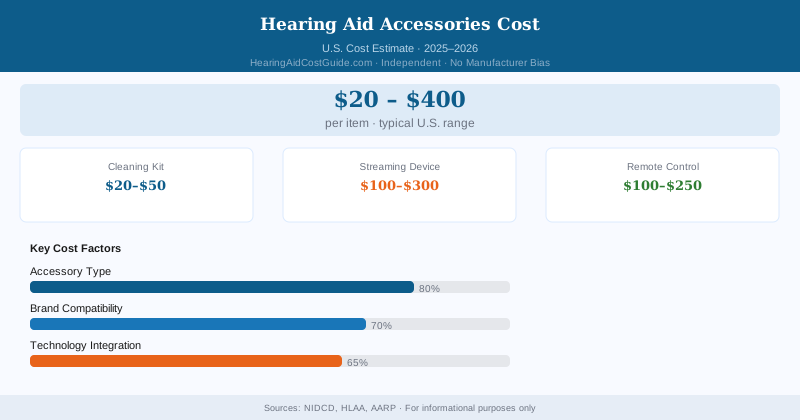
Hearing Aid Accessories Price Guide
| Accessory | Price Range | What It Does |
|---|---|---|
| TV Streamer (Phonak TV Connector) | $150–$250 | Streams TV audio directly to aids via Bluetooth |
| TV Streamer (Oticon TV Adapter) | $175–$225 | Oticon-specific TV streaming dongle |
| TV Streamer (ReSound Multi Mic as TV) | $200–$350 | Multi-use streamer; also works as remote mic |
| Remote microphone (Phonak Roger Pen) | $450–$750 | Clip-on mic worn by speaker; streams to aids |
| Remote microphone (Phonak Roger On) | $700–$1,000 | Table mic for group settings |
| Remote microphone (ReSound Multi Mic) | $200–$350 | General purpose remote mic |
| Roger Table Mic (Phonak, classroom) | $800–$1,200 | Multi-speaker table microphone |
| Remote control (physical) | $60–$150 | Manual volume/program button for non-app users |
| Drying/dehumidifier kit | $30–$150 | Removes moisture; extends device life |
| Cleaning kit | $15–$50 | Brushes, wires, wax pick tools |
TV Streamers: Transform Television Watching
TV is one of the most common complaints among hearing aid users — even well-fitted aids struggle when dialogue, music, and sound effects are competing. A TV streamer plugs into the TV’s audio output (optical, headphone, or RCA) and transmits audio wirelessly, direct to your hearing aids. You hear a clean, close-range signal no matter where you’re sitting in the room.
Brand-specific costs:
- Phonak TV Connector: $150–$200 (works with any Phonak Audéo model)
- Oticon TV Adapter 3.0: $175–$225 (Oticon-specific)
- Signia StreamLine TV: $200–$250 (Signia-specific)
- Starkey TV Streamer: $150–$200 (Starkey-specific)
These are brand-locked. A Phonak streamer won’t talk to Oticon aids. Verify your specific hearing aid model before ordering — manufacturers sometimes break compatibility between generations even within the same brand.
Many modern hearing aids have direct Bluetooth (Made for iPhone, ASHA for Android), which means you can stream from a smart TV’s Bluetooth output without a separate dongle. If you’re buying new aids, ask your audiologist whether this applies to the model you’re considering.
ReSound’s Multi Mic ($250–$350) is the most versatile single accessory available:
- Remote microphone: Clip to a speaker’s lapel to transmit their voice directly
- Conference mic: Place in the center of a group for 360-degree pickup
- TV streamer: Connect to TV audio output
- Partner mic: Pass to a partner in a noisy environment
One device that handles multiple accessory use cases is better value than buying separate TV streamer + remote mic. However, it only works with ReSound/Jabra devices.
Remote Microphones: For Restaurants and Lectures
The physics here are simple. Your hearing aid’s microphone is 18 inches from the sound you’re trying to hear. In a noisy restaurant, that’s a problem no amount of processing can completely solve. A remote microphone worn by the person you’re talking to puts the pickup point 6 inches from their mouth — like a private phone call from across the table.
Phonak Roger System: The most advanced wireless microphone ecosystem. The Roger Pen ($500–$700) is a stylus-shaped mic worn by a speaker or placed on a table. The Roger On ($800–$1,000) is an intelligent table mic that activates when someone speaks. It requires Roger receivers embedded in hearing aids or attached via RogerDirect — an additional connection step worth confirming with your audiologist.
Oticon ConnectClip: $200–$300. Serves as remote microphone and Bluetooth partner mic. Less feature-rich than Roger but simpler to use.
Who benefits most: working professionals who attend a lot of meetings, active social adults who dine out regularly, anyone in lecture or classroom settings. If that describes you, the investment in a remote mic pays for itself in quality of life pretty quickly.
Drying and Dehumidification
Moisture is the leading cause of hearing aid failure. It doesn’t take a swim — daily perspiration and normal ear canal humidity are enough to accumulate damage over months and years. A drying system removes that moisture overnight.
Electronic dehumidifiers (Phonak DryBox, Zephyr, etc.): $80–$150. Heated and UV-assisted drying. Most effective; especially recommended for people who sweat, live in humid climates, or wear aids during exercise.
Desiccant-based dryers (hearing aid dehumidifier jars): $15–$30. Simple capsule-based drying. Less effective than electronic but meaningfully better than nothing, and inexpensive enough that there’s no reason not to own one.
Using a drying system consistently is one of the few things you can do to extend hearing aid life and reduce the most common cause of mid-life device failure — moisture damage to internal components.
Smartphone Apps: Free but Essential
Every major hearing aid brand offers a free companion app. These aren’t accessories you pay for — they’re tools you should definitely be using:
- Phonak myPhonak: Volume, program control, remote adjustments
- Oticon ON: Volume, programs, hearing diary
- ReSound Smart 3D: Volume, sound equalizer, geotagging
- Starkey Thrive: Volume, health tracking, language translation, hearing diary
- Widex Moment: Volume, Zen tinnitus tones, sound fine-tuning
Apps are free but require a compatible smartphone. iPhones from 2016+ work with Made for iPhone aids. Android compatibility is spottier — it depends on both the brand and your Android version. Before choosing a hearing aid model, confirm your phone works with its app.
Before purchasing accessories, confirm they’re compatible with your specific hearing aid model and generation. Phonak TV Connectors from 2019 may not be compatible with Phonak Audéo Lumity (2023) aids. Manufacturers update compatibility with each new generation. Always verify compatibility on the manufacturer’s website or ask your audiologist.