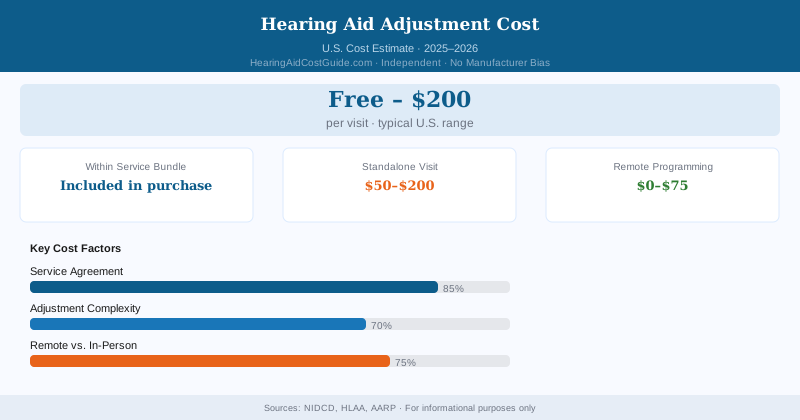
Most people assume a hearing aid fitting is a one-and-done appointment — actually, the initial programming session is more like a first draft. New users typically need 3–6 adjustments in the first 3–6 months before their hearing aids feel right. Whether those appointments cost you anything depends on how you bought your devices and how carefully you read the fine print of what was included.
The NIDCD reports that fewer than 30% of adults who could benefit from hearing aids actually use them, and inadequate follow-up care is a documented reason people abandon devices. Knowing what adjustments cost — and what you’re entitled to — is real money.
Hearing Aid Adjustment and Programming Costs
| Service | Bundled Purchase | Unbundled / After Warranty |
|---|---|---|
| Initial fitting and programming | Included | $200–$400 |
| Follow-up adjustments (year 1) | Included | $75–$150 per visit |
| Annual programming review | Included (often) | $100–$200 |
| Out-of-warranty adjustments | Not included | $75–$200 per visit |
| Remote programming adjustment | Often included | $50–$150 per session |
| New audiogram (if thresholds changed) | Sometimes included | $150–$300 |
What “Programming” Actually Means
Hearing aids are sophisticated computers that amplify specific frequencies differently based on your audiogram. Programming connects the aids to brand-specific software (Phonak Target, Genie, Connexx, and others) and adjusts:
- Gain curves: How much amplification at each frequency
- Compression settings: How the aid handles loud vs. soft sounds
- Directional microphone behavior: When to focus forward vs. omnidirectional
- Programs/memories: Different settings for quiet, noise, music, phone use
- Noise reduction strength
- Feedback cancellation sensitivity
Each brand requires its own proprietary software. You can’t program Phonak aids with Oticon software. That lock-in matters when you’re evaluating providers and considering switching clinics.
When You Need a Programming Adjustment
Most users need adjustments because:
- Sounds are too loud or too soft overall or in specific environments
- Own voice sounds hollow or strange (occlusion — can often be fixed with programming)
- Background noise is overwhelming in restaurants or noisy environments
- Hearing has changed — your audiogram has shifted and the aids need recalibration
- New environment demands — started a new job with different listening demands
- After wax buildup is removed — ear canal acoustics change after earwax removal
Between appointments, write down specific situations where your hearing aids aren’t performing well. “Too much noise in restaurants” is actionable. “Just doesn’t sound right” is hard to program to. The more specific your feedback, the faster and more effective each adjustment appointment will be.
Remote Programming: The Growing Option
All major hearing aid brands now offer remote programming — your audiologist adjusts your aids through a smartphone app without an in-person visit:
- Phonak Remote Support: Audio/video session with audiologist, adjustments pushed to aids via app
- Oticon RemoteCare: Similar video-based remote programming
- ReSound Remote Assist: Audiologist can adjust aids remotely based on patient feedback
- Starkey Telehealth: Remote adjustments integrated with Thrive app
Remote sessions typically run $50–$150 when billed separately, vs. $75–$200 for in-person. For minor tweaks — a bit less treble in crowded environments, adjusting the program transition thresholds — remote is equally effective and saves you a trip. For significant fitting changes or if real-ear measurement is needed, you’ll still need to go in person.
DIY Volume and Program Adjustments
Most modern hearing aids let you make limited adjustments through a companion smartphone app:
- Volume up/down within a range set by your audiologist
- Switch between programs (quiet, noise, music)
- Adjust bass/treble balance
- Create geotagged location-based settings
These user adjustments work around the margins of the audiologist’s programming. They’re genuinely useful day-to-day but they don’t change the underlying fitting. Think of them as the controls on a stereo, not a rewrite of the settings.
Be cautious about third-party programmers advertising low-cost ($30–$75) hearing aid programming online. Programming hearing aids correctly requires your current audiogram, knowledge of prescription targets, and ideally real-ear measurement. Incorrect programming can make hearing worse, not better, and may void your warranty.
Adjustments After Bundled Period Expires
When your bundled 2–3 year service period ends, adjustments become out-of-pocket. A few options to keep costs reasonable:
- Ask your audiologist about annual maintenance plans — some offer $150–$300/year covering unlimited adjustments
- Check if your hearing has actually changed — if thresholds are stable, you may not need recalibration
- Use remote programming — typically 30–40% cheaper than in-person
- Consider Costco — their follow-up service has no expiration date for hearing aids purchased there
How to Know If You Need an Adjustment (vs. More Adaptation Time)
New hearing aid users often hear “give it time” from their audiologist — and that’s legitimate. Your brain genuinely needs weeks to adapt to amplified input. But don’t keep waiting if you experience:
- Persistent feedback (whistling) that reinserting the aid doesn’t fix
- Sound quality that gets worse over time rather than staying flat
- Physical discomfort or pain during wear
- Word recognition scores that aren’t improving after 6–8 weeks
Those are adjustment problems, not adaptation problems. Don’t let anyone wave them off.