Here’s the stat that should shift your perspective on cleaning: roughly 60% of hearing aids brought in for “not working” repair are actually just dirty. Earwax and debris block the receiver and microphone openings, causing muffled sound, silence, or whistling — and the owner assumes something broke. Most of the time it didn’t. Five minutes of weekly maintenance would have prevented the $150–$400 repair visit.
Regular cleaning is the single most impactful maintenance habit for hearing aid users. And most of it is free.
Hearing Aid Cleaning Costs
| Cleaning Method | Cost | Frequency | Who Does It |
|---|---|---|---|
| Wax filter/trap replacement | $5–$15 for pack of 8 | Monthly or as needed | User |
| Dome replacement | $5–$15 for pack of 6–10 | Monthly or as needed | User |
| Desiccant dryer pod replacement | $5–$10 | Every 4–8 weeks | User |
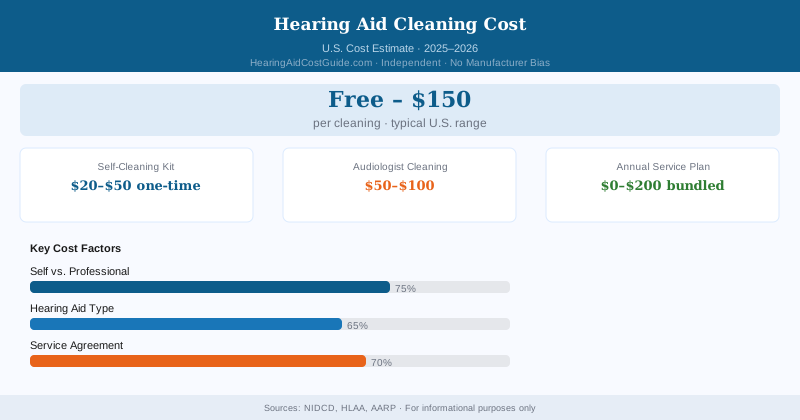
| DIY cleaning kit (brushes, wax pick) | $15–$50 one-time | Daily use | User |
| Professional cleaning at audiologist | $50–$100 | Every 3–6 months | Audiologist |
| Professional deep clean + inspection | $75–$150 | Annually | Audiologist |
| Electronic dryer (one-time) | $80–$150 | Daily use | User |
Daily Cleaning: The Most Important Habit
Every night:
- Wipe hearing aids with a dry, soft cloth — remove any visible wax or moisture
- Place in drying kit or electronic dehumidifier overnight
- Open battery door (for disposable battery aids) to let contacts air out and extend battery life
Every week:
- Use the soft-bristle cleaning brush (included with most aids) to gently brush microphone openings and the speaker/receiver tip
- Inspect the wax filter — if it looks discolored or blocked, replace it
- Check the dome or earmold for cracks, hardening, or wax buildup
Every month:
- Replace the wax filter/trap regardless of appearance — monthly replacement is preventive
- Replace domes if they’re stiff, cracked, or no longer fit snugly
- Inspect the tubing (for BTE aids) for cracks, yellowing, or blockage
Wax Filters: The Most Critical Consumable
Wax filters (also called wax guards, wax traps, or cerustops) are tiny filters that protect the receiver from earwax. They’re the most commonly needed replacement part, and they’re cheap enough that there’s no reason to wait until they’re visibly clogged.
Models and costs:
- Phonak Cerustop: $8–$15 for 8 pack (~$1/filter)
- Oticon ProWax MiniFit: $8–$12 for 6 pack
- Signia/Widex CeruStop: $8–$15 for 8 pack
- Generic compatible wax filters: $5–$10 for 8–12 pack (confirm compatibility before purchasing)
Replace when you notice reduced volume or muffled sound, or when the filter appears visibly blocked. Monthly prophylactic replacement is a good habit for people who produce a lot of earwax.
Most hearing aids include a wax filter replacement tool in the packaging:
- Remove the hearing aid dome or earmold
- Insert the empty end of the replacement tool into the existing wax filter and twist/pull to remove
- Insert the new filter from the other end of the tool
- Replace the dome
Takes about 30 seconds. Most audiologists demonstrate this at the initial fitting. If you weren’t shown, ask at your next appointment or search your hearing aid model’s tutorial on YouTube.
Dome and Earmold Maintenance
Domes (soft silicone tips for RIC aids): Replace monthly or when they become stiff, cracked, or visibly soiled. Packs of 10 cost $5–$15. Use the correct size and style (open/closed/tulip/power) as specified by your audiologist — the wrong dome affects both sound quality and fit.
Custom earmolds (for BTE aids): Clean daily with the cleaning brush and dry overnight. Wipe with a damp cloth if visibly soiled; dry completely before reinserting tubing. Earmold replacement costs $75–$150 at an audiology clinic when hardening or fit deterioration occurs.
Professional Cleaning: When to Schedule It
Even excellent daily cleaning habits don’t reach everything. Professional servicing every 6 months is recommended — the audiologist:
- Performs a thorough cleaning of all components, including parts you can’t access
- Checks the receiver for damage or wax blockage inside the housing
- Inspects microphone ports with specialized tools
- Runs a basic listening check of the aid’s function
- Checks for housing cracks or damage
- Replenishes wax filters, domes, and batteries
Cost: $50–$100 per cleaning visit. Usually included in bundled pricing for the first 1–3 years after purchase. After the bundled period ends, factor this into your annual hearing aid budget.
The HLAA notes that inadequate maintenance is one of the most common reasons people report dissatisfaction with hearing aids — and most maintenance issues are entirely preventable with consistent care. Costco includes free cleanings for the life of the hearing aid, which is one of the underappreciated advantages of their model.
Cleaning Supplies to Have on Hand
- Soft-bristle cleaning brush: Came with your aids; replacement $5–$10
- Wax pick/loop: For removing wax from recessed areas; $5–$15
- Hearing aid cleaning cloth: Microfiber, non-abrasive; $5–$15 for pack
- Cleaning spray: Hearing aid-specific, alcohol-free sanitizing spray; $10–$20
- Storage box: Protects aids from dust and pets when not in use; often included with aids
Total DIY cleaning kit: $30–$60 one-time, plus $20–$40/year in consumables.
Never use: running water, rubbing alcohol, household cleaning sprays, Q-tips in the receiver port, or paper towels. Water and alcohol damage electronic components. Q-tips push wax deeper into the receiver. Paper towels scratch surfaces and leave fibers. Use only hearing aid-specific cleaning tools and approved cleaning products.