What kills most hearing aids isn’t a drop or a fall — it’s earwax. Wax clogs the microphone ports and receiver tubes, muffles sound, and eventually causes the receiver to fail entirely. The good news: a $12 cleaning kit used consistently can extend your hearing aid’s life by years and save you hundreds in repair bills. The bad news: most people skip cleaning until something sounds wrong.
Here’s what the right tools cost and how to use them.
Why Cleaning Tools Matter (and What They Save You)
Hearing aid repairs average $150–$400 per incident. Receiver replacements — often caused by wax damage — run $80–$200 per ear at an audiologist’s office. Compare that to a cleaning kit that costs $8–$25 and lasts a full year. The math isn’t complicated.
Most audiologists recommend daily light cleaning and a deeper weekly clean. If you’re not doing this, you’re shortening your aids’ lifespan and increasing your repair costs. It’s one of the most cost-effective maintenance habits you can build.
Hearing Aid Cleaning Tool Costs
| Tool / Kit | Cost | Best For |
|---|---|---|
| Basic cleaning brush | $3–$8 | Daily wax removal from vents and ports |
| Wax pick / loop | $3–$8 | Clearing receiver ports manually |
| Multi-tool (brush + pick + magnet) | $6–$15 | All-in-one daily cleaning |
| Complete cleaning kit | $10–$25 | Starter set with all essential tools |
| Drying tablet / Dry & Store jar | $8–$18 | Overnight moisture absorption |
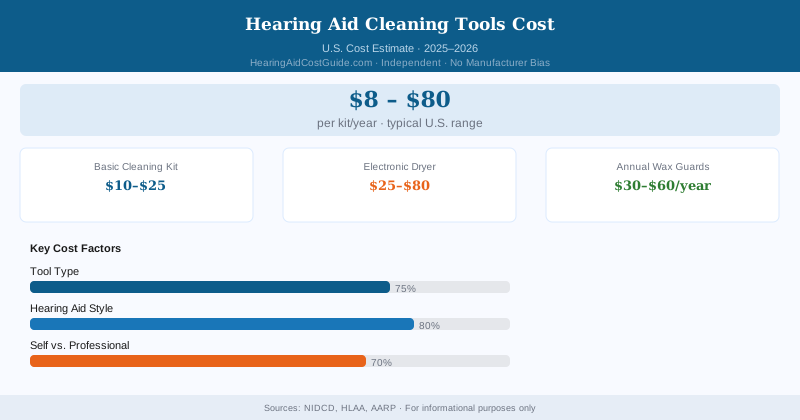
| Electronic drying unit (Dry-Go, etc.) | $25–$80 | Faster drying; heated airflow |
| Wax filters / guards (pack of 6–8) | $8–$18 | Monthly wax guard replacement (receiver-in-canal) |
| Professional in-office cleaning | $30–$75 | Deep clean; includes inspection |
For most hearing aid users, a basic cleaning kit ($10–$25) plus a drying system ($8–$80 depending on preference) covers everything you need. Annual wax filter replacements add $30–$60 per year for receiver-in-canal (RIC) style aids.
Which Tools Do You Actually Need?
This depends on your hearing aid style.
Receiver-in-canal (RIC) and in-the-ear (ITE) aids: You need a soft-bristle cleaning brush, a wax pick, and replacement wax guards (sometimes called wax filters). Wax guards sit at the end of the receiver and catch debris before it reaches the electronics. They need replacing every 2–4 weeks — your audiologist will show you how.
Behind-the-ear (BTE) aids with earmolds: Clean the earmold separately from the hearing aid. The earmold can be washed gently with mild soap and water — just make sure it’s completely dry before reattaching. The hearing aid itself needs only a brush-down. No wax guards required since the receiver sits behind the ear.
In-the-canal (ITC) and completely-in-canal (CIC) aids: These sit entirely in the canal and are most prone to wax damage. A wax pick and brush are essential. Many come with a tiny magnet tool to help remove and insert the aid without touching the device directly.
These four items cover 95% of what you need:
- Soft-bristle cleaning brush ($3–$8) — daily wipe-down
- Wax pick or loop ($3–$8) — clear receiver ports
- Drying jar with desiccant tablets ($8–$18) — overnight moisture removal
- Wax guards, 6–8 pack ($8–$18) — monthly replacement for RIC aids
Total: $22–$52 for your first year’s supply
Electronic Drying Systems: Worth It?
Manual drying jars with silica gel desiccant tablets work fine and cost $8–$18. Electronic dryers use gentle heat and UV light to remove moisture and sanitize your aids overnight. They run $25–$80 for consumer models.
If you sweat heavily, live in a humid climate, wear your aids all day, or have had moisture-related repairs in the past — an electronic dryer is genuinely worth the investment. Moisture damage is the second leading cause of hearing aid repairs after wax, and it’s almost entirely preventable. At $25–$80, an electronic dryer pays for itself the first time it prevents a $150 repair.
The National Statistics on Hearing Aid Maintenance
The American Speech-Language-Hearing Association (ASHA) reports that improper cleaning and moisture are among the top causes of hearing aid malfunction and premature device failure. The NIDCD notes that the average hearing aid lifespan is 4–7 years, but that lifespan drops significantly without consistent maintenance — in some cases to as little as 2–3 years for users who skip cleaning routines.
Extending your aids’ life from 4 years to 7 years through proper cleaning can delay a $3,000–$6,000 replacement purchase by three years. The math on a $25 cleaning kit is overwhelmingly favorable.
When to Pay for a Professional Cleaning
Audiologist offices offer professional cleaning for $30–$75 per visit. This includes:
- Ultrasonic cleaning of earmolds
- Wax removal from microphone ports with specialized tools
- Tube inspection and replacement if needed
- Receiver test and performance check
Most audiologists recommend a professional cleaning once or twice a year, or any time your aids sound muffled despite home cleaning. If your aids are bundled with a service package, professional cleanings may already be included — check your purchase agreement.
Don’t skip professional cleanings to save $40. They catch problems (cracked tubing, damaged receivers) before they become expensive repairs.
Where to Buy Cleaning Supplies
Your audiologist’s office carries brand-specific tools and wax guards designed for your exact model — this is the safest source. Generic kits on Amazon ($8–$20) often work well for brushes and picks but may not include the correct wax guard size for your specific model. Check your hearing aid brand’s website for the correct part number before ordering generic guards.
Never use water, alcohol wipes, or household cleaning sprays directly on your hearing aids. Water damages the electronics; alcohol can deteriorate seals and plastic components. For the hearing aid body, use only a dry, soft cloth or the tools specifically designed for hearing aid cleaning.
Bottom Line
A complete starter cleaning kit runs $22–$52, and annual replacement supplies (wax guards, desiccant tablets) add $30–$60 per year. That’s $80–$110 per year to protect a $3,000–$6,000 investment. Add a professional cleaning once or twice a year ($30–$75 each) and you’ve done everything right. It’s one of the cheapest and most impactful things you can do to protect your hearing aids.