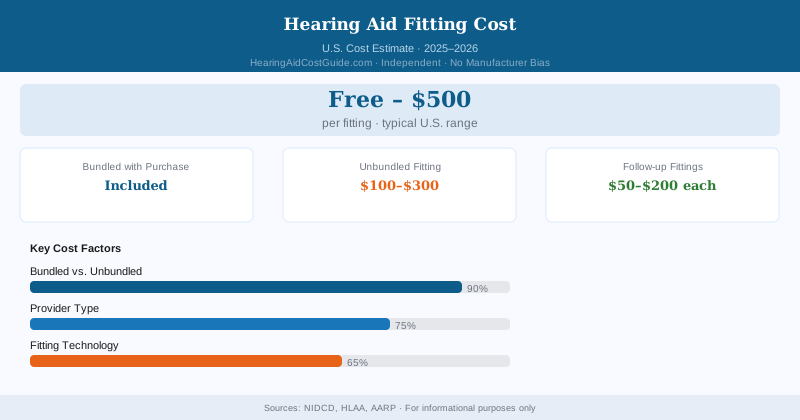
Most people buying hearing aids never see a “fitting” line item on their invoice. That’s because fitting is bundled into the device price — and that’s also why so many people don’t realize what they’re actually paying for, or what they’re entitled to. Understanding the fitting means you can evaluate whether you got good value and whether you can switch providers if something isn’t right.
Hearing Aid Fitting Costs
| Service Component | Bundled? | Standalone Cost |
|---|---|---|
| Pre-fitting audiogram | Yes (usually) | $150–$300 |
| Earmold impression | Varies | $50–$100 per ear |
| Device programming (initial) | Yes | $150–$300 |
| Real-ear measurement (REM) | Varies (30% skip it) | $100–$200 |
| Fitting appointment (time) | Yes | $150–$300 |
| Orientation/instruction session | Yes | $75–$150 |
| 30-day follow-up | Yes (bundled) | $75–$150 |
| Total first-year service | Bundled in device | $800–$1,500 |
What Happens at a Hearing Aid Fitting
A proper fitting appointment takes 60–90 minutes — longer than most people expect. Here’s the numbered protocol for what should happen:
1. Device inspection and preparation. The audiologist or hearing instrument specialist ensures the devices are charged, programs are loaded, and any custom components fit properly.
2. Initial programming to prescription target. Using your audiogram, they program the hearing aids to a validated prescription formula — typically NAL-NL2 or DSL v5.0. These are evidence-based formulas that specify how much gain you need at each frequency.
3. Real-ear measurement — the gold standard. A small probe microphone is placed in your ear canal alongside the hearing aid. The audiologist plays calibrated sounds and measures what the hearing aid is actually delivering at your eardrum — then adjusts the programming until the measured output matches the prescription target. This step takes 20–30 minutes and significantly improves outcomes.
Here’s the problem: roughly 30% of dispensers skip real-ear measurement. NIDCD research on hearing aid satisfaction points to inadequate initial fitting as one of the leading causes of hearing aid abandonment. Real-ear measurement is a primary reason fittings succeed or fail.
4. Orientation. You learn how to insert, remove, and care for the devices, how to change batteries or use the charger, and what to expect during the adjustment period.
5. Real-world listening check. The audiologist has a conversation with you and may use recorded background noise to check comfort before you leave.
When booking a fitting, ask: “Does your fitting protocol include real-ear measurement (REM)?” If the answer is no or “we don’t always do that,” ask them to include it. Studies consistently show that hearing aids verified with REM perform better than those programmed to prescription without verification. It should be a standard of care, not an optional extra.
What’s Usually Extra (Not Bundled)
Even with bundled pricing, some services typically cost extra:
- Custom earmolds for standard BTE devices: $75–$150 per mold
- Custom earmold remakes if fit changes: $75–$125 per mold
- Accessories: TV streamers ($150–$300), remote microphones ($200–$400), remote controls ($50–$150)
- Out-of-warranty repairs: $150–$600 per repair
- Loss and damage replacement deductibles: $0–$300 per incident
- Additional programming visits after bundled period expires: $75–$200 per visit
Unbundled Fitting: When It Makes Sense
Some audiologists now offer unbundled pricing:
- Device at near-wholesale cost + itemized professional fees
- Fitting appointment: $200–$400
- Follow-up visits: $75–$200 each
- Total device cost appears 20–30% lower up front
This works well for experienced hearing aid users who know what they need and don’t require much follow-up. First-time users typically come out ahead with bundled pricing — they need more follow-up visits in the first year than they expect.
Can You Change Audiologists After Buying?
Yes — and this is a legitimate consumer concern. If you bought bundled hearing aids and move away from the dispensing clinic, you’ve lost access to those included services.
Options when you need to switch:
- Manufacturer’s network: Phonak, Oticon, and others have national audiologist networks. Your included services may transfer to an affiliated provider — ask explicitly before assuming.
- Unbundled transfer: Many audiologists will see you as a “transfer patient” and program your existing aids for $100–$200 per visit.
- Manufacturer direct: For Phonak and some other brands, your audiologist can send your audiogram to manufacturer support for remote programming adjustments.
Before buying, ask what happens to your bundled services if you move or if the clinic closes. Get the answer in writing. Some bundled warranties transfer; most do not.
The Trial Period and Return Policy
Federal law requires a minimum 30-day trial period for hearing aids dispensed in person by a professional. The refund policy must be disclosed in writing. Ask:
- Is there a restocking fee? (Common: $100–$300)
- What happens to the cost of the initial evaluation if I return the aids?
- Is the earmold impression fee refundable?
OTC hearing aids follow standard retail return policies — typically 30–100 days depending on brand. Don’t skip this conversation at the time of purchase; it’s much harder to negotiate after the fact.
Frequently Asked Questions
When billed as a standalone service, hearing aid fitting typically costs $200–$600 depending on the complexity of your hearing loss and the provider's location. However, most hearing aid practices bundle this fee into the device price, so you won't see it as a separate line item on your invoice.
Most traditional health insurance plans do not cover hearing aids or fitting services, though Medicare Advantage plans increasingly offer hearing aid benefits that may include fitting. You'll typically pay out-of-pocket for fitting costs, though some employer-sponsored plans and Veterans Affairs benefits may cover part or all of the expense.
A standard hearing aid fitting appointment usually takes 1–2 hours and includes ear mold impressions, adjustment of settings, and hearing aid programming tailored to your audiogram results. You may need follow-up visits (typically included in bundled pricing) within 30 days to fine-tune the devices and ensure proper fit and function.