A lot of people walk into their first audiology appointment expecting to leave with hearing aids the same day — pick a pair, pay, done. Then they find out there’s a diagnostic evaluation, a fitting appointment, ear impressions if needed, a 30-day trial period, and follow-up visits. It feels like a lot.
Here’s why it’s all there. Hearing aids aren’t like reading glasses. They’re programmed medical devices, and the programming matters just as much as the hardware. A hearing aid set up with the wrong targets for your specific loss pattern — even an expensive one — can actually underperform a mid-range aid that’s been properly fitted. The process exists to get that right.
Three to four appointments, spread over 6–8 weeks. Here’s what each one involves.
Step 1: The Diagnostic Audiogram
When: Your first appointment. Sometimes this is a dedicated evaluation visit; at some practices it’s folded into a combined evaluation-and-selection visit.
What happens: A licensed audiologist conducts a full hearing evaluation, typically including:
- Pure tone audiometry (testing hearing at 8 frequencies, both ears)
- Bone conduction testing (to distinguish sensorineural from conductive loss)
- Speech audiometry (how well you understand words, not just whether you hear tones)
- Tympanometry (middle ear function)
- Case history: medications, noise exposure history, ear surgeries, family history of hearing loss
Why it matters: This isn’t optional pre-work before the real appointment. The audiogram is the prescription. Every hearing aid programmed by the audiologist starts from these numbers. A hearing aid programmed without an accurate current audiogram is not properly calibrated for your ears.
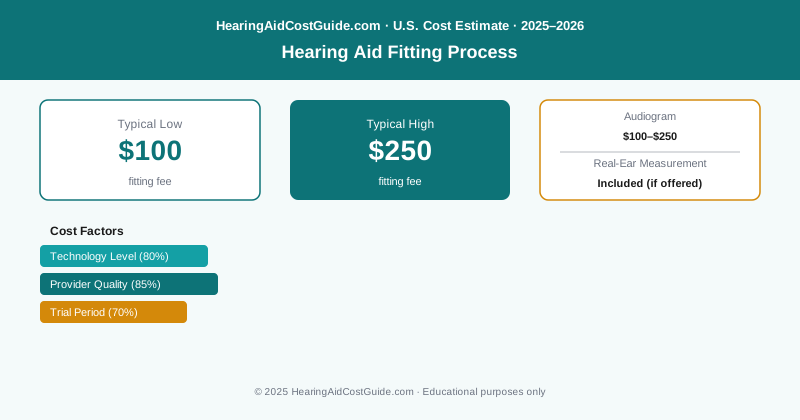
Cost: $100–$250 without insurance, often waived or credited toward the hearing aid purchase price if you buy from the same audiologist. Many audiologists offer free screenings; Costco Hearing Centers provide free evaluations.
Bring: Any previous audiograms (for comparison), a complete medication list, and ideally a family member who can confirm the situations where you struggle most.
Step 2: Hearing Aid Selection
When: Same day as the audiogram or a separate appointment, depending on the practice.
What happens: The audiologist reviews your results and recommends style and technology level options based on your hearing profile, ear anatomy, lifestyle, and budget.
Style choice depends on the configuration of your hearing loss, whether you have dexterity limitations, how important discretion is to you, and whether you want rechargeable batteries (which aren’t available in the smallest styles).
Technology level (basic, mid-range, premium) affects how well the hearing aids handle noise, how many microphone channels they use, and whether they include Bluetooth streaming, smartphone apps, or remote adjustability.
A good audiologist should present options at two or three technology levels and explain the practical difference between them for your specific lifestyle. If you’re only shown one option at one price, ask to see alternatives.
Demo hearing aids: Many practices have loaner or demo aids you can try during this appointment to experience the basic sensation of amplified sound before committing.
Questions to ask at this step:
- What makes this specific aid appropriate for my audiogram results?
- What would I get with the next tier up vs. down?
- Does this style work with my ear canal anatomy?
- What’s the trial period if I want to return or exchange?
Step 3: Ear Impressions (If Needed)
When: After style selection, either same day or a follow-up visit.
For whom: Needed for custom-fit styles (ITE, ITC, CIC, IIC) and for BTE hearing aids that use custom earmolds rather than universal domes. RIC aids with standard silicone domes typically don’t require impressions.
What happens: The audiologist places a small foam block in your ear canal for protection, then injects a soft impression material that hardens in minutes. The impressions are sent to the hearing aid manufacturer, who uses them to fabricate a device shaped precisely to your ear canal.
Cost: $50–$100 if billed separately; often included in the fitting package.
Turnaround: Custom devices typically take 2–3 weeks to manufacture.
Step 4: The Fitting Appointment
When: When the hearing aids arrive (or immediately after selection for RIC aids with stock domes).
What happens — and why this appointment matters as much as the device itself:
The audiologist connects the hearing aids to fitting software using a programming cable or Bluetooth. Starting from manufacturer default settings based on your audiogram, they adjust gain (amplification) across frequencies, fine-tune noise reduction settings, and set the compression characteristics that determine how quickly the aid responds to changes in sound level.
The gold standard for this process is real-ear measurement (REM), also called probe microphone measurement. A thin silicone tube (a probe microphone) is placed in your ear canal alongside the hearing aid. The audiologist plays reference sounds, and the probe measures the actual sound pressure level reaching your eardrum — confirming that what you’re receiving matches the target prescription for your hearing loss.
Every ear canal is shaped differently. Two people with identical audiograms can require meaningfully different hearing aid settings because their ear canals amplify frequencies differently.
Without REM, audiologists use manufacturer software defaults — which may be reasonably close, or may over- or under-amplify specific frequencies. With REM, the output is verified directly at the eardrum and adjusted to match the prescriptive target.
Research shows that only about 40% of US hearing aid dispensers routinely perform real-ear measurement. Before your fitting appointment, ask your audiologist directly: “Do you use real-ear measurement (probe microphone testing) for fitting?” If the answer is no, ask why not — or consider seeking a provider who does.
At the fitting, you should also receive:
- Instruction on inserting, removing, and cleaning the aids
- Battery replacement or charging instructions
- Information on the manufacturer app (for Bluetooth-enabled aids)
- A follow-up appointment scheduled within 2–4 weeks
What to report during the fitting:
- Anything that sounds wrong — too loud, too tinny, your own voice sounds odd
- Any physical discomfort from the fit
- Any feedback (whistling) in specific situations
Some adjustment is normal at this stage. The audiologist can change settings in the programming software in real time.
Step 5: The 30-Day Trial Period
When: Starts at the fitting appointment; typically runs 30–45 days.
Most states require hearing aid providers to offer a trial period of at least 30 days with the right to return for a refund (minus a fitting fee that varies by practice and state). Get those terms in writing before you pay — start date, trial length, return fees.
During the trial, wear the aids consistently. Not just in quiet settings — especially in difficult situations like restaurants, phone calls, and group conversations. Keep notes on what works and what doesn’t. If something bothers you, call your audiologist early. Don’t white-knuckle through the whole trial without speaking up; most issues can be addressed with a quick reprogramming.
The NIDCD notes that most new hearing aid users take 4–6 weeks to adapt to amplified sound. Sounds that initially feel too loud or sharp usually become comfortable as the brain recalibrates. That adaptation period is normal and expected.
| Appointment | Timing | What’s Decided | Typical Cost Impact |
|---|---|---|---|
| Diagnostic audiogram | Week 1 | Hearing profile, type/degree of loss | $0–$250 (often credited) |
| Hearing aid selection | Week 1–2 | Style, technology level, manufacturer | Major: determines purchase price |
| Ear impressions (custom aids) | Week 2 | Custom fit accuracy | $50–$100 |
| Fitting appointment | Week 3–5 | Programmed settings, REM verification | Included in purchase |
| 30-day trial | Weeks 4–8 | Keep or return? | Trial fee $0–$300 if returned |
| Follow-up adjustments | Months 1–6 | Fine-tuning to real-world use | Included (reputable providers) |
Step 6: Follow-Up Adjustments
When: 2–4 weeks after fitting, then as needed. Most reputable audiology practices include unlimited adjustments for the first 1–3 years in the hearing aid price.
What happens: You report how the aids are performing in real situations. The audiologist reprograms based on your feedback. Common adjustments:
- Reducing or increasing gain at specific frequencies
- Modifying noise reduction aggressiveness
- Adding or adjusting listening programs for specific environments (music, phone, restaurant)
- Physical fit adjustments if the device is uncomfortable or creating feedback
New hearing aid users typically need 2–3 follow-up visits in the first six months. This is normal and expected — don’t feel like you’re being difficult by asking for adjustments.
Warning Signs of Poor Fitting Practices
Not all hearing aid dispensers follow best practices. Watch for:
- No real-ear measurement — the most common shortcut in the industry
- Pressure to decide same-day without a chance to compare options or seek a second opinion
- Unclear trial terms — any reputable provider will spell out return policy in writing before you pay
- No follow-up care included — ongoing adjustments should be part of the professional service, not billed separately at every visit
- Fitting performed by a salesperson, not a licensed audiologist — hearing instrument specialists (HIS) are licensed to fit hearing aids but have less clinical training than audiologists; for complex hearing loss or if you’ve had previous fitting problems, seeing an audiologist (AuD) is worth seeking out
Be cautious of any hearing aid purchase that doesn’t include professional fitting services — including some mail-order or online purchases. Hearing aids are medical devices. The programming is as important as the device hardware. An improperly programmed hearing aid — even an expensive one — can perform worse than a correctly fitted moderate-priced aid. If you’re considering an online purchase, look for providers that offer remote programming through their app or a local fitting partner.
The fitting process takes time, but every step is there for a reason. People who stay engaged through the trial and follow-up period — who ask questions, report what’s not working, and show up for adjustments — consistently get better outcomes than people who expect the aids to work perfectly out of the box. These are calibrated instruments. Calibration takes iteration.