Your hearing aid just stopped working mid-conversation. It’s not making sound, or it sounds distorted, or it keeps cutting out. Now you’re looking at two questions: how much is this going to cost, and is it even worth fixing?
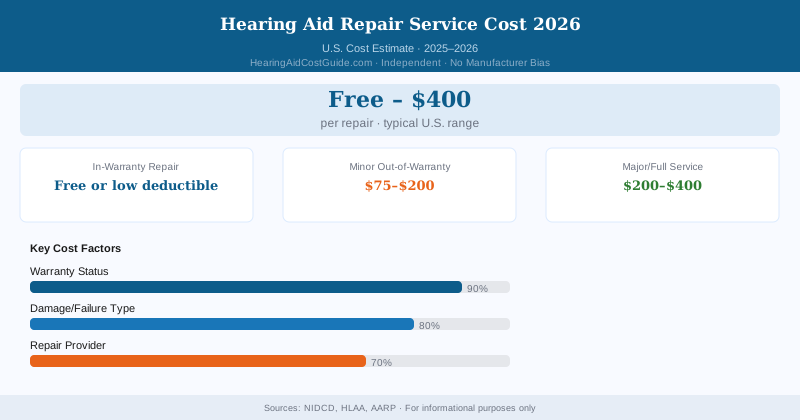
Good news: most hearing aid repairs are far less expensive than a replacement. The average out-of-pocket repair runs $100–$300 depending on what’s wrong and who fixes it. Here’s what you need to know before you hand it over.
Common Hearing Aid Repairs and Their Costs
| Repair Type | In-Warranty Cost | Out-of-Warranty Cost |
|---|---|---|
| Receiver (speaker) replacement | $0–$50 | $75–$200 |
| Microphone replacement | $0–$75 | $100–$250 |
| Shell crack or damage repair | $0–$100 | $75–$200 |
| Water/moisture damage cleaning | $0–$50 | $75–$150 |
| Battery door replacement | $0–$25 | $30–$75 |
| Volume control or button repair | $0–$50 | $50–$150 |
| Full manufacturer service | $0 in-warranty | $200–$400 |
| Tube or dome replacement (BTE) | $0–$15 | $15–$40 (DIY or office) |
Where You Get It Repaired Matters — A Lot
Manufacturer repair (mail-in): This is often the best value for out-of-warranty devices. Phonak, Oticon, Starkey, Signia, and Widex all offer flat-fee repair programs. Typical flat-fee: $150–$350 per device, which covers most component failures and includes a 6-month warranty on the repair. Turnaround is usually 5–10 business days.
Audiologist office repair: Your audiologist can handle basic repairs in-office (tube/dome replacements, cleaning, battery door swaps) often for $25–$75. More complex repairs get sent to the manufacturer — your audiologist acts as the middleman and may mark up the lab fee by $50–$100.
Third-party repair shops: Independent repair labs (in-person or mail-in) can be 20–40% cheaper than going through your original audiologist. Quality varies. Look for shops that are board-certified by the National Board for Certification in Hearing Instrument Sciences (NBC-HIS) or employ licensed hearing instrument specialists. Reputable shops include Hearing Aid Repair Lab, HearSource, and local independent audiologists who do their own bench work.
Big-box retail (Costco): If you bought your aids at Costco, Costco’s Hearing Center staff can handle basic repairs and will ship to the manufacturer for more complex work — usually with the same flat-fee structure. Non-Costco aids can also be serviced, but policy varies by location.
Warranty: The Most Important Variable
ASHA reports that most prescription hearing aids come with a 1–3 year manufacturer warranty that covers repairs and one loss/damage replacement. If your aids are still under warranty, you should pay nothing (or a small deductible) for most repairs.
Check your paperwork before paying for any repair. You’d be surprised how many people pay out-of-pocket for a repair that would have been covered.
Before scheduling any repair, ask your audiologist: “Is this device still under manufacturer warranty?” and “Does my hearing aid insurance plan cover repairs?” Some plans sold as add-ons cover repairs up to $500/year. You may have coverage you’ve forgotten about.
The Most Common Failure Points
Receiver (speaker): The most frequently replaced component in RIC (receiver-in-canal) hearing aids. The receiver wire sits in the ear canal and is exposed to moisture and wax. Replacement is often quick (15–30 minutes in-office) and runs $75–$150 out-of-warranty.
Moisture damage: According to hearing industry service data, moisture is the leading cause of hearing aid failure in humid climates and among active users. If your aid sounds distorted or intermittent, moisture in the microphone port or receiver is often the culprit. A professional cleaning and drying service runs $50–$100. Prevention: store aids in a dehumidifier case ($25–$60) every night.
Wax accumulation: Earwax blocking the receiver or microphone port causes most “dead aid” calls to audiologist offices. This is often something you can resolve at home with the cleaning tools that came with your device, or with a $10 wax guard replacement. Don’t pay a service fee for this if you can avoid it.
Tube degradation (BTE aids): The plastic tubing connecting the BTE unit to the earmold hardens and cracks over time. Tube replacement is straightforward and inexpensive — $15–$40 in-office, or DIY with tubing kits available online for under $10.
Repair vs. Replace: When to Repair and When to Walk Away
This is the real question. Here’s a practical framework:
Repair makes sense if:
- The device is 1–4 years old
- The repair cost is under 40% of replacement cost
- The underlying technology still meets your hearing needs
- You’re under warranty (then repair is almost always free)
Replace instead if:
- The device is 5+ years old and showing multiple failures
- You’ve repaired it twice in the past 12 months
- Your hearing loss has changed significantly since fitting
- Repair cost exceeds $400 and replacement technology would meaningfully improve your hearing
A 6-year-old pair of hearing aids that needs a $300 repair might not be worth fixing — especially when modern aids offer significantly better speech clarity, Bluetooth streaming, and rechargeable batteries. The NIDCD notes that hearing aid technology has advanced substantially in the past 5 years, and older devices may simply no longer provide optimal benefit.
Watch out for audiologists who push replacement aggressively when a repair would do. A $300 repair on a 4-year-old device is usually the right call. If you’re being pushed toward a $4,000 replacement for a device that’s only slightly out of warranty, get a second opinion.
DIY Repairs: What You Can Do at Home
You don’t need a service call for everything. These you can handle yourself:
- Wax guard replacement: $8–$15 for a pack of 8. Follow the tool instructions in your manual.
- Dome replacement (RIC aids): $15–$25 for a bag of assorted sizes. Snap on and off in seconds.
- Tubing replacement (BTE): Buy tubing online for $5–$10. Requires a thread tool but it’s manageable.
- Battery contact cleaning: Use a dry cotton swab to clean oxidized contacts in the battery compartment.
What you should never do at home: open the shell, attempt to replace the receiver chip yourself, or use liquid cleaners inside the microphone port. Those repairs require professional tools.
Knowing the repair landscape helps you avoid overpaying. Most hearing aid problems are fixable — and often cheaper to fix than you’d assume.