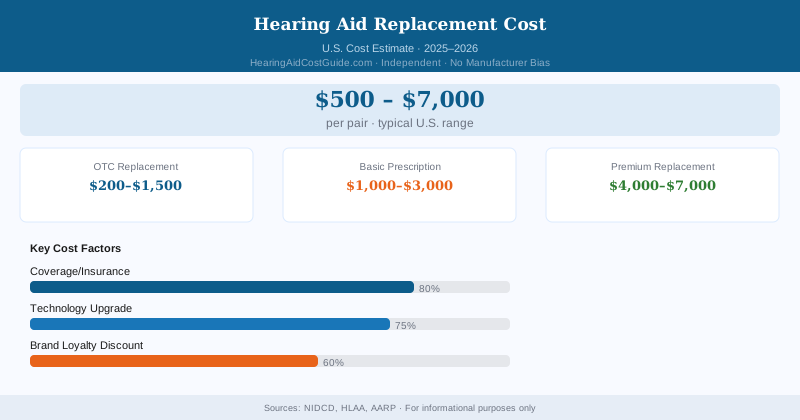
Here’s a scenario that plays out in audiology offices every week: a patient brings in a 7-year-old pair of hearing aids for yet another repair. The repair will cost $800. The aids are still technically functional. And the patient is still missing conversations at restaurants, asking family members to repeat themselves, and turning the TV up loud enough to bother the neighbors. The audiologist runs the numbers and explains that for $1,499 at Costco, the patient could have current technology with rechargeable batteries, direct Bluetooth streaming, and three years of follow-up care included — and spend less than the repair.
That’s the replacement decision in a nutshell. It’s not about how old the device is. It’s about what you’re getting out of it.
When to Replace: The Practical Framework
Most audiologists skip the “5–7 year rule” and use these triggers instead:
Replace when:
- Repairs cost more than 50% of the device’s current replacement value
- Your hearing has shifted enough that current aids can’t be reprogrammed to match your new audiogram
- Technology has advanced to a point where upgrading provides real benefit — AI processing, rechargeable batteries, Bluetooth, better noise reduction
- Physical damage makes reliable function impossible
- You’re consistently missing conversations or asking people to repeat themselves despite wearing aids
Don’t replace yet when:
- The aids work well and repairs are minor and infrequent
- Your hearing is stable
- Current technology meets your listening needs in the situations that matter to you
- A recent repair was successful and the device is functioning normally
Replacement Cost by Channel
| Channel | Replacement Cost (Per Pair) | Notes |
|---|---|---|
| Costco | $1,499–$2,199 | Best value; includes 3-year service |
| OTC direct (Jabra, Sony, Eargo) | $799–$1,599 | No professional fitting |
| Private audiologist (entry tier) | $2,500–$3,500 | Full service |
| Private audiologist (premium) | $4,500–$7,000 | Full service, premium technology |
| VA (veterans) | $0 | Includes premium brands |
| Medicare Advantage (with benefit) | $0–$2,000 copay | Plan dependent |
Why 5-Year-Old Aids Fall Behind
MarkeTrak data consistently shows that hearing aid wearers using older technology report lower satisfaction — not because the devices are broken, but because the gap between 2019 and 2025 performance in difficult listening environments is significant and measurable.
A 2018–2019 pair of hearing aids is missing:
- AI-driven noise processing that distinguishes speech from background noise in real time (2022+)
- Rechargeable batteries (widely available since 2019, now standard)
- Direct Android streaming (mainstream since 2022)
- Bluetooth 5+ performance
- Real-time language translation features available in select 2024 Starkey and Jabra models
If your 5-year-old aids are “working,” they’re still amplifying sound. But in a restaurant, a crowded event, or an outdoor conversation, the processing gap between 2019 and 2025 technology is something you’d notice immediately in a side-by-side comparison.
Building a Replacement Budget Now
You don’t need to wait until the aids fail. Budget for replacement proactively:
- Costco replacement ($1,500–$2,200): $25–$37/month over 5 years
- Private audiologist mid-tier ($4,500–$5,500): $75–$92/month over 5 years
- HSA contributions are the most tax-efficient way to accumulate this — contributions go in pre-tax and withdrawals for hearing aids are tax-free
Replacing Just One Aid
If one hearing aid fails or gets lost while the other is fine:
- Replacing the failed aid from the same current pair: $700–$3,500 (single-aid pricing)
- You get one aid with current technology, one that’s older generation
- Audiologists can program both aids to work together, but cross-generation performance can be inconsistent
If one aid fails after 5+ years, replacing both often makes more financial sense — you get consistent technology across both ears, both under new warranty, and the old working aid becomes an emergency backup.
If your hearing aids are failing but you’re 6–12 months away from a Medicare Advantage benefit renewal or employer benefit cycle, short-term bridge options exist:
- Manufacturer refurbished aids at 30–40% discount
- OTC hearing aids as temporary gap-fillers
- Request an extended loaner from your audiologist (some practices maintain loaner inventories)
Using your insurance benefit at the right time — when it aligns with device failure — maximizes value.
Upgrades That Actually Matter vs. Marketing Noise
Not every generation’s release justifies replacing a working device. Here’s an honest breakdown:
Worth replacing for:
- First-generation Bluetooth aids → modern direct streaming models (huge practical difference)
- Disposable battery → rechargeable (especially if dexterity is a concern)
- Severely deteriorating word recognition scores → cochlear implant evaluation
- Analog → digital (some older users are still on analog aids)
Probably not worth replacing for:
- Same technology tier with minor software updates
- New color options
- Marginally improved processing on already-premium devices
- “New generation” designation that’s primarily a marketing revision, not a technology leap
The End-of-Life Decision Tree
Step 1 — Apply the 50% rule: If repair costs exceed 50% of the current replacement value, replacement wins.
Example: 6-year-old aids with a $2,500 replacement value. An $800 repair is 32% of replacement cost — potentially worth it. But if those same aids need another repair within 12 months, you’ve crossed the threshold.
Step 2 — Project remaining useful life: Repairing a 6-year-old device typically buys 1–2 more years. Replacing now gives you 5+ years of service with modern technology. Run the per-year cost math.
Step 3 — Check for demonstrable benefit: Ask your audiologist to show you a measurable difference in speech understanding scores with current technology vs. your existing aids. If they can’t demonstrate a functional benefit, replacement may not be justified yet.
Don’t let audiologists or hearing aid chains pressure you into replacing aids that are still working well for your needs. “Your technology is outdated” is sometimes legitimate and sometimes a sales pitch. Ask for a performance comparison: “Can you show me a measurable difference in my speech understanding scores with current aids vs. newer aids?” If they can’t demonstrate a functional benefit, hold off.