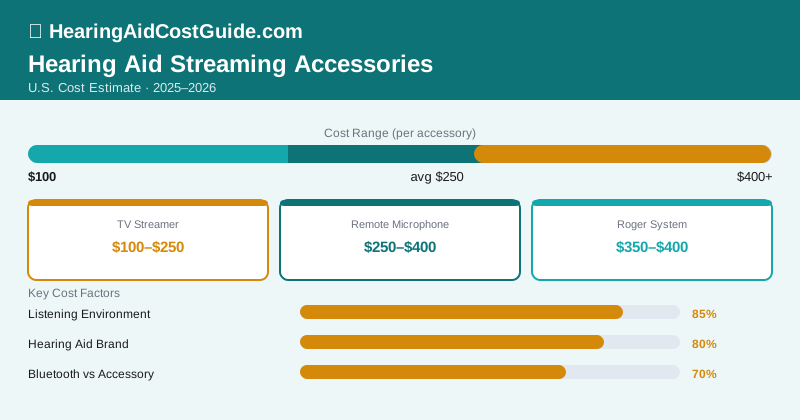
Three months into wearing hearing aids, the TV is still a problem. The devices work well in quiet conversations — exactly as the audiologist said they would. But the television still sounds like mumbling from the couch, and the volume war with your spouse is ongoing. That’s when many people discover that streaming accessories exist. A TV streamer at around $200 could have solved this from day one. Nobody mentioned it at the fitting.
This guide covers what each accessory actually does, when it’s worth buying, and when your hearing aids’ built-in Bluetooth already handles the same job.
TV Streamers: The Most Popular Add-On
A TV streamer is a small transmitter that plugs into your television’s audio output — 3.5mm, RCA, or optical. It wirelessly sends TV audio directly to your hearing aids at whatever volume you choose, independently of the room speaker. Your spouse watches at 40; you hear it at 70. No conflict, no compromise.
| Accessory | Typical Price | Compatible With |
|---|---|---|
| TV streamer (brand companion) | $150–$250 | Same-brand hearing aids only |
| Remote microphone | $250–$400 | Same-brand; directional pickup |
| Multi-microphone | $350–$400 | Table-top; picks up multiple speakers |
| Phone clip / Bluetooth adapter | $100–$200 | Older phones, non-MFi Android |
| Remote control (physical) | $100–$200 | Volume and program switching |
| Roger Pen (Phonak, standalone) | $700–$900 | Phonak Roger-enabled aids |
| Roger Select (Phonak) | $700–$800 | Phonak Roger-enabled aids |
Brand-specific TV streamers:
- Phonak TV Connector: ~$200
- Oticon TV Adapter 3.0: ~$200
- Starkey TV Streamer: ~$200
- Signia StreamLine TV: ~$200
- ReSound TV Streamer 2: ~$180
These are brand-specific. A Phonak TV Connector won’t work with Oticon hearing aids. This lock-in is one reason brand choice matters beyond just the hearing aids themselves — you’re also choosing an accessory ecosystem.
Remote Microphones: The Restaurant Solution
If one situation pushes people to seek help from an audiologist, it’s not being able to follow a conversation in a noisy restaurant. Hearing aids help, but their microphones pick up surrounding noise along with whoever you’re talking to. A remote microphone places a directional pickup close to your dining companion’s mouth and streams their voice directly to your ears — cutting through the background noise.
Remote microphones clip onto a lapel or sit on the table facing the person speaking. Your companion doesn’t need to do anything special.
- Phonak Roger Clip-On Mic: ~$750 (expensive, but consistently rated as best-in-class)
- Oticon RemoteMic: ~$250
- Starkey Table Microphone: ~$350
- ReSound Multi Mic: ~$350
The Phonak Roger system runs on a proprietary wireless protocol — not standard Bluetooth — that’s optimized for speech in noise. It’s significantly more expensive than competitors, but the Hearing Industries Association has cited Roger as a benchmark in difficult listening environments. If restaurant hearing remains your biggest unresolved complaint, a Roger-enabled hearing aid paired with a Roger microphone is worth the premium.
A useful rule of thumb:
Bluetooth handles well:
- Phone calls streaming directly to your hearing aids
- TV if you sit close to a streaming source
- Music and podcasts
- Video calls with grandchildren
Accessories add real value when:
- You need TV audio streamed across a larger room or varying distance
- Background noise in restaurants regularly defeats your hearing aids
- Your phone doesn’t support MFi or ASHA direct streaming
- You want a physical remote (if app-based control is frustrating)
- Your hearing aids use disposable batteries without built-in streaming
Many newer premium hearing aids with Bluetooth 5.2 or MFi handle most daily streaming without any accessories. An audiologist demo of your specific situation is worth more than any general rule.
Phone Clips and Bluetooth Adapters
If your hearing aids don’t have built-in Bluetooth — common with older devices or some behind-the-ear styles — a phone clip or Bluetooth adapter bridges the gap. It hangs around your neck or clips to your shirt, connects to your phone via standard Bluetooth, and relays audio to your hearing aids via FM or near-field magnetic induction.
- Phonak ComPilot Air II: ~$200
- Signia StreamLine Mic: ~$200
- Widex Com-Dex: ~$200
These are increasingly obsolete as direct Bluetooth becomes standard in new devices. But if you bought hearing aids before 2020, a phone clip may be the most practical upgrade available without replacing your aids entirely.
Physical Remote Controls
Smartphone apps have largely replaced physical remotes. But some users — particularly those who find touchscreen navigation frustrating or unreliable — still prefer buttons they can actually feel. A dedicated remote lets you adjust volume, switch programs, and mute and unmute your hearing aids with a single button press.
- Phonak Remote Control II: ~$150
- Oticon Remote Control 3.0: ~$170
- Signia Mini Pocket Remote: ~$130
If the companion app works well on your phone, you probably don’t need a physical remote. If you have dexterity issues or find apps unpredictable, the remote earns its cost.
Bundled vs. A-La-Carte Accessory Pricing
Some practices bundle one or two accessories into the hearing aid purchase price — TV streamers especially have become standard-issue at many clinics. Before you buy, ask:
- “What accessories are included in this price?”
- “What’s the a-la-carte price if I want to add accessories later?”
- “Are accessories covered under the warranty if they malfunction?”
Accessories are brand-specific and generally not interchangeable. Before buying a Phonak TV Connector, confirm your specific Phonak model is on Phonak’s compatibility list — not all Phonak aids work with all Phonak accessories. The same applies to every major brand. If you switch hearing aid brands at your next purchase, plan on replacing your accessories too.
Bottom Line
A TV streamer ($150–$250) is the single most worthwhile accessory for most people — it solves a daily friction point for a modest cost and almost nobody regrets buying one. Remote microphones ($250–$900) are worth considering if restaurant conversations remain your biggest challenge after adjusting to aids. Physical remotes ($100–$200) make sense if touchscreen controls are a barrier. If your new hearing aids have Bluetooth 5.2 or MFi direct streaming, you may not need any accessories at all — confirm with your audiologist before spending extra. See our hearing aid accessories cost guide for a broader look at maintenance and care costs beyond streaming.