Picture this: day three of a two-week trip to Japan, and you realize one hearing aid is gone — possibly left in the hotel bathroom, possibly fell out during a temple visit. You’re in a country where you don’t speak the language, you’re already managing communication with a single hearing aid, and you’re suddenly staring down the prospect of a $2,000+ emergency replacement in Tokyo. This is a real scenario that happens to hearing aid users every year. It’s also almost entirely preventable with about 30 minutes of preparation before you leave home.
Travel-Related Hearing Aid Cost Risks
| Risk | Potential Cost | Prevention |
|---|---|---|
| Lost hearing aid (domestic) | $1,200–$3,500 per aid | Loss/damage warranty |
| Lost hearing aid (international) | $2,000–$6,000+ (incl. international fitting) | L&D warranty + travel insurance |
| Forgotten charger | $30–$80 replacement | Pack extra, ship ahead |
| Battery depletion mid-trip | $5–$15 for batteries abroad | Pack 2+ weeks supply |
| Water damage (beach, pool) | $200–$600 out-of-warranty repair | Use IP-rated aids; dry after exposure |
| Airline TSA confusion causing damage | Rare; $0–$300 | Know TSA rules |
| Emergency audiologist visit abroad | $150–$500+ | Travel insurance with medical |
Before You Leave: Five Things to Do
1. Confirm your loss and damage coverage extends internationally. Many manufacturer L&D plans cover globally; some are US-only. Call your audiologist’s office or the manufacturer directly before traveling. Don’t assume.
2. Pack a complete supply kit. Bring at least a 2-week supply of:
- Wax filters (a pack of 8 lasts about 2 months under normal replacement schedules)
- Replacement domes or earmolds (pack of 6–10)
- Batteries if you use disposable — 3–4 weeks minimum for international trips
- Extra charger or charging case (if rechargeable)
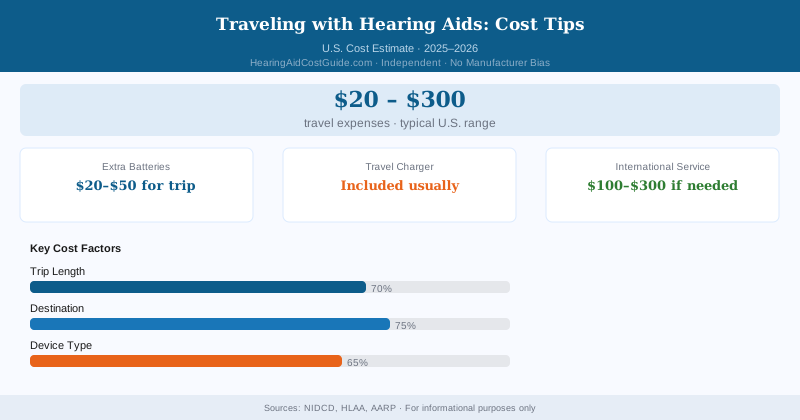
Total cost for a complete travel supply kit: $30–$60. That’s a cheap insurance policy.
3. Carry your audiologist’s contact info and a copy of your audiogram. If you need emergency fitting abroad, a local audiologist who has your audiogram can quickly identify appropriate temporary devices. Without it, you’re starting from scratch.
4. Set up remote programming before you go. Most major hearing aid brands offer remote programming through their apps. If something sounds off mid-trip, your audiologist back home may be able to make programming adjustments remotely without you finding a local clinic.
5. Check whether your homeowner’s or renter’s insurance covers hearing aids during travel. Some policies cover high-value electronics, including hearing aids, away from home. Worth a quick call to your insurance agent before an international trip.
Battery Management on the Road
Rechargeable aids: Bring the manufacturer charger AND a USB-C cable with universal adapter. Check the voltage range on your charger before traveling internationally — most modern chargers accept 100–240V, but it’s worth confirming. Consider whether your portable power bank can charge the hearing aid case if wall outlets aren’t accessible.
Disposable battery aids: Airports and pharmacies in major cities typically carry size 312 and 675 batteries. In rural areas or developing countries, your specific size may be genuinely unavailable. Pack 3–4 weeks’ supply for any international trip — and note that batteries drain slightly faster in humid, tropical climates.
Rechargeable hearing aid users crossing many time zones often underestimate the charging disruption. Jet lag, early arrivals, red-eye flights — it’s easy to skip a charging cycle and end up with dead hearing aids halfway through a sightseeing day.
Many Phonak and ReSound charger cases can charge from USB power banks, not just wall outlets. Pick up a compact power bank before you leave — it’s a $20–$40 solution to a potentially expensive problem.
TSA and Airport Security
Hearing aids can stay in your ears or in your carry-on through TSA security. You’re not required to remove them for X-ray screening.
What TSA recommends:
- Hearing aids stay in ears or carry-on
- They don’t need to go through the X-ray belt separately
- Cochlear implant users: full-body scanners (Advanced Imaging Technology) are safe with implants — confirm details with your surgeon and TSA
If you need assistance communicating at a TSA checkpoint, you can request written communication. TSA officers are trained to accommodate hearing-impaired travelers.
Water and Weather
Beach and pool: Most hearing aids are rated IP67 or IP68 (dust and water resistant) but aren’t built for extended submersion. Remove them before swimming, diving, or sitting in a hot tub regardless of IP rating.
Humid tropical climates: Run your dehumidifier daily. If you don’t have an electronic dryer, a small desiccant container from a travel store works adequately for short trips.
Extreme cold: Cold temperatures temporarily reduce battery capacity. In very cold weather, keep hearing aids in an inside pocket when you’re outdoors to maintain battery temperature.
Getting Help Abroad
Major cities worldwide — London, Paris, Sydney, Tokyo, Mexico City — have audiologists and hearing aid dealers who can handle emergency repairs, provide loaners, or dispense hearing aids. Phonak, Oticon, ReSound, and Signia all have international distribution networks.
Finding local help:
- Search “[City] audiologist hearing aid” for local providers
- Contact your manufacturer’s international customer service line
- Use your travel insurance’s medical assistance line to locate providers
Emergency hearing aid services in developed countries typically run $100–$400+ for urgent consultations. Expect to pay more for replacement aids internationally than you would at home.
Never pack your only pair of hearing aids in checked luggage. Airlines lose or damage checked baggage every day. Hearing aids always travel in your carry-on. If you’re traveling with prescription devices worth $3,000–$6,000, also check whether your homeowner’s or renter’s insurance rider covers them — some policies cover valuable electronics during travel.
Travel Insurance With Hearing Aid Coverage
Standard travel insurance medical coverage includes emergency care but typically treats hearing aids as personal property, subject to a per-item limit of $500–$1,500. For better coverage:
- Allianz, Travel Guard, and major travel insurers offer electronics or valuables riders
- Declare your hearing aids as high-value items on your policy
- Per-item coverage limits with riders: $1,500–$3,000 with most plans
For trips under 2 weeks, manufacturer L&D coverage (if your plan includes international coverage) is often sufficient. For extended international travel — multi-month trips, sabbaticals, extended family visits — confirm that your manufacturer L&D plan and travel insurance together provide adequate combined coverage for the scenario you’re most worried about.