A hearing aid amplifies sound. A cochlear implant replaces the damaged inner ear entirely — bypassing it with electronics and sending signals directly to the auditory nerve.
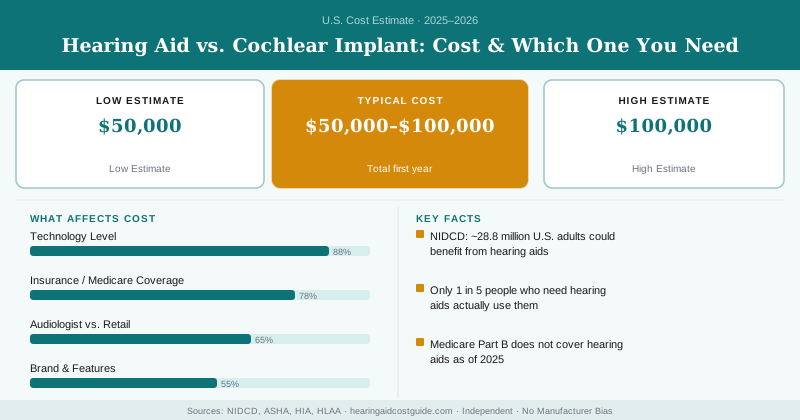
The cost difference reflects that difference. Hearing aids run $3,000–$8,000 per pair. A cochlear implant — once you add surgery, hospitalization, device hardware, and rehabilitation — typically totals $50,000–$100,000 per ear. The good news: cochlear implants are covered by Medicare and most private insurance for eligible patients. Hearing aids often aren’t.
Full Cost Comparison
| Cost Component | Hearing Aids | Cochlear Implant |
|---|---|---|
| Device hardware | $3,000–$8,000/pair | $25,000–$35,000/ear |
| Surgery | N/A | $15,000–$30,000 |
| Hospitalization | N/A | $5,000–$15,000 |
| Pre-implant evaluation | $0 (bundled) | $3,000–$6,000 |
| Fitting and programming | Included or $75–$200/visit | $3,000–$6,000 (rehabilitation) |
| Annual maintenance | $0–$300 | $1,000–$3,000 (processor upgrades) |
| Total first year | $3,000–$8,000 | $50,000–$100,000 |
What Each Device Does
Hearing aids are worn on or in the ear. They capture sound through a microphone, process it digitally, and deliver amplified sound through a speaker into the ear canal. They work by making sound louder and clearer for an ear that still has functional (if damaged) hair cells.
Cochlear implants are surgically implanted devices. The internal component — a receiver/stimulator — is placed under the skin behind the ear, with an electrode array threaded into the cochlea. The external processor captures sound and converts it to electrical signals sent through the skin to the implant. The implant then directly stimulates the auditory nerve — bypassing damaged hair cells entirely.
This is why cochlear implants can provide hearing to people with profound hearing loss where even the most powerful hearing aids provide little benefit. The cochlea’s hair cells aren’t needed; the auditory nerve is stimulated directly.
Candidacy Criteria: Who Gets Each
| Degree of Hearing Loss | Typical Device | Notes |
|---|---|---|
| Mild loss | OTC or entry hearing aid | No implant candidacy |
| Moderate loss | Prescription hearing aids | No implant candidacy |
| Severe loss | Premium hearing aids | May be implant candidate if aids insufficient |
| Profound loss | Power hearing aids first; cochlear implant if insufficient | Implant evaluation recommended |
| Total deafness | Cochlear implant | Hearing aids won’t provide adequate benefit |
FDA cochlear implant candidacy criteria (general guidelines):
- Adults with moderate-to-profound sensorineural hearing loss in both ears
- Adults who receive limited benefit from hearing aids (typically tested with word recognition scores below 50% in the ear to be implanted, or below 60% in the better-hearing ear)
- Children 12 months and older with severe-to-profound loss
The NIDCD reports that approximately 736,900 registered cochlear implant devices have been implanted worldwide as of 2019 — a relatively small number compared to the 430+ million people with disabling hearing loss globally, reflecting strict candidacy criteria.
Many cochlear implant recipients wear a hearing aid in the non-implanted ear simultaneously — a practice called “bimodal hearing.” This combines the benefits of both technologies: the implant handles the more severely impaired ear, while the hearing aid provides natural acoustic amplification in the better ear. Studies show bimodal hearing significantly improves speech understanding in noise compared to either device alone.
Insurance Coverage: The Key Difference
This is where cochlear implants have a major advantage over hearing aids:
Cochlear implants:
- Covered by Medicare (Parts A and B) as a surgical procedure — hospital, surgeon, and device costs
- Covered by most private insurance plans as a medical necessity
- Covered by Medicaid in most states for eligible adults and children
Hearing aids:
- NOT covered by Original Medicare (Parts A and B)
- Covered by some private insurance plans with significant variation
- Covered by Medicaid in some states for adults; most states cover them for children
The insurance disparity means that for a profoundly deaf Medicare beneficiary, a cochlear implant may cost $0 out of pocket, while a hearing aid for a mildly hard-of-hearing patient could cost $4,000–$6,000 with no coverage. This disconnect drives frustration for many patients and audiologists.
Risks and Recovery
Hearing aids: No surgical risk. Trial period of 30–75 days standard. If they don’t help, return them.
Cochlear implants: Involve surgery under general anesthesia. Risks include infection, device failure, changes to residual hearing (which is typically not preserved), and in rare cases, meningitis (vaccination required prior to implantation). Recovery takes weeks. Learning to interpret cochlear implant sound takes months — the brain must adapt to a new type of auditory signal.
Cochlear implantation is generally irreversible — once the electrode array is inserted into the cochlea, residual natural hearing in that ear is typically destroyed. This is an important consideration for adults with some remaining hearing who are evaluating their options. A cochlear implant evaluation team will walk through this decision carefully.
When to Consider an Evaluation for a Cochlear Implant
Ask your audiologist for a cochlear implant referral if:
- You have severe-to-profound loss and hearing aids aren’t providing adequate benefit
- You’re struggling with speech understanding even in quiet environments with aids
- Your word recognition score in the ear being evaluated is below 50%
- You have progressive hearing loss and are approaching profound levels
An evaluation at a cochlear implant center typically includes audiological testing, medical evaluation, imaging (CT or MRI), and counseling — and it doesn’t commit you to surgery.
Bottom Line
If hearing aids can meet your needs, they’re the right starting point — dramatically lower cost, no surgical risk, reversible. For adults with severe-to-profound loss where aids provide limited benefit, cochlear implants are a medically appropriate and often insurance-covered path to functional hearing. The first step is a comprehensive audiological evaluation to know where you fall on the spectrum.