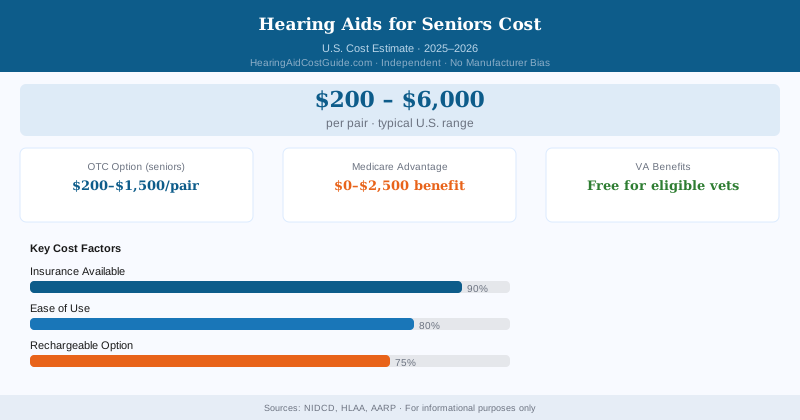
The NIDCD reports that about 1 in 3 adults over 65 has some degree of hearing loss, making it one of the most common chronic conditions among older Americans. And yet original Medicare — the program covering most of those adults — excludes hearing aids entirely. Zero coverage. This gap has existed for decades despite repeated legislative attempts to fix it.
But the gap doesn’t have to mean paying $5,000+ out of pocket. With the right approach, most seniors can access quality hearing aids for $1,500–$2,500.
Cost Options for Seniors
| Option | Cost | Notes |
|---|---|---|
| Original Medicare (Parts A+B) | $0 coverage | No hearing aid benefit |
| Medicare Advantage with hearing benefit | $0–$2,000 copay | 76% of MA plans include hearing |
| Costco (with membership) | $1,499–$2,199/pair | Best value for most seniors |
| OTC hearing aids | $799–$1,499/pair | Good for mild-moderate loss |
| Private audiologist | $3,500–$7,000/pair | Full service, highest quality |
| VA benefits (eligible veterans) | $0 | Best option for veterans |
Working Around the Medicare Gap
Original Medicare has excluded hearing aids since the program was created in 1965. About 10 million Medicare beneficiaries have significant hearing loss without coverage. Here’s how to work around it:
Switch to or enroll in Medicare Advantage. If you’re approaching 65 or in the Medicare Annual Enrollment Period (October 15 – December 7), choose an MA plan with a meaningful hearing benefit. Look specifically for plans with $1,000–$2,000 allowances per pair — not just “hearing exam coverage,” which is a much weaker benefit. About 76% of Medicare Advantage plans now include some hearing benefit.
Shop at Costco. The Kirkland Signature 10.0 at $1,499/pair uses technology comparable to devices selling for $4,500+ at private clinics. The included 3-year follow-up care means you won’t pay $150/visit for adjustments. No age requirement, no insurance needed.
Use OTC hearing aids for mild-to-moderate loss. If your audiogram shows mild-to-moderate high-frequency loss, OTC devices from Jabra, Sony, or Lexie cost $799–$1,499/pair and don’t require insurance or a prescription.
Check VA eligibility. If you served in any branch of the U.S. military, VA audiology provides free hearing aids including premium-tier devices. This is the best available option for eligible veterans — and it’s underutilized.
Medicare Annual Enrollment Period: October 15 – December 7 each year.
If you need hearing aids and your current Medicare Advantage plan has no hearing benefit (or a poor one), you can switch to a plan with a stronger hearing benefit during AEP. The new plan takes effect January 1. Savings versus paying privately can be $2,000–$4,000 per pair. Compare plans at medicare.gov.
Features That Matter Most for Seniors
Rechargeable batteries eliminate fumbling with tiny size 312 batteries — genuinely important for anyone with arthritis or reduced hand dexterity. Most current Costco and major-brand aids are rechargeable. If you’re buying new, there’s almost no reason to choose disposable battery models.
Bluetooth to smartphone and TV. For TV watching — one of the most common hearing complaints among older adults — direct Bluetooth streaming to hearing aids is transformative. You set the TV at a comfortable level for others in the room and stream audio directly to your ears. No more volume wars.
Physical controls. Some hearing aids rely entirely on smartphone apps for adjustments. If app-based control is a barrier — small screen, unfamiliarity with smartphones — ask specifically for models with physical volume buttons and program switches.
Telecoil (T-coil). Connects wirelessly to hearing loop systems installed in many churches, theaters, banks, and airports. Highly valuable for seniors who attend religious services or cultural events. Not all hearing aids include telecoil, so request it specifically if it matters to you.
Fall detection (Starkey Genesis AI). An optional feature in select Starkey devices. Worth considering for seniors who live alone.
The Cognitive Health Argument for Getting Aids Now
The 2023 ACHIEVE trial, published in The Lancet, found that treating hearing loss in high-risk older adults reduced cognitive decline by 48% over three years. This is one of the strongest evidence-based arguments for treating hearing loss early — not waiting until it’s severe.
At $1,499 for Costco hearing aids, the cost-per-year of potential dementia prevention is remarkably low compared to the $30,000+ annual cost of dementia care.
AARP has consistently advocated for hearing care access in this population, noting that the social isolation caused by untreated hearing loss compounds into depression, withdrawal, and health decline — a cascade that hearing aids can interrupt.
Social Isolation Is a Real and Measurable Risk
Untreated hearing loss is strongly associated with social withdrawal, depression, and anxiety in older adults. People with hearing loss report avoiding restaurants, phone calls, family gatherings — situations where communication is difficult. That avoidance leads to isolation, which compounds health decline far beyond hearing.
Hearing aids that restore social engagement have measurable mental health benefits in this population. It’s not just about hearing better. It’s about staying connected.
“I can hear fine at home” is one of the most common statements audiologists hear from seniors who need hearing aids. Home environments are quiet. The real test is a restaurant, a family gathering with multiple conversations, or a church service. If you’re consistently asking people to repeat themselves or avoiding social situations because you can’t follow conversation, get an audiogram — don’t wait for the loss to get worse.
Low-Income Senior Options
- Medicaid dual-eligible: Seniors enrolled in both Medicare and Medicaid may access state Medicaid hearing aid benefits — coverage varies by state
- SHIP (State Health Insurance Assistance Program): Free Medicare counseling at shiptacenter.org to identify the best Medicare plan option for your hearing coverage needs
- Starkey Foundation and Lions Club: Provide free hearing aids for qualifying low-income seniors
- Community health centers: Federally qualified health centers (FQHCs) sometimes offer audiology services on a sliding-scale fee basis