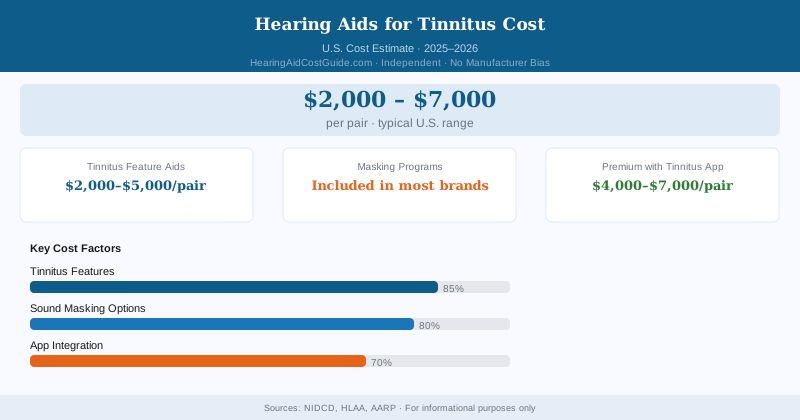
Here’s a number that surprises most tinnitus sufferers: 90%. That’s the percentage of people with chronic tinnitus who also have measurable hearing loss, according to the American Tinnitus Association. And that overlap isn’t a coincidence. When the auditory system doesn’t get enough sound input — because of hearing loss — the brain turns up its own internal “gain” to compensate. Tinnitus is often that turned-up phantom signal. Hearing aids address tinnitus from the source: they restore the sound input the auditory system has been starved of, reducing the brain’s compensatory hyperactivity.
Hearing Aid Cost With Tinnitus Programming
| Option | Price Per Pair | Tinnitus Feature |
|---|---|---|
| Costco Jabra Enhance Pro | $1,799 | Basic sound enrichment |
| Widex Moment Sheer 330 | $3,500–$4,200 | Zen fractal tones + sound therapy |
| Oticon More 1 + SoundSupport | $4,200–$5,500 | Tinnitus SoundSupport |
| Starkey Evolv AI + Multiflex | $4,500–$6,200 | Multiflex tinnitus program |
| Phonak Audéo Lumity + tinnitus | $4,800–$6,500 | Acoustic CR neuromodulation |
| Signia Pure Charge&Go + notch | $3,800–$5,500 | Notch therapy |
One thing to know upfront: tinnitus programming is a software feature, not a hardware premium. The price differences above reflect the base device tier — you’re not paying extra for the tinnitus capability. A $4,200 Oticon costs that much for its hearing performance, not because the tinnitus program is expensive to include.
Three Ways Hearing Aids Reduce Tinnitus
Mechanism 1: Restoring auditory input. By amplifying the frequency ranges where your hearing loss is greatest, hearing aids give the auditory system the stimulation it’s been missing. The neural hyperactivity that generates tinnitus quiets down when the system gets proper input again. This is the primary mechanism — and it’s why hearing aids help tinnitus even before you turn on any dedicated tinnitus program.
Mechanism 2: Environmental masking. With hearing aids in, background sounds are louder. Traffic, fans, ambient conversation — they naturally cover the tinnitus signal. Tinnitus is loudest in silence; hearing aids bring the environment back in.
Mechanism 3: Dedicated sound therapy programs. Most premium hearing aids include built-in tinnitus programs that play customizable background sounds through the aids — white noise, pink noise, ocean waves, or proprietary sounds like Widex Zen. These run simultaneously with normal hearing aid function.
Widex Zen: A Purpose-Built Approach
Widex pioneered fractal tinnitus therapy with their Zen tones — soft, chime-like sounds that follow a fractal mathematical pattern. The reason fractal tones work where simple white noise sometimes doesn’t: the brain tunes out repetitive, predictable sounds relatively quickly (called habituation). Fractal patterns are predictably unpredictable — varied enough that the brain doesn’t habituate.
Clinical studies show Widex Zen reduces Tinnitus Handicap Inventory (THI) scores significantly over 3–6 months of consistent use. Zen comes programmed into any current Widex hearing aid at no added cost.
Signia’s notch therapy targets people with a specific single-frequency tinnitus — a pure tone, not broadband noise. The hearing aid identifies the tinnitus frequency and creates a narrow “notch,” reducing amplification at that precise frequency. This disrupts the neural feedback loop sustaining the tinnitus signal. Effective for approximately 60–70% of patients with tonal tinnitus in clinical trials.
Do Hearing Aids Help Tinnitus Without Hearing Loss?
For the roughly 10% of tinnitus patients with normal audiograms — what audiologists call “normal hearing tinnitus” — hearing aids are generally not recommended. There’s no amplification deficiency to correct, so the primary mechanism of benefit doesn’t apply.
Options for normal-hearing tinnitus patients:
- Sound generators (in-ear noise generators without hearing aid amplification)
- CBT (Cognitive Behavioral Therapy) for tinnitus distress management — strong evidence base
- TRT (Tinnitus Retraining Therapy) counseling protocol
- Lenire bimodal neuromodulation — newer FDA-approved device combining sound and tongue stimulation
- Stress and sleep management — stress is a major tinnitus exacerbator, and tinnitus severity often tracks with sleep quality
OTC Hearing Aids for Tinnitus: Limited but Available
Some OTC hearing aids include basic tinnitus features:
- Jabra Enhance Select 500: Includes a simple masking noise option in its app ($1,499)
- Eargo 7: Has a noise relief program ($1,599)
These are significantly cheaper than prescription tinnitus aids but offer substantially less customization than audiologist-programmed devices. Tinnitus management is one area where professional fitting and programming provides genuine added value — the ability to fine-tune the therapy signal to your specific tinnitus is clinically meaningful, not just a premium upsell.
Combination Devices: When You Need Both at Once
When tinnitus is severe enough to warrant dedicated sound therapy, but you also need hearing aid amplification, “combination instruments” provide both functions simultaneously. The audiologist controls the hearing aid amplification and the tinnitus therapy signal independently — optimizing both without compromise.
These are prescription-only:
- Widex Moment + Zen: $4,500–$6,500/pair
- Starkey Genesis AI + Multiflex: $5,000–$6,800/pair
- Oticon More + SoundSupport: $4,500–$6,500/pair
Finding a Tinnitus Specialist
Not all audiologists have specialized tinnitus training. Look for:
- Board-certified audiologist (CCC-A credential from ASHA)
- TRT-trained clinician (Tinnitus Practitioners Association certification)
- Academic medical center audiology departments
- The American Tinnitus Association’s provider directory at ata.org
Tinnitus management requires patience — benefits from hearing aids typically appear gradually over 4–12 weeks as the brain adapts. Many patients report minimal change in the first 2–3 weeks. Give the process time before concluding that hearing aids aren’t helping your tinnitus. If there’s been no meaningful change after 3 months of consistent wear, discuss adding formal TRT or CBT to your care plan. The two approaches together are more effective than either alone.