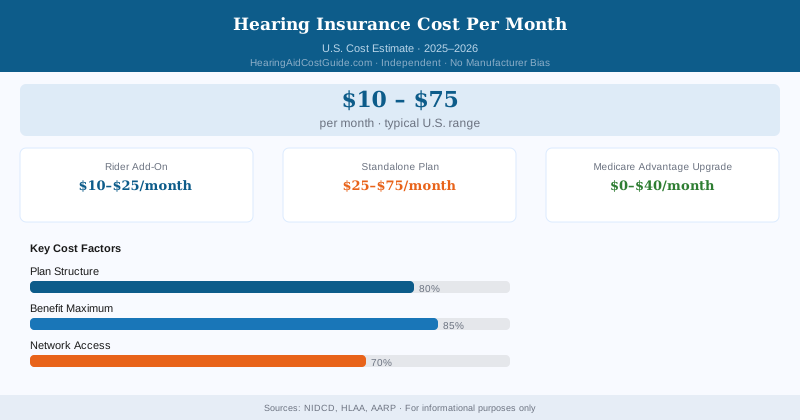
Most people assume hearing insurance works like dental insurance — you pay a monthly premium, you get substantial coverage, and the math is straightforward. Actually, hearing “insurance” is a patchwork of discount programs, network arrangements, and riders with wildly different real-world values. Before you hand over $30 a month, here’s what you need to know.
Hearing Insurance Plan Costs and Benefits (2025)
| Plan / Provider | Monthly Cost | Hearing Aid Benefit | Frequency |
|---|---|---|---|
| TruHearing (standalone) | $10–$20/person | $699–$1,999/pair copay | Every 3 years |
| UnitedHealthcare Hearing | $0 (part of MA plan) | $500–$2,000/pair | Annually or per plan |
| AARP Hearing Care (UHC) | Included with AARP plan | $500–$2,000/pair | Per plan terms |
| Amplifon Network (discount) | Free to join | 20–35% discount off retail | No limit |
| HearingLife Insurance | $20–$45/month | $1,000–$2,500/pair | Every 2 years |
| Blue Cross Hearing (varies) | $15–$35 rider | $500–$1,500/pair | Every 3 years |
| HLAA TruHearing discount | Free (HLAA membership $30/yr) | Discounted pricing | No benefit, discount only |
TruHearing: The Most Common Network
TruHearing isn’t an insurance company — it’s a benefit management firm that negotiates discounted pricing with audiologists and device manufacturers, then distributes those discounts through insurers, employers, and Medicare Advantage plans. If your plan has a “hearing benefit,” there’s a good chance TruHearing is running it behind the scenes.
Here’s how the process actually works:
- You call TruHearing (800-TRUE-HEARING) and they verify your benefit
- You pick a TruHearing-affiliated audiologist near you
- Your audiologist fits devices from TruHearing’s device catalog
- You pay the TruHearing copay — which varies by device tier and plan
- Three follow-up appointments are included
TruHearing device tiers:
- TruHearing Select: $699/aid — entry-level devices from major brands
- TruHearing Advanced: $999/aid — mid-tier devices
- TruHearing Premium: $1,399/aid — higher-tier devices
- TruHearing Premium Plus: $1,999/aid — near-premium devices
Those same devices at retail — without TruHearing — might run $2,500–$4,500 per aid. The pricing is a genuine discount, but you’re locked into their catalog and network of providers. According to the Hearing Loss Association of America (HLAA), only about 30% of Americans who need hearing aids actually use them, and cost is the number-one barrier. TruHearing’s model does help close that gap for people with employer or Medicare Advantage coverage.
If your Medicare Advantage plan includes a TruHearing benefit at no additional premium, use it. The discounted pricing genuinely beats retail. But compare TruHearing copay prices to:
- Costco (no benefit required, $1,499–$2,199/pair)
- OTC devices on Amazon ($799–$1,499/pair)
If the TruHearing copay is $1,999/pair for Select-tier aids, you might do as well or better at Costco without any network restrictions.
Standalone Hearing Insurance: The Math
Run this scenario for a typical adult buying standalone hearing insurance:
- Premium: $20/month × 12 months = $240/year
- 3-year premium total: $720
- Benefit: $1,000–$2,500 per pair
- Net value if used in year 3: $280–$1,780 in savings
That math works — if you actually buy hearing aids during the benefit period. Miss the window and you’ve paid $720–$1,440 for nothing. Standalone hearing insurance makes the most financial sense for people who know they need aids soon but want to spread the cost rather than pay everything upfront.
Employer Group Hearing Benefits
Check your benefits portal — hearing coverage is among the most underadvertised employer perks. What you might find:
- Hearing exam coverage: Usually bundled into standard medical benefits as a specialist visit
- Hearing aid rider: Optional add-on for $5–$25/month, covering $500–$2,000 per pair
- TruHearing/AudiologyOnline employer programs: Discount access rolled into your benefits package
Call your HR department and ask specifically about hearing benefits. Don’t assume the absence of a prominent listing means nothing exists.
AARP Hearing Care Program (Through UHC)
AARP members can tap into UnitedHealthcare’s hearing benefit program:
- AARP membership: $16/year
- Hearing benefit through UHC: Available to AARP members through participating UHC Medicare Advantage plans
- Benefit value: $500–$2,000 per pair, varies by plan
This isn’t a standalone hearing insurance product. It’s a benefit within a Medicare Advantage plan that AARP members can access — an important distinction when you’re comparing what you’re actually buying.
HearingLife Financing Plans (Not Insurance)
HearingLife offers financing through CareCredit and internal programs. Those are loans, not insurance. A $3,000 hearing aid financed at 18% APR over 24 months costs $3,575 total — you’re spending more, not less. Don’t let the monthly-payment framing make financing look like coverage.
Discount programs (Amplifon, TruHearing access without insurance, HLAA member pricing) are often marketed using “insurance” language. A discount is not insurance — you’re paying full discounted price, not paying a premium and receiving a benefit. Know which type of program you’re enrolling in before assuming your costs are covered.
Bottom Line: Is Hearing Insurance Worth It?
For most people without Medicare Advantage hearing benefits:
- If you need hearing aids in the next 1–2 years: Yes, standalone hearing insurance or adding a hearing rider to employer coverage can provide real savings
- If your hearing is fine: Skip the premium and self-insure by saving that amount instead
- If you have Medicare Advantage: Check your plan’s existing hearing benefit before buying separate coverage
- If you’re a veteran: Use VA benefits before considering any paid insurance — VA provides free hearing aids to eligible veterans, making most commercial hearing insurance redundant