Sandra had been asking her family to repeat themselves for two years before she finally booked a hearing appointment. Then she spent two more weeks stalling because she couldn’t figure out what it would cost or what would actually happen when she got there. That’s a common pattern — and it’s fixable with about five minutes of research.
Here’s exactly what a first hearing consultation costs and what you should walk out with.
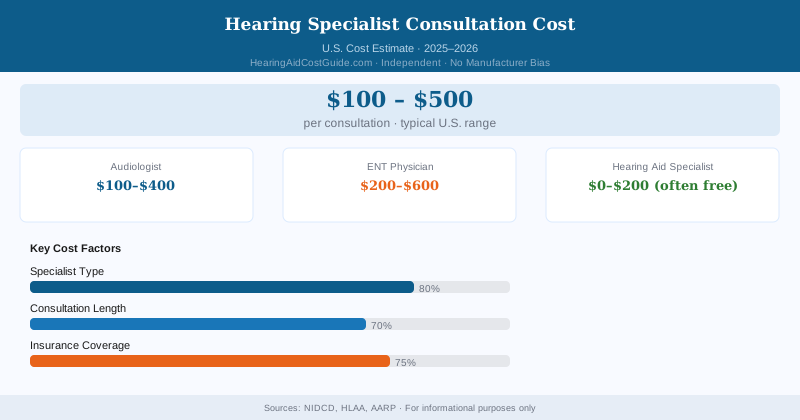
First Hearing Consultation Cost by Provider Type
| Provider | Consultation Cost | Includes Audiogram? | Hearing Aid Focused? |
|---|---|---|---|
| Private audiologist (AuD) | $150–$350 | Yes | Not primarily |
| ENT physician | $200–$450 | Often (via in-house audiology) | No |
| Hearing aid chain (HearingLife, etc.) | Free–$50 | Basic screening | Yes |
| Costco Hearing Center | Free | Yes (comprehensive) | Yes |
| Hospital audiology department | $200–$400 | Yes | Not primarily |
| Online audiology consultation | $50–$150 | Screening-level only | Varies |
The Difference Between Consultation and Comprehensive Evaluation
A consultation is a meeting to discuss your concerns and figure out what testing or treatment makes sense. Some audiologists schedule this as a standalone appointment before doing any diagnostic work.
A comprehensive audiological evaluation is the actual testing — audiogram, tympanometry, speech testing — that produces a diagnosis and, if needed, a hearing aid prescription. Most practices combine both into one 60–90 minute appointment.
When you call to book, ask this specific question: “Does the initial appointment include a comprehensive hearing test?” The answer tells you whether you’re booking a consult, an evaluation, or both.
What to Expect at a First Audiology Consultation
Before you go:
- Write down your symptoms: which ear(s) are affected, when you first noticed changes, which situations are hardest (noisy restaurants? phone calls? TV?)
- List medications — especially antibiotics, chemotherapy agents, loop diuretics, and quinine-based drugs, which can all cause hearing loss
- Note any significant noise exposures in your history (machinery, concerts, firearms, industrial work)
During the appointment:
- Case history (10–15 minutes): Audiologist takes a detailed history of your hearing health
- Ear examination (5 minutes): Otoscopy checks the ear canal and eardrum
- Tympanometry (5 minutes): Measures middle ear pressure
- Pure-tone audiometry (15–20 minutes): Tests your hearing thresholds in a sound booth
- Speech audiometry (10–15 minutes): Word recognition testing
- Results review (15–20 minutes): Audiologist explains your audiogram and answers questions
What you leave with:
- Your audiogram (always ask for a copy — more on this below)
- An explanation of what the findings mean
- Specific recommendations: monitoring, hearing aids, ENT referral, or all three
According to the NIDCD, the average person waits 7 years between noticing hearing problems and seeking professional help. The consultation itself rarely takes longer than 90 minutes. The gap between noticing and acting is almost entirely avoidable.
- What degree and type of hearing loss do I have?
- What do my results mean for my daily life?
- What are my treatment options, including non-hearing-aid options?
- Am I a candidate for OTC hearing aids, or do I need prescription?
- Do I need to see an ENT as well?
- How often should I be retested?
- Are there any medications or conditions contributing to my hearing loss?
- Can I have a copy of my audiogram?
Free Hearing Consultations: What’s Actually Free
Costco: Comprehensive free hearing evaluation by a licensed hearing instrument specialist. This produces a full, diagnostic-quality audiogram. There’s no obligation to buy anything — though you’re clearly in a retail environment. For the price (nothing), the quality is genuinely good.
Hearing aid chains (HearingLife, Miracle-Ear, Beltone): Offer free “consultations” that typically include a shorter screening test and a sales presentation. Less clinically thorough than a private practice or Costco evaluation.
Online screenings: Useful for deciding whether to seek a professional evaluation. Not appropriate for diagnosis or hearing aid prescription — too many variables (headphone quality, ambient noise) affect results.
Insurance Coverage for the First Visit
With medical insurance: An initial audiologist or ENT visit is typically covered at your specialist copay when there’s a clinical reason (symptom-based, not routine screening). Call ahead to confirm in-network status and whether a referral is needed.
Medicare Part B: Covers diagnostic audiological evaluations when ordered by a physician for a medically necessary reason. It does not cover routine screenings. A physician referral may be required — confirm before your appointment to avoid a surprise bill.
Without insurance:
- Costco hearing evaluation: $0 (requires Costco membership)
- HLAA-affiliated free screening events: $0 (check hlaa.org for local events)
- Community health center: Sliding-scale fee based on income
- Private audiologist: $150–$350; many offer payment plans
What to Do With Your First Consultation Results
Normal results: Schedule a recheck in 3–5 years; sooner if you notice changes.
Mild hearing loss: Discuss whether hearing aids are appropriate now or whether monitoring makes sense. Mild loss doesn’t automatically require amplification.
Moderate+ hearing loss: Proceed to a hearing aid consultation. Bring your audiogram copy to any other provider you consult — Costco, hearing chains, or online platforms can all use it.
Asymmetric or unexpected findings: Take your audiologist’s ENT referral seriously. Asymmetric loss, sudden hearing changes, acoustic neuroma suspicion, and vestibular findings are medical concerns that go beyond what an audiologist can manage alone.
Your audiogram belongs to you. Some hearing aid retail chains use proprietary formats that are hard to share with competitors, or pressure patients not to take their results elsewhere. This is unethical. Insist on a copy of your actual test data and take it wherever you want — including a second opinion.