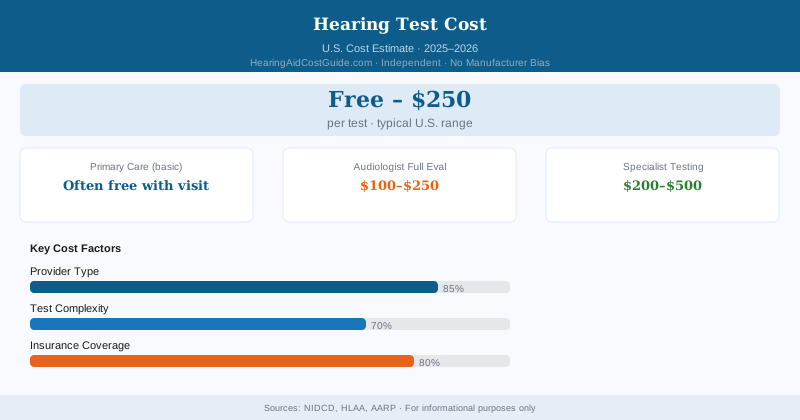
48 million Americans have some degree of hearing loss. The average person waits seven years between first noticing symptoms and finally getting a hearing test — and cost uncertainty is a big part of why. Here’s exactly what you’ll pay at each type of provider, so that barrier disappears.
Hearing Test Cost by Provider Type
| Provider | Test Type | Typical Cost | Insurance Coverage |
|---|---|---|---|
| Online / app screening | Basic frequency check | Free | N/A |
| Pharmacy / chain clinic | Basic screening | Free–$50 | Rarely covered |
| Costco Hearing Center | Comprehensive | Free | N/A |
| Private audiologist (no insurance) | Full audiogram | $150–$350 | Often covered |
| ENT physician | Medical evaluation + hearing | $200–$450 | Usually covered |
| Hospital audiology department | Full diagnostic | $200–$400 | Often covered |
| Pediatric audiologist | Children’s evaluation | $200–$500 | Usually covered |
Free Hearing Screenings: What You Actually Get
Online tests (Mimi Hearing Test, ReSound app, ASHA online screener): These check whether you can detect pure tones at a few key frequencies through your headphones. Useful for flagging potential problems. But they can’t identify the type, degree, or cause of hearing loss — and results depend heavily on your headphone quality and room noise.
Costco Hearing Centers: Free comprehensive hearing evaluations by licensed hearing instrument specialists. You get a full audiogram. The context is a retail environment where the logical next step is a hearing aid purchase conversation — but there’s no obligation to buy, and the test quality is genuinely diagnostic.
HearingLife, Miracle-Ear, and chain centers: These typically offer free “screenings” — abbreviated tests that function more as a sales entry point than a clinical evaluation. Less thorough than what you’d get at a private practice or Costco.
Clinical Audiogram: The Standard Test
A full audiological evaluation at a private audiologist costs $150–$350 without insurance and runs 60–90 minutes. It includes:
- Pure-tone audiogram: Tests hearing thresholds at frequencies from 250 Hz to 8,000 Hz — and sometimes up to 16,000 Hz for high-frequency assessment
- Speech audiometry: Measures how clearly you understand speech at different volumes
- Tympanometry: Checks eardrum and middle ear function
- Immittance audiometry: Evaluates acoustic reflexes
The result is your audiogram — a graph showing your hearing thresholds in each ear at each frequency. This document is what audiologists use to prescribe and program hearing aids. It’s also yours to keep and share with any provider you choose.
Medicare Part B covers diagnostic hearing and balance exams when ordered by a physician for a medically necessary reason. It does NOT cover routine hearing screenings. Most private insurance plans cover audiological testing at 70–100% after deductible when ordered by a physician or deemed medically necessary. Call your insurer before your appointment to confirm coverage — the distinction between “diagnostic” and “routine” can mean the difference between full coverage and a $300 out-of-pocket bill.
ENT Hearing Evaluation: When You Need a Doctor
An ENT (otolaryngologist) evaluation makes sense when you have:
- Sudden hearing loss — get in within 24–48 hours. This can be a medical emergency requiring immediate steroid treatment
- Unilateral hearing loss (one ear significantly worse than the other)
- Ear pain, drainage, or visible abnormalities
- Dizziness or balance problems alongside hearing changes
- History of noise exposure, head trauma, or previous ear surgery
ENT visits cost $200–$450 for the initial evaluation and typically include an in-house audiogram done by their audiology staff. This visit goes through your standard medical insurance benefit — not the hearing benefit — and is usually covered.
Children’s Hearing Tests
Pediatric evaluations cost $200–$500 depending on the child’s age and the tests required. Infants and toddlers who can’t respond to standard pure-tone testing require specialized approaches:
- ABR (Auditory Brainstem Response): An electrophysiological test that can be done while the child sleeps — or under sedation for younger children, adding $200–$600 to the evaluation
- OAE (Otoacoustic Emissions): A quick test of cochlear function, often used as initial screening
Most states mandate newborn hearing screening before hospital discharge, covered under standard newborn care. The NIDCD reports that about 2–3 out of every 1,000 children are born with detectable hearing loss — early detection dramatically improves outcomes.
Don’t substitute an online screening for a clinical audiogram if you’re actually experiencing hearing difficulties. Online tests can’t identify the type of hearing loss (sensorineural vs. conductive), can’t detect middle ear problems, and aren’t calibrated — results vary significantly based on your headphones and the noise in your room. They’re a starting point, not a diagnosis.
Getting the Most From a Hearing Test Appointment
- Bring a list of medications — some are ototoxic (damaging to hearing), and your audiologist needs to know
- Note when you first noticed problems and which ear seems worse
- Ask for a printed copy of your audiogram — you’re entitled to it
- Ask your audiologist to explain each part of the results in plain language, not audiological jargon
- Don’t feel obligated to buy hearing aids at the same appointment. Take the audiogram and compare options at your own pace
Bottom Line
A comprehensive hearing test runs $150–$350 at a private audiologist, is often covered by insurance when there’s a medical reason, and costs exactly nothing at Costco. If you’ve been putting off getting tested because of cost uncertainty, the free Costco option or an insured visit eliminates that barrier. Seven years is too long to wait.
Frequently Asked Questions
A comprehensive hearing test at an audiologist typically costs $0–$200 if you have insurance that covers preventive care, or $100–$200 out-of-pocket without insurance. Some audiologists offer free screenings to encourage follow-up purchases, but a full diagnostic evaluation usually falls in the $150–$200 range at independent practices.
Medicare covers hearing tests only if ordered by a physician for a medical reason (not routine screening), and you'll typically pay 20% coinsurance after meeting your deductible. Most private insurance plans do not cover routine hearing tests, though some employer plans include annual screenings at no cost; contact your insurer to verify your specific coverage.
A standard hearing test takes 20–30 minutes and involves sitting in a soundproof booth while responding to tones at different volumes and frequencies. The audiologist will also conduct speech discrimination testing and may perform additional assessments like tympanometry; plan for a total appointment time of 45–60 minutes including consultation and results review.