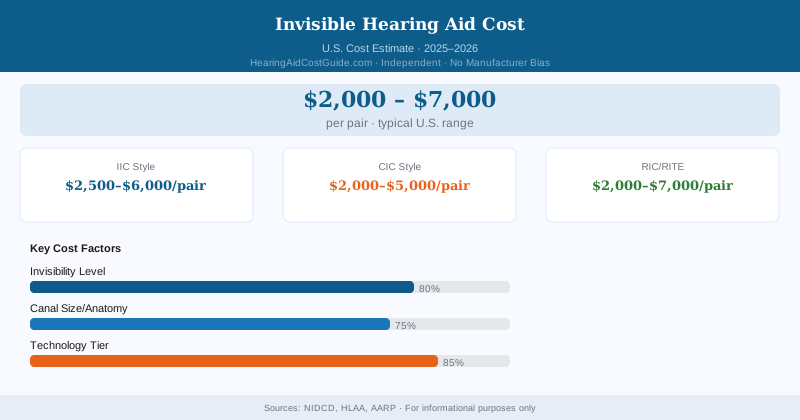
The appeal is obvious: hearing aids nobody can see. Invisible-in-canal (IIC) devices sit so deep in the ear canal that they’re invisible even in profile. Completely-in-canal (CIC) devices are nearly as discreet. Both styles cost considerably more than standard behind-the-ear models — and neither is the right choice for everyone.
Before you pay a premium for invisibility, here’s what that premium actually buys and what it costs you in features.
Invisible vs. Standard Hearing Aid Cost
| Style | Abbreviation | Visibility | Price Per Pair | Best For |
|---|---|---|---|---|
| Behind-the-ear | BTE | Visible | $2,000–$5,500 | Any loss level |
| Receiver-in-canal | RIC/RITE | Barely visible | $2,500–$6,500 | Mild-to-severe |
| In-the-canal | ITC | Partial canal | $2,800–$6,000 | Mild-to-moderate |
| Completely-in-canal | CIC | Near invisible | $3,200–$7,000 | Mild-to-moderate |
| Invisible-in-canal | IIC | Truly invisible | $3,500–$8,000 | Mild-to-moderate only |
Why Invisible Hearing Aids Cost More
Custom manufacturing. IIC and CIC devices are built from an ear impression specific to your canal — there’s no off-the-shelf shell. Manufacturing takes 1–2 weeks and adds $200–$600 in custom fabrication costs over a standard device.
Miniaturized components. Fitting a battery, microphone, amplifier, and receiver into something that sits 3–5mm inside the bony canal requires extremely small, high-tolerance parts that cost more to produce.
Fewer features for more money. Here’s the part that surprises most buyers: the size constraints on IIC devices mean most of them lack Bluetooth connectivity, directional microphones, and rechargeable batteries — three features that meaningfully improve hearing performance. You’re paying a premium for discretion and getting a technology step backward.
The HLAA (Hearing Loss Association of America) notes that self-stigma around hearing aids is a leading reason people delay treatment. If invisibility is what gets you to actually wear aids consistently, the premium may be worth it. But go in with open eyes about the tradeoffs.
Top Invisible Hearing Aid Models (2025)
Phonak Lyric ($3,200–$4,400/year subscription): The most unique product in this category. An extended-wear device placed deep in the canal by an audiologist — worn for 1–3 months without removal, through sleep and showering. Subscription-based: $3,200–$4,400 per year, per ear. The battery is replaced by your audiologist when it dies; you never touch it.
Signia Silk Charge&Go IX ($4,200–$5,800/pair): A rechargeable ITC with click-soft silicone domes — no custom ear impression required. The closest thing to a ready-fit invisible option on the market. Own Voice Processing reduces the “hollow” echo that bothers many new wearers.
Starkey Evolv AI IIC ($4,500–$6,500/pair): Deep-canal custom fit with AI-based sound processing. No Bluetooth due to size constraints, but excellent sound quality for mild-to-moderate loss in a truly invisible form.
Oticon Own IIC ($4,000–$6,200/pair): Deep Neural Network processing packed into a custom IIC shell. Requires a full ear impression and audiologist fitting. One of the more technologically sophisticated IIC options available.
Lyric’s annual cost of $3,200–$4,400 per ear ($6,400–$8,800/year for both ears) looks steep — but the subscription includes unlimited device replacements when batteries die and all follow-up visits. For people who want truly invisible, always-on hearing without ever thinking about their devices, the convenience premium can absolutely be worth it. The audiologist handles battery replacements on a schedule you don’t have to manage.
Who Invisible Aids Work For
IIC and CIC devices are a good fit for people with:
- Mild-to-moderate hearing loss — the deep-canal receiver can’t produce enough power for severe or profound loss
- Ear canals large enough to accommodate the device (your audiologist checks this with an impression; not everyone qualifies anatomically)
- Dry ear canals — moisture inside the bony canal is a reliability killer for deep-fit devices
- Strong preference for discretion over features
Who Should Avoid Invisible Aids
- Severe or profound hearing loss — the tiny receiver simply can’t deliver the gain required
- Dexterity issues — IIC devices are small and require fine motor control to insert and remove daily
- Frequent ear infections or drainage problems
- Anyone who wants Bluetooth streaming, TV connectivity, or rechargeable batteries (most IICs offer none of these)
Many IIC hearing aid users experience increased earwax buildup because the device blocks the natural migration of wax out of the canal. Plan for more frequent professional cleaning appointments — typically every 3–4 months rather than the annually that’s typical with RIC or BTE styles.
Invisible OTC Hearing Aids
A few OTC options offer discreet, near-invisible designs without the custom fitting cost:
- Eargo 7 ($1,599/pair): Floating bud design that sits at the canal entrance, self-fitting via app
- Sony CRE-20 ($999/pair): Smaller in-the-ear design with self-fitting capability
These cost far less than custom IIC devices, but they’re not truly invisible-in-canal — they’re visible at the canal entrance. For buyers who want discretion at a lower price point, they’re worth considering as long as your loss is mild-to-moderate.
Bottom Line
If invisibility is your primary requirement and your hearing loss is mild-to-moderate, plan to spend $3,500–$6,500 per pair for a custom IIC device with professional fitting. If you also want Bluetooth and rechargeable batteries — and most people do, once they use them — a small RIC style hearing aid is a better overall technology value and still very discreet in daily life. Phonak Lyric is worth a serious look if you want maximum set-it-and-forget-it convenience and the subscription model works for your budget.
Frequently Asked Questions
Invisible hearing aids typically cost $2,500 to $8,000 per pair, depending on the brand, technology level, and features included. IIC (Invisible-in-Canal) models tend to fall at the higher end of this range due to their deeper canal placement and smaller size, while CIC (Completely-in-Canal) devices are usually slightly less expensive but still premium-priced compared to behind-the-ear alternatives.
Most health insurance plans, including Medicare, do not cover hearing aids as they are classified as elective devices rather than medically necessary equipment. However, some supplemental insurance plans or state Medicaid programs may offer partial coverage; you should contact your specific insurer to ask about your out-of-pocket responsibility, which typically ranges from the full cost to modest copays depending on your plan.
IIC and CIC hearing aids work best for people with mild to moderate hearing loss and larger ear canals, as the tiny devices require adequate space for proper fitting and battery placement. They are not suitable for severe hearing loss, children with growing ear canals, or individuals with narrow ear canals or excessive earwax production, as these conditions prevent proper fit and function.