Ear infections are a childhood disease — most adults assume. But otitis media with effusion (fluid in the middle ear) affects roughly 2% of adults, causes significant conductive hearing loss, and is frequently mismanaged. Many people spend months convinced they need their hearing checked. A few end up convinced their hearing aids need reprogramming. Then a doctor looks in the ear — and there’s fluid that’s been there for four months.
Understanding what adult ear infections actually involve, and what different treatment paths cost, can save you both time and money.
Adult Ear Infection Treatment Costs
| Treatment | Setting | Typical Cost |
|---|---|---|
| Primary care visit + antibiotics (AOM) | PCP office | $150–$300 |
| ENT consultation | ENT office | $200–$400 |
| Audiogram (to assess fluid-related hearing loss) | Audiology | $100–$250 |
| Tympanometry (middle ear pressure test) | PCP or audiology | $50–$150 |
| Watchful waiting (observation period) | No direct cost | $0 |
| Tympanostomy tube placement (in-office, local) | ENT office | $1,500–$3,500 |
| Tympanostomy tubes (surgical center, general anesthesia) | ASC | $3,000–$6,000 |
| Balloon Eustachian tube dilation (office-based) | ENT office | $3,000–$5,000 |
| Nasal steroid spray (observation period) | Pharmacy | $15–$60/month |
Three Types of Adult Ear Infections: Different Presentations, Different Costs
Acute otitis media (AOM) is a bacterial or viral infection in the middle ear space — the same thing children get, just less common in adults. Symptoms: sudden ear pain, pressure, muffled hearing, sometimes fever. Treatment is typically antibiotics ($150–$300 for the visit and prescription) with most cases resolving in 5–10 days.
Otitis media with effusion (OME) — “glue ear” — is fluid in the middle ear without signs of acute infection. No pain, often no fever. Just muffled hearing, a feeling of fullness, and sometimes mild tinnitus. Adults develop it after upper respiratory infections, during allergy season, or from Eustachian tube dysfunction. This is the one that gets missed most often because it’s painless and insidious.
Chronic suppurative otitis media (CSOM) involves a perforated eardrum with ongoing drainage. Requires ENT management, possibly surgical repair. Less common than AOM or OME but more complex to treat.
AOM in Adults: When Do You Actually Need Antibiotics?
The American Academy of Otolaryngology–Head and Neck Surgery (AAO-HNS) guidelines allow for watchful waiting in some adult AOM cases — many resolve in 2–3 days without antibiotics. Pain management (ibuprofen, warm compress) may be the only treatment needed.
Antibiotics (amoxicillin first-line, $10–$25 generic) are indicated when:
- Symptoms persist beyond 48–72 hours
- You have severe ear pain or high fever
- You have only one functional ear
- You’re immunocompromised
The watch-and-wait approach saves you the cost of unnecessary antibiotics. But if you’re in real pain or symptoms worsen within 24 hours, call your doctor — don’t wait it out without monitoring.
OME: The Fluid-in-Ear Protocol
Here’s the typical adult OME treatment ladder, per AAO-HNS 2023 clinical practice guidelines:
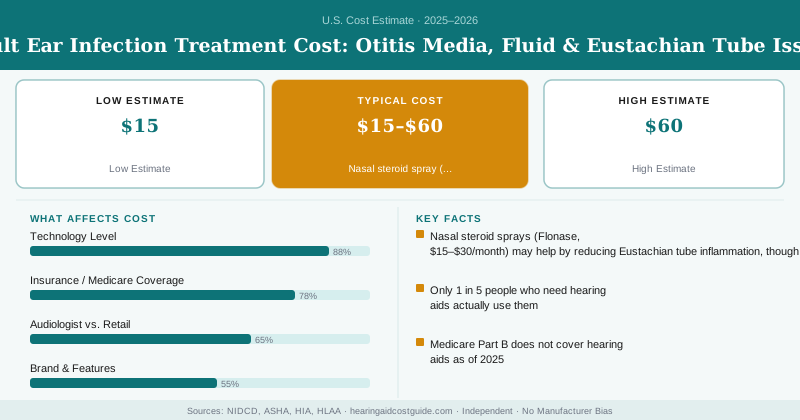
Step 1: Observation (first 3 months) — Most OME resolves spontaneously within 3 months. Cost: follow-up PCP visit ($150–$250) to recheck. Nasal steroid sprays (Flonase, $15–$30/month) may help by reducing Eustachian tube inflammation, though evidence for efficacy in OME is mixed.
Step 2: ENT referral (at 3 months if not resolved) — ENT will confirm diagnosis with tympanometry, may order an audiogram to document the degree of conductive hearing loss. Expect $200–$400 for the consultation.
Step 3: Surgical intervention (if fluid persists or hearing is significantly impaired) — Tympanostomy tube placement or Eustachian tube dilation. Decision depends on whether the problem is in the middle ear (tubes) or the Eustachian tube itself (dilation).
Fluid in the middle ear typically causes a conductive hearing loss of 20–40 dB across low and mid frequencies. This looks like hearing loss on an audiogram — but it’s completely reversible once fluid clears. If you’re getting a new audiogram to evaluate hearing aid needs, tell your audiologist if you’ve recently had a cold, allergies, or ear fullness. Testing while you have fluid in the ear will result in an audiogram that doesn’t reflect your true sensorineural thresholds, and may lead to an incorrect hearing aid prescription.
Tympanostomy Tubes in Adults: Cost and What to Expect
If fluid persists beyond 3 months and causes meaningful hearing loss or quality-of-life impact, tympanostomy tubes (pressure equalization tubes) are the standard intervention.
A small incision is made in the eardrum under direct visualization, and a tiny ventilation tube is inserted to allow fluid drainage and pressure equalization. Tubes typically fall out on their own in 6–18 months.
In-office tube placement (local anesthesia): Some ENTs perform this under topical or local anesthesia in the office — no general anesthesia required. Cost: $1,500–$3,500 depending on facility fees. Recovery: same day.
Surgical center placement (general anesthesia): More common for adults who can’t tolerate the procedure awake. Ambulatory surgical center costs range from $3,000–$6,000, including facility and anesthesia fees. Insurance typically covers this when medically indicated and documented.
Medicare and insurance coverage: Tympanostomy tubes are covered by Medicare and most private insurance when medical necessity is documented — persistent OME with hearing loss meeting clinical criteria. Pre-authorization may be required. Ask your ENT’s billing department to confirm before scheduling.
Balloon Eustachian Tube Dilation: The Newer Option
The Eustachian tube connects the middle ear to the back of the throat, equalizing pressure. Chronic Eustachian tube dysfunction — where the tube doesn’t open and close properly — is a common cause of recurring middle ear problems in adults.
Balloon Eustachian tube dilation (ETD) is an FDA-cleared in-office procedure. A thin catheter is passed through the nose and into the Eustachian tube opening. A small balloon is inflated for about 2 minutes, dilating the tube. Most patients feel improved pressure equalization immediately.
Cost: $3,000–$5,000 for the procedure at an ENT office. Medicare covers ETD when medical necessity is documented — chronic ETD with documented pressure testing abnormalities, typically after failed conservative management. Private insurance coverage varies; pre-authorization is usually required.
Who’s a candidate: ETD is most appropriate for patients with chronic Eustachian tube dysfunction causing recurrent OME or barotrauma symptoms — not for single episodes of acute ear infection.
The NIDCD estimates that over 15% of American adults have some degree of hearing difficulty — and middle ear fluid is one of the reversible causes that’s frequently missed during hearing evaluations. If you’re an adult with new or worsening hearing loss, ask your audiologist to include tympanometry in your evaluation. A flat tympanogram (Type B curve) indicates fluid or another middle ear problem — and that changes the clinical pathway entirely from hearing aid fitting to ENT referral.
Frequently Asked Questions
Medicare Part B covers medically necessary office visits for ear infections, including ENT consultations and follow-up appointments. Audiograms ordered by a physician to evaluate hearing loss from fluid are covered. Surgical ear tube placement (tympanostomy) under general anesthesia is covered under Medicare Part A if hospitalized, or under Part B if performed in an ambulatory surgical center with physician oversight. The newer in-office balloon Eustachian tube dilation (ETD) procedure is covered by Medicare when documentation supports medical necessity.
Most cases of otitis media with effusion (fluid in the middle ear) in adults resolve within 3 months without treatment, according to AAO-HNS clinical practice guidelines. Hearing typically returns to baseline once fluid clears. If fluid persists beyond 3 months, ENT evaluation is warranted — at that point, the conductive hearing loss (typically 20–40 dB across low and mid frequencies) may warrant intervention to prevent long-term effects on communication.
Tympanostomy tubes (pressure equalization tubes) are inserted through the eardrum under anesthesia and remain in place to allow fluid drainage and pressure equalization. They typically fall out on their own after 6–18 months. Balloon Eustachian tube dilation (ETD) dilates the Eustachian tube itself using a small balloon catheter introduced through the nose — it doesn't involve the eardrum at all and is performed in-office. ETD is indicated for chronic Eustachian tube dysfunction rather than acute ear infections. Both can be appropriate depending on your specific diagnosis.