OSHA estimates that 22 million American workers are exposed to hazardous noise levels each year. The NIDCD reports that noise-induced hearing loss affects approximately 17% of US adults between the ages of 20 and 69 — that’s one in six working-age adults. And almost all of it was preventable.
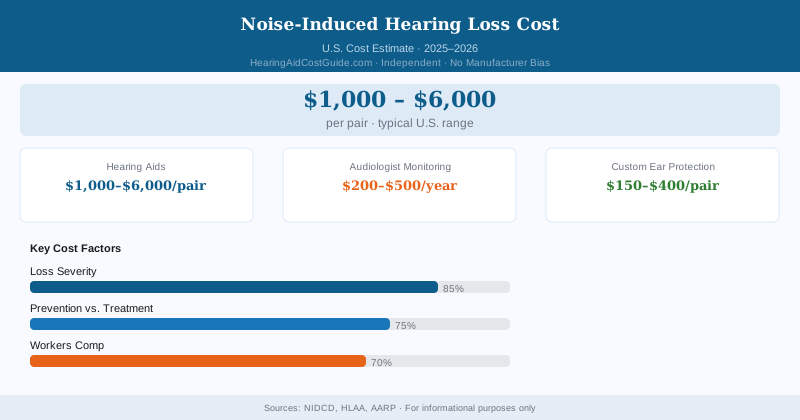
The math is worth sitting with. A box of foam earplugs costs $15–$25 and lasts months. Hearing aids — which are what you’re buying once the damage is done — run $1,500–$7,000 per pair, and you’ll replace them every 5–7 years. Prevention is one of the most cost-effective health decisions a person in a noisy occupation can make.
Noise-Induced Hearing Loss: What Treatment Costs
| Treatment | Cost | Notes |
|---|---|---|
| Audiological evaluation | $150–$350 | Essential first step |
| Hearing aids (mild-moderate loss) | $799–$1,499/pair | OTC if appropriate |
| Hearing aids (moderate-severe) | $1,499–$7,000/pair | Prescription, professionally fitted |
| Tinnitus management (co-occurring) | $0–$4,500 | Often accompanies NIHL |
| Workers’ comp / VA benefit | Varies | May cover full cost |
Prevention Cost vs. Treatment Cost
| Protection Method | Cost | Protects For |
|---|---|---|
| Foam earplugs (box of 200) | $15–$25 | Months of daily use |
| Earmuffs (standard) | $25–$75 | Years |
| Custom molded earplugs | $150–$300 | 5–10 years |
| Electronic hearing protection | $100–$600 | Years |
| Total cost to prevent NIHL | $15–$600 | Career |
| Cost to treat NIHL with hearing aids | $1,500–$7,000+ | Every 5–7 years |
If you work in construction, manufacturing, or any other loud industry, this table is worth posting somewhere visible.
Occupations at Highest NIHL Risk
NIOSH (National Institute for Occupational Safety and Health) tracks hearing loss claims by industry, and the numbers are striking:
- Mining: 70% of workers develop hearing loss — the highest prevalence of any sector
- Construction: Significant exposure; 25,000+ workers develop new NIHL annually
- Manufacturing/heavy industry: 21% prevalence across the sector
- Military: Gunfire, aircraft, explosives — hearing loss and tinnitus are the top VA disability claims
- Agriculture: Tractor engine noise is underappreciated; farmers have high NIHL rates
- Musicians: Cumulative exposure across careers affects both classical and rock musicians
- Entertainment workers: Venue staff, sound engineers, and nightclub workers work in hazardous noise with minimal protection
NIHL Audiogram Pattern
Noise-induced hearing loss has a signature on the audiogram: a dip at 4,000 Hz — the “4K notch.” This is distinct from age-related hearing loss (presbycusis), which slopes progressively from high to low frequencies. The notch occurs because the basal turn of the cochlea, responsible for processing 4,000 Hz sounds, is mechanically most vulnerable to noise damage.
If your audiogram shows a 4K notch and you’ve worked in a loud environment, that’s strong evidence of occupational hearing loss — and potentially a workers’ comp claim.
After loud noise exposure, you may experience temporary threshold shift (TTS) — temporary hearing loss and/or tinnitus that resolves within hours to days. TTS is a warning sign; repeated TTS leads to permanent NIHL.
If hearing loss or tinnitus from noise exposure does NOT resolve within 24–72 hours, seek audiological evaluation urgently. Some cases of acute noise-induced hearing damage may respond to corticosteroid treatment within the first 7–14 days. Waiting eliminates this treatment window.
Hearing Protection Options and Costs
Disposable foam earplugs: NRR (Noise Reduction Rating) of 25–33 dB. Cost: $0.05–$0.15 per pair. Fine for occasional use; less practical for daily wear because people don’t insert them correctly under time pressure.
Reusable earplugs (corded or flanged): NRR 24–30 dB. Cost: $5–$30 per pair. A better choice for regular daily use.
Earmuffs: NRR 22–33 dB. Cost: $25–$100. Easy on, easy off — good for environments where noise exposure is intermittent. Can be combined with earplugs for higher combined protection (the effective NRR isn’t additive, but the combination does add meaningful protection).
Custom molded earplugs: Typically NRR 26–34 dB. Cost: $150–$300. Made from ear impressions by an audiologist, these fit precisely and stay comfortable for full-shift wear. The best investment for musicians, shooters, and anyone in consistent daily occupational noise.
Electronic hearing protection: NRR 22–33 dB passive, plus electronic amplification for situational hearing between hazardous sounds. Cost: $100–$600. The right tool for hunters, military users, and shooting range visitors who need to hear conversation but protect against gunshots.
Musicians’ earplugs: Flat frequency response — attenuates all frequencies equally to preserve sound quality while reducing overall volume. Cost: $15–$300. Essential for musicians who need accurate monitoring while protecting their hearing over a career.
Workers’ Compensation for Occupational NIHL
NIHL caused by your job may qualify for workers’ compensation. Many workers don’t file claims because the hearing loss developed gradually — it doesn’t feel like a workplace injury the way a broken arm does. But occupational audiology specialists routinely establish occupational cause from audiogram patterns.
The general process:
- Report hearing changes to your employer and request an occupational health evaluation
- Audiogram performed by occupational health
- Workers’ comp claim filed if occupational cause is established
- Approved claims may cover hearing aids, medical evaluation, and partial wage replacement
Don’t assume you waited too long. State statutes of limitations vary, and the date-of-discovery rule in many states means the clock starts when you knew of the loss — not necessarily when it first occurred.
Musicians developing NIHL: The HEARS (Hearing Education and Awareness for Rockers) program and Hearing Health Foundation provide resources specifically for musicians. If you perform regularly, see an audiologist for occupational NIHL monitoring and get fitted for musicians’ earplugs — the version that maintains music quality while protecting your hearing.
VA Benefits for Military NIHL
Hearing loss and tinnitus are the two most common VA disability claims — consistently. Military service creates relentless noise exposure from firearms, aircraft, vehicle engines, and explosives, often without adequate hearing protection. Veterans with noise-induced hearing loss from service should file for VA disability benefits. The VA provides free audiology care, hearing aids, and ongoing support through its audiology program, and the disability ratings can provide meaningful monthly compensation.