Here’s a fact most people don’t learn until they’re sitting in an ENT’s office: otosclerosis is one of the most common causes of progressive hearing loss in adults — and most of its sufferers are between 15 and 45 years old. The condition causes abnormal bone growth in the middle ear, gradually locking the stapes (the smallest bone in the human body) in place. When that happens, sound can’t travel properly and hearing drops.
The good news is it’s very treatable. The cost, however, varies wildly depending on which treatment path you take.
Your Two Main Options
Option 1: Stapedectomy surgery. A microsurgeon removes the fixed stapes bone and replaces it with a prosthesis. Success rates are high — roughly 90% of patients experience significant hearing improvement, according to data from the American Academy of Otolaryngology. This is a cure-oriented approach, not just a workaround.
Option 2: Hearing aids. If surgery isn’t an option — because of health risks, personal preference, or financial constraints — a well-fitted hearing aid can compensate for the conductive hearing loss otosclerosis causes. It doesn’t treat the disease, but it restores functional hearing.
Cost of Stapedectomy Surgery
| Cost Component | Typical Range | Notes |
|---|---|---|
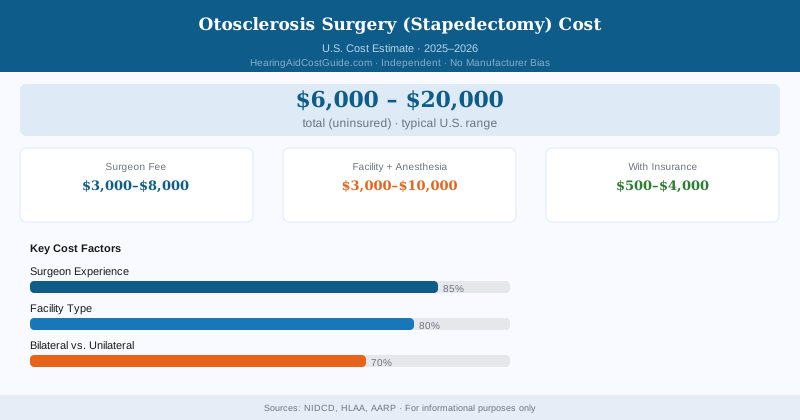
| Surgeon fee | $3,000–$8,000 | Specialty ENT microsurgeon |
| Hospital/facility fee | $2,000–$8,000 | General anesthesia required |
| Anesthesia fee | $800–$2,000 | Separate bill from anesthesiologist |
| Pre-op audiology/CT scan | $300–$900 | Required to confirm diagnosis |
| Total (uninsured) | $6,000–$20,000 | Wide range by region and surgeon |
| Total (insured, post-deductible) | $500–$4,000 | Depends on plan structure |
If you have private insurance or Medicare, stapedectomy is typically covered as medically necessary surgery. Your actual bill will reflect your deductible, coinsurance, and whether all providers were in-network. Surprise billing protections under the No Surprises Act (effective 2022) mean you can’t be billed at out-of-network rates by ancillary providers at in-network facilities — a meaningful protection for a procedure involving multiple providers.
Cost of Hearing Aids for Otosclerosis
If you’re managing with hearing aids instead of pursuing surgery, the costs look different:
- Behind-the-ear or receiver-in-canal aids: $2,000–$6,000 per pair
- Custom in-the-ear styles: $1,600–$5,000 per pair
- Over-the-counter aids (mild loss only): $200–$1,500 per pair
The catch: hearing aids don’t stop the progression of otosclerosis. If bone growth continues, your hearing loss will worsen and you may eventually need stronger aids — or still end up pursuing surgery. Some people spend years buying progressively stronger hearing aids before choosing stapedectomy.
Surgery for otosclerosis is usually covered by health insurance (including Medicare Part B) as a medically necessary procedure. Hearing aids — for the same patient, treating the same condition — are typically NOT covered. This coverage gap means surgery can end up costing you less out-of-pocket than years of hearing aids, even though the sticker price looks higher.
What Makes Stapedectomy Costs Vary So Much
Surgeon experience. This is a high-precision microsurgery performed under a microscope on the smallest bones in the body. Experienced ENT neurotologists at academic medical centers charge more — but revision rates are lower. Don’t choose your surgeon based on cost alone.
Location. Costs in urban markets (New York, Los Angeles, Chicago) run 20–40% higher than in mid-sized or rural markets for the same procedure.
Facility type. Outpatient surgical centers are significantly cheaper than hospital inpatient admissions. Stapedectomy is usually done as outpatient — confirm this with your surgeon’s office.
Single vs. bilateral surgery. Otosclerosis affects both ears in about 70% of cases, though surgeons typically do one ear at a time. A second surgery is a separate procedure with its own facility and anesthesia fees.
The National Institute on Deafness and Other Communication Disorders (NIDCD) estimates that about 3 million Americans have otosclerosis, with roughly 25,000–40,000 new cases diagnosed annually. Despite its prevalence, many people go years without a correct diagnosis because the progressive nature of the loss is subtle and often attributed to aging.
Recovery and Follow-Up Costs
Stapedectomy recovery is typically 1–2 weeks for light activity, 4–6 weeks for full recovery. Post-op visits are usually 3–4 appointments over 6 months — budget $75–$200 per visit depending on insurance. Vertigo and dizziness are common in the first 1–2 weeks; some patients need vestibular therapy afterward, which can add $200–$600.
Questions to Ask Before Deciding
- What’s my current degree of hearing loss and is it affecting daily life significantly?
- Am I a good surgical candidate (health status, age, inner ear involvement)?
- What’s the surgeon’s complication rate for stapedectomy?
- If I do surgery, what’s the expected improvement on my audiogram?
- If I wait, how fast is my loss likely to progress?
Fluoride therapy was once promoted as a way to slow otosclerosis progression, but current evidence does not support it as an effective treatment. Stick to audiologist-recommended interventions: surgery or properly fitted hearing aids. Be skeptical of any provider selling fluoride supplements as an otosclerosis treatment.
Bottom Line
Surgery is the only treatment that addresses the underlying cause of otosclerosis. Stapedectomy runs $6,000–$20,000 without insurance, but with health coverage it’s usually treated as medically necessary — making your out-of-pocket far more manageable. If surgery isn’t right for you, well-fitted hearing aids can restore your functional hearing, but expect ongoing costs as the condition progresses. Get an evaluation from an ENT who specializes in otosclerosis — the diagnosis and treatment plan are both worth getting right.