Most people assume rechargeable hearing aids are just a convenience upgrade — a nice-to-have for people who don’t want to mess with tiny batteries. The actual financial math tells a different story.
In 2020, roughly 30% of hearing aids sold used rechargeable batteries. By 2025, that number had surpassed 70%, according to the Hearing Industries Association. Part of that is marketing. Part of it is that the numbers genuinely work out better for most users.
Rechargeable vs. Disposable Battery Cost Comparison
| Factor | Rechargeable | Disposable (Size 312) |
|---|---|---|
| Upfront premium | +$150–$400 over disposable equivalent | Baseline |
| Annual battery cost | ~$0 (charger included) | $50–$150/year |
| Charging time | 3–4 hours for full charge | N/A |
| Battery life per charge | 16–24 hours | 3–10 days per battery |
| Battery replacement (device) | $200–$400 after 5–7 years | N/A |
| 5-year total battery cost | $0–$400 (if replaced once) | $250–$750 |
The Upfront Premium
Rechargeable hearing aids typically cost $150–$400 more than the same model in a disposable-battery version — when the brand offers both options. Many premium-tier devices now come only in rechargeable versions, making the comparison moot at the top of the market.
A few real-world pricing examples:
- Phonak Audéo Lumity 90: ~$3,200/ear rechargeable vs. ~$3,000/ear disposable (size 13)
- ReSound Nexia 9: ~$3,100/ear rechargeable vs. ~$2,900/ear disposable
- Signia Pure Charge&Go IX: Rechargeable only — no disposable option at this tier
5-Year Battery Savings Calculation
Here’s the math that most hearing aid shoppers don’t do before buying. A hearing aid user who changes size 312 batteries twice a week spends:
- 104 batteries per year per aid × 2 aids = 208 batteries per year
- At $0.40–$0.60 per battery: $83–$125/year
- Over 5 years: $415–$625
Size 13 batteries (larger, used in BTE and power aids) last longer but cost more:
- 60–80 batteries per year per aid × 2 aids = 120–160 batteries per year
- At $0.35–$0.55 per battery: $42–$88/year
- Over 5 years: $210–$440
Break-even point: At a $200 upfront premium and $100 per year in disposable savings, you break even in 2 years. After that, rechargeable is ahead.
Rechargeable hearing aids use lithium-ion cells with a typical lifespan of 4–5 years before capacity degrades noticeably. Battery replacement costs $200–$400 per pair — factory repair required, not user-replaceable on most models. Factor this into the 5–7 year device ownership cost when you’re doing your math.
Convenience Value
Beyond the financial math, the quality-of-life difference matters — especially for older users. Rechargeable hearing aids offer:
- No fiddling with tiny batteries — a genuine advantage for people with arthritis or dexterity limitations
- No emergency battery runs — put aids on the charger overnight, start the day with full power
- No accidental swallowing risk for households with small children or pets (button batteries are a serious pediatric poisoning hazard — the American Academy of Pediatrics warns about this specifically)
- Travel simplicity — one USB-C charger instead of a supply of spare batteries
Drawbacks Worth Knowing
- Power failure vulnerability: Forget to charge or lose power, and you can’t swap a fresh battery in — you’re just stuck
- Heavy streaming drains faster: Bluetooth audio streaming can shrink a rated 16-hour battery life to 12–14 hours in practice
- Size constraints: Rechargeable requires enough internal space for the lithium cell — truly invisible IIC devices rarely offer rechargeable options
- Heat degrades the battery: Avoid leaving the charger in a hot car; lithium-ion capacity fades faster with heat exposure over time
If you rely on your hearing aids for safety — living alone, driving, needing them for emergency communication — keep emergency disposable batteries as a backup even if you use rechargeable devices. Or confirm your model has a backup battery option. Some Phonak and Starkey models include a rechargeable-plus-disposable hybrid door for exactly this reason.
Best Rechargeable Hearing Aids by Price Tier
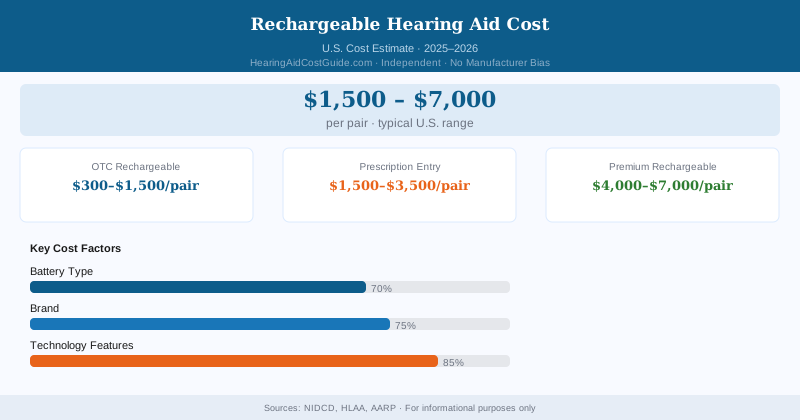
Budget OTC: Jabra Enhance Select 200 ($799/pair), Sony CRE-20 ($999/pair)
Mid-tier OTC: Jabra Enhance Select 500 ($1,499/pair)
Costco: Kirkland Signature 10.0 ($1,499/pair), Jabra Enhance Pro ($1,799/pair)
Prescription premium: Phonak Audéo Lumity 90R ($6,500/pair), Oticon Intent 1 ($6,800/pair), ReSound Nexia 9 ($6,200/pair)
Bottom Line
For most hearing aid users, rechargeable is worth the modest upfront premium. Break-even happens in under 2 years, the convenience is real, and the industry is clearly moving in this direction — which means better support and more model options at every price point going forward. The main exceptions are people who need truly invisible IIC devices or people in situations where a dead battery mid-day would be a serious problem.