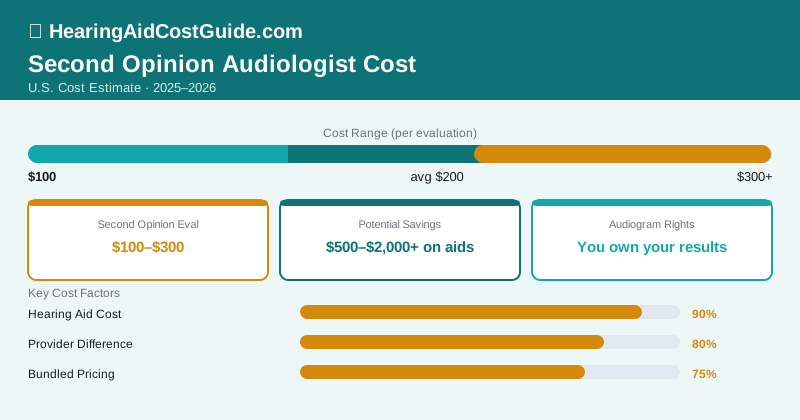
$6,500 was the number on the sheet. That’s what one audiologist quoted for hearing aids after a single 45-minute appointment. A neighbor mentioned she’d paid $4,200 for comparable devices at a different practice — with a more thorough explanation of her specific hearing loss and two extra adjustment sessions included. Same diagnosis. Different price, different experience. She paid $150 for the second opinion. It saved her $2,300.
Getting a second opinion before major medical spending is standard practice for surgery, cancer treatment, and orthopedics. For hearing aids, most people don’t think to do it — partly because no one suggests it, and partly because the pricing variation isn’t visible until you look.
When a Second Opinion Is Worth Getting
Not every situation calls for one. Here’s an honest breakdown of when it matters:
Good reasons to get a second opinion:
- You’re being quoted $5,000 or more per pair and felt rushed through the appointment
- Your hearing has changed dramatically in a short time — sudden or rapid loss warrants a second look at the diagnosis itself
- You’re a cochlear implant candidate — this decision almost universally warrants evaluation at a second CI center
- You received a quote you can’t parse — all bundled, or all unbundled, with no comparison
- The audiologist recommended one brand exclusively without discussing alternatives
- You left feeling like the appointment was a sales pitch
Situations where a second opinion adds less:
- You have a longstanding relationship with your audiologist and trust their judgment
- The diagnosis is straightforward mild presbycusis and the recommendation fits what you’d expect
- You’ve already researched and the recommendation aligns with what you found
| Second Opinion Service | Typical Cost | What It Includes |
|---|---|---|
| Full audiological evaluation | $100–$300 | Audiogram, word recognition, review of history |
| Hearing aid consultation only | $50–$150 | Device recommendation without new audiogram |
| Cochlear implant candidacy evaluation | $200–$500 | Extensive testing, team review |
| University clinic evaluation | $75–$200 | Often reduced cost, highly trained staff |
| VA audiologist (veterans) | $0 | Full evaluation at no cost |
You Own Your Audiogram — Ask for It
Many patients don’t know this: your audiogram is your medical record. Under HIPAA, you have the right to a copy. Before you leave your first appointment, ask for a printed or digital copy.
If you bring your audiogram to a second audiologist, they can review your results without necessarily re-testing everything. You may still need some additional testing depending on timing or what the second provider wants to verify — but you won’t always pay for a full evaluation twice.
Bring these to any hearing aid consultation:
- “Can I get a copy of my audiogram today?”
- “Is this quote bundled or unbundled?” (Unbundled = separate charges for devices, fitting, follow-ups)
- “What’s included in this price over the next 3 years?”
- “What would the next tier down cost, and what would I give up?”
- “Can I try these devices for 30–60 days before committing?”
- “Do you dispense multiple brands, or are you primarily a [one brand] practice?”
A reputable audiologist answers all of these without getting defensive.
Bundled vs. Unbundled Pricing
One of the biggest sources of confusion in hearing aid pricing is that practices charge differently for the same devices.
Bundled pricing includes the hearing aids and all associated services — fitting, adjustments, follow-up appointments, sometimes batteries — in one price. Simpler to understand, harder to compare across practices.
Unbundled pricing separates device cost from professional services. You see the hearing aid price ($1,500–$2,500 per device, typically) and pay separately for services. More transparent, and potentially cheaper if you don’t use many follow-up visits.
A 2022 survey by the American Academy of Audiology found that patients at unbundled practices spent 20–30% less on hearing care over three years on average — mainly because they weren’t paying for follow-up appointments they never needed. See our hearing aid cost guide for a full breakdown of pricing structures.
What a Second Audiologist Might Find
Second opinions occasionally turn up:
- A different degree of hearing loss — audiograms can vary based on equipment calibration and testing methodology
- A more conservative recommendation — not every mild-to-moderate loss requires premium-tier aids
- A different technology recommendation — audiologists develop preferences for certain brands based on their training, which may not always be your best fit
- That your loss doesn’t require amplification yet — some patients are prescribed aids earlier than necessary
They rarely uncover something alarming that the first audiologist missed. But they sometimes offer a genuinely different clinical perspective on the same data.
One caution about chasing the lowest price: the cheapest hearing aid quote isn’t always the best value. The audiologist’s skill in programming and fitting matters as much as the hardware. A $4,500 pair programmed expertly by an experienced audiologist will outperform a $6,000 pair set up by someone who rushes fittings. Ask any audiologist you’re considering whether they use real-ear measurement (REM) during fitting — it’s the gold standard for accurate programming, and some practices skip it entirely to save time.
Bottom Line
A second audiologist evaluation costs $100–$300 — a small fraction of the $3,000–$7,000 decision you’re facing. It’s worth it when you feel uncertain, when the numbers seem high, or when you’re considering a major step like cochlear implant candidacy. Request your audiogram at the first appointment; you’re entitled to it. Compare both bundled and unbundled pricing. And ask about real-ear measurement — practices that use it reliably produce better fitting outcomes.