You go to bed with normal hearing. You wake up, and one ear is gone — or dramatically worse. Maybe it happened mid-conversation, or while you were exercising. There’s no pain, no obvious cause, and it’s terrifying.
This is sudden sensorineural hearing loss (SSHL), and it’s a medical emergency. Not “call your doctor in a few days” urgent — emergency room today urgent. Here’s what that costs, and why the timing matters more than almost anything else.
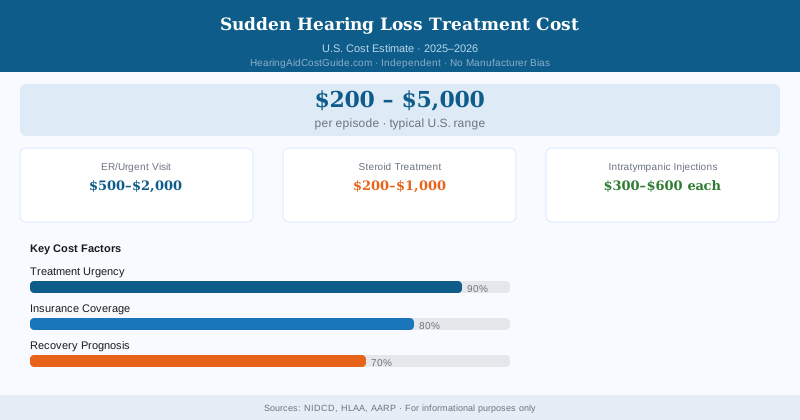
SSHL Treatment Cost Breakdown
| Treatment Component | Cost (No Insurance) | Notes |
|---|---|---|
| Emergency ENT visit | $200–$450 | Same day — don’t wait |
| Audiological evaluation (urgent) | $200–$350 | Needed to document baseline |
| Oral prednisone (2-week course) | $15–$50 | Generic, very low cost |
| Intratympanic steroid injection (per injection) | $300–$800 | Often 3 injections |
| Hyperbaric oxygen therapy (per session) | $200–$400/session; 20–40 sessions | Select cases, not universally covered |
| Follow-up audiogram (4–8 weeks) | $150–$350 | Assesses recovery |
| Hearing aid (if partial recovery) | $1,500–$7,000 | For residual loss |
| Cochlear implant (if no recovery, profound loss) | $50,000–$100,000+ | Insured: OOP max |
What Is SSHL?
SSHL is defined as hearing loss of ≥30 dB HL across three consecutive frequencies, developing within 72 hours. It typically affects one ear, often with tinnitus, and sometimes with dizziness or vertigo. The NIDCD estimates that SSHL strikes approximately 66,000 Americans each year — though the actual number may be higher, since many cases go unreported or misdiagnosed as ear congestion.
The cause is usually unknown. About 85–90% of SSHL cases are idiopathic — no identifiable culprit. Theories include viral infection (herpes viruses in particular), vascular disruption to the cochlea, immune-mediated damage, or endolymphatic hydrops. A small percentage have identifiable causes: acoustic neuroma (rule this out with MRI), autoimmune inner ear disease, or perilymph fistula.
Why Time to Treatment Is Everything
Cochlear hair cells don’t regenerate. Once they’re damaged, they’re gone. The window for steroid treatment effectiveness — while debated — is generally accepted to be:
- Best outcomes: Treatment within 24–48 hours
- Good outcomes still possible: Treatment within 1–2 weeks
- Limited or no steroid benefit: After 4–6 weeks
About 32–65% of SSHL cases recover fully or partially — even with treatment, the range is wide. Without treatment, spontaneous recovery occurs in roughly 32–45% of cases. Treatment doesn’t guarantee anything, but it significantly improves the odds, especially for severe cases.
If you wake up with sudden hearing loss in one ear:
- Do NOT wait to “see if it gets better on its own”
- Do NOT wait for your primary care appointment next week
- Go to urgent care or an emergency room TODAY
- Specifically say: “I have sudden hearing loss — I need to see an ENT today or tomorrow, and I need an audiogram.”
Every 24 hours of delay potentially reduces recovery chances. This is one of the few genuine emergencies in hearing health where the treatment window is measured in days, not weeks.
Treatment Options
Systemic Oral Steroids
Prednisone (typically 60mg daily for 14 days, then taper) is first-line treatment. Cost: $15–$50 for a two-week course. Cheap, accessible, and proven.
Side effects worth knowing: blood sugar elevation (seriously problematic if you have diabetes), mood changes, sleep disruption, and temporary immunosuppression. Talk to your doctor before starting if you have diabetes, osteoporosis, or are immunocompromised.
Intratympanic Steroid Injections (IT Steroids)
Methylprednisolone or dexamethasone injected directly through the eardrum into the middle ear. Used as:
- Initial treatment alongside oral steroids
- Salvage treatment when oral steroids fail
- First choice when systemic steroids are contraindicated
Typically 3 injections over 2–3 weeks. Cost: $300–$800 per injection — $900–$2,400 total for a full course. Usually covered by insurance as an office procedure, so the out-of-pocket hit is often just your specialist copay.
Hyperbaric Oxygen Therapy (HBOT)
Not universally recommended in US guidelines, but some European protocols support it — particularly for cases that don’t respond to steroids. HBOT provides an oxygen-rich environment to promote inner ear tissue recovery. At 20–40 sessions costing $200–$400 each, that’s $4,000–$16,000 if not covered by insurance. Medicare and some private plans cover HBOT for certain indications; prior authorization is required and worth pursuing.
Insurance Coverage for SSHL Treatment
SSHL is billed under medical insurance — not hearing benefits. That’s an important distinction:
- Office visits and ENT evaluation: Covered at your specialist copay rate
- Audiogram (diagnostic): Covered when medically necessary
- Oral steroids: Covered under your pharmacy benefit; very low cost
- IT injections: Covered as an office procedure (specialist or procedure copay)
- MRI (to rule out acoustic neuroma): Covered when medically indicated
- HBOT: Coverage varies widely; requires prior authorization
After SSHL, an MRI with gadolinium contrast of the internal auditory canals is standard to rule out acoustic neuroma. This is especially important if hearing loss is still asymmetrical after some recovery, or if there’s accompanying facial numbness, weakness, or persistent balance problems. An acoustic neuroma is the one structural cause of SSHL that requires specific treatment regardless of how much hearing recovers.
Long-Term Outcomes: Planning for What Comes Next
If SSHL leaves you with permanent residual hearing loss, the appropriate next step depends on what you’re left with:
- Partial recovery: Hearing aids may be appropriate if functional hearing loss remains
- Significant asymmetry: CROS, BiCROS, or BAHA systems for single-ear hearing
- Profound unilateral loss: Single-sided deafness solutions (CROS, BAHA, or cochlear implant evaluation)
- Profound bilateral loss: Cochlear implant candidacy evaluation
One important note from audiologists who treat SSHL regularly: don’t rush into hearing aids. Wait 3–6 months, because some late recovery is possible during this window. Get a repeat audiogram at 3 months and again at 6 months before deciding on permanent hearing aid needs.