Is Telehealth Audiology Actually Worth It?
Q: Can I really get legitimate hearing care over a video call?
For a lot of hearing care needs — yes, genuinely. Teleaudiology expanded rapidly after 2020 and has become a permanent fixture. Remote programming, follow-up consultations, tinnitus counseling — these translate well to video. But there are hard limits, and knowing where they are saves you time and money.
Q: What does telehealth hearing care actually cost?
Here’s a current breakdown:
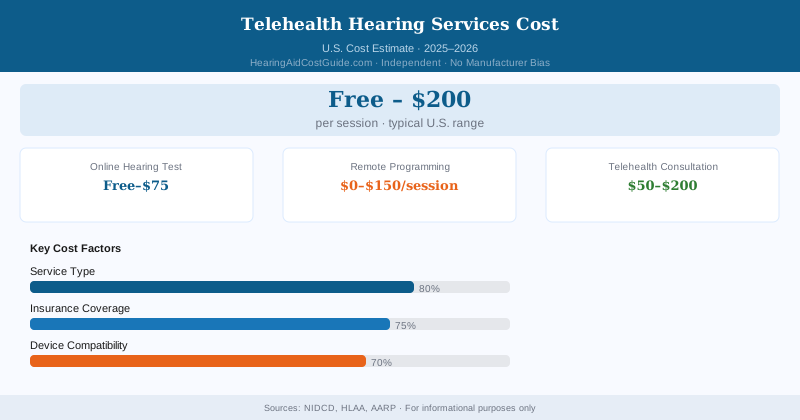
Telehealth Hearing Services Costs
| Service | Telehealth Cost | In-Person Cost | Best For |
|---|---|---|---|
| Initial hearing consultation | $75–$150 | $150–$350 | Questions, guidance |
| Remote hearing aid programming | $50–$150 | $75–$200 | Adjustments without travel |
| Online hearing screening | Free–$30 | Free (Costco) | Screening, not diagnosis |
| Tinnitus telehealth consultation | $75–$200 | $200–$400 | Tinnitus guidance |
| Follow-up/check-in visit | $40–$100 | $75–$150 | Post-fitting support |
| OTC brand audiologist coaching | $0–$75 | N/A (OTC) | Eargo, Sony CRE-E10, MDHearing |
Q: What can telehealth actually do for hearing care?
More than most people expect. Here’s what works well remotely:
Remote hearing aid programming. All major brands now support remote adjustments — the audiologist connects to your hearing aids through the companion app and pushes new settings in real time during a video call. Phonak Remote Support, Oticon RemoteCare, ReSound Remote Assist — these platforms are mature and work well. For adjustments after your initial fitting, this is functionally equivalent to sitting in the audiologist’s office.
Consultation and counseling. Discussing audiogram results, reviewing hearing aid options, counseling on tinnitus management or communication strategies — all of this translates to video without any loss of quality.
Follow-up visits. After an initial in-person fitting, most follow-up appointments for minor adjustments can be done remotely. That’s a 45-minute drive saved, multiple times a year.
OTC device support. Sony, Eargo, MDHearing, and Lexie all offer telehealth support from licensed professionals as part of their OTC models — a meaningful step between pure self-fitting and full clinical care.
Q: What can telehealth NOT do?
This matters more than people realize:
Initial audiogram. Standard audiometry requires a calibrated audiometry booth and equipment — period. No app or webcam setup replicates this. Home-based audiometry apps are screening tools, not clinical audiograms, and can’t be used for hearing aid prescriptions or medical documentation.
Real-ear measurement. The gold standard for hearing aid fitting requires a physical probe microphone in your ear canal alongside the hearing aid. Cannot be done remotely.
Physical ear examination. Otoscopy, tympanometry, and assessment of the ear canal require someone physically looking in your ear.
First hearing aid fitting. Initial fitting requires the audiologist to verify physical fit, demonstrate insertion and removal, and preferably perform real-ear measurement. This belongs in person.
Here’s how a remote programming session actually goes:
- You start a video call with your audiologist
- The audiologist connects to your hearing aids through the companion app on your phone (your phone acts as a bridge)
- The audiologist sees your current hearing aid settings in their programming software
- They make adjustments in real time — you hear the changes happen live
- You tell them how it sounds; they fine-tune
- New settings are confirmed and saved
For most adjustments after an initial in-person fitting, this is just as effective as being in the office. The technology has gotten quite good.
Q: What telehealth platforms should I use?
Tuned (tunedhearing.com): Telehealth audiology platform with audiologists nationwide. Remote programming for major hearing aid brands, tinnitus consultations, hearing aid guidance. Cost: $50–$150 per session.
AudiologyOnline / ASHA TeleAudiologist listings: Directories of audiologists who offer telehealth. Costs vary by practice.
Manufacturer direct telehealth: Phonak, Oticon, ReSound, and Starkey all have internal telehealth programming support through their audiologist networks.
VA Telehealth Audiology: Veterans can access VA audiologists via VA Video Connect for remote programming and consultations at no cost. The VA has been one of the leaders in telehealth audiology — with good reason, given how geographically dispersed the veteran population is.
Q: Does insurance cover telehealth audiology?
After 2020 telehealth expansions — which have largely been made permanent — most insurance plans cover telehealth audiology at the same rate as in-person:
- Medicare: Covers telehealth audiology services when appropriately billed with telehealth modifiers
- Private insurance: Coverage varies by state and plan, but telehealth parity has improved significantly
- Medicaid: Telehealth coverage for audiology expanded in most states; check your state plan
Q: What technology do I need?
Remote programming requires:
- A compatible smartphone
- The manufacturer’s companion app, installed and paired with your aids
- A reliable internet connection
- Your audiologist must have the manufacturer’s programming software — not all independent audiologists have multi-brand remote programming capability
A sudden change in hearing, severe pain, or anything that feels like a medical emergency? See someone in person. Don’t telehealth-first an emergency.
An online “audiogram” via app or website is NOT equivalent to a clinical audiogram for hearing aid prescription, cochlear implant candidacy, or any medical documentation purpose. A 2022 study published in the American Journal of Audiology found that consumer hearing check apps significantly underestimate hearing loss in quiet home environments compared to calibrated booth testing. For any medically relevant decision, you need an in-person test with calibrated equipment.
Q: What’s the most cost-effective hearing care model in 2025?
For many people with mild-to-moderate hearing loss, this hybrid approach makes the most financial sense:
- Free in-person audiogram at Costco or through insurance
- OTC hearing aids with the audiologist coaching option (Lexie, MDHearing, Sony CRE-E10)
- Remote programming support from the OTC brand’s telehealth team for adjustments
- Annual in-person follow-up for ear health check and updated audiogram
Total annual ongoing cost: roughly $100–$300 in telehealth and accessories, plus the OTC device amortized over its 3–5 year life. That’s a meaningful improvement over paying $5,000+ for prescription devices plus annual visit fees.