You probably know the feeling. You leave a concert or a loud family dinner and there’s a ringing — sometimes a hiss, sometimes a high-pitched tone — that lingers for a few hours, maybe longer. For most people, it fades by morning and doesn’t come back. For about 50 million Americans, according to the American Tinnitus Association, it doesn’t go away.
Twenty million of those people have chronic tinnitus that disrupts daily life. Two million have it badly enough that it interferes with sleep, focus, and function in ways that go beyond annoying.
Tinnitus gets dismissed a lot. “Nothing can be done about it.” “Just learn to live with it.” In 2025, both of those statements are outdated. The causes are well understood. Several evidence-based treatments exist. The FDA cleared a new bimodal treatment device in 2023. The picture has changed — here’s what it actually looks like now.
What Tinnitus Actually Is
Tinnitus (pronounced TIN-uh-tus or tin-EYE-tus — both are correct) is the perception of sound when no external sound is present. The most common description is ringing, but it can also present as:
- Buzzing
- Hissing or whooshing
- Clicking or pulsing
- Roaring (like wind)
- High-pitched tone
Subjective vs. objective tinnitus: About 99% of tinnitus is subjective — only the person experiencing it can hear it. It originates in abnormal neural activity in the auditory system, not an actual physical sound. In rare cases, tinnitus is objective — caused by a physical sound source like a blood vessel near the ear, a muscle spasm, or jaw joint clicking. Objective tinnitus can sometimes be heard by an examiner with a stethoscope and is often treatable by addressing the underlying cause.
Pulsatile tinnitus — a rhythmic sound that beats in sync with your heartbeat — is a separate concern that always warrants medical evaluation. It can indicate a vascular abnormality and should be assessed by an ENT or neurologist.
What Causes Tinnitus
Tinnitus isn’t a disease — it’s a symptom. It can come from many places, but most cases trace back to damage or changes in the auditory system.
Noise-induced hearing loss — the most common cause by a wide margin. When cochlear hair cells are damaged by loud noise, the brain partly compensates by turning up its own internal sensitivity (called neural “gain”). That increased gain generates phantom signals. Most people with noise-induced hearing loss have some degree of tinnitus.
Age-related hearing loss (presbycusis) — same mechanism: hair cell loss triggers the brain’s gain compensation. The two causes co-occur in older adults so often that separating them is usually impossible.
Earwax buildup — a blocked ear canal changes the acoustic environment and can trigger or worsen tinnitus. Often resolves completely after professional earwax removal.
Medications — high-dose aspirin and NSAIDs, certain antibiotics (aminoglycosides like gentamicin), some chemotherapy drugs (cisplatin), loop diuretics (furosemide), and quinine can all cause or worsen tinnitus. Some cases reverse when the medication stops; others don’t. Never stop a prescribed medication without talking to your doctor — but do report new tinnitus to whoever prescribes your medications.
TMJ disorders — the temporomandibular joint sits just in front of the ear canal. Jaw tension, teeth grinding, or joint dysfunction can produce clicking or buzzing tinnitus that shifts with jaw movement.
Meniere’s disease — excess fluid in the inner ear. Tinnitus (usually a roaring in one ear), episodic vertigo, ear fullness, and fluctuating hearing loss are its four classic symptoms.
Stress and anxiety — don’t cause tinnitus directly, but strongly affect how intrusive it feels. The feedback loop is well-documented: tinnitus triggers anxiety, anxiety amplifies the perceived volume and distress of tinnitus.
How Common It Is: The Numbers
According to the American Tinnitus Association (ATA):
- 50 million Americans experience some form of tinnitus
- 20 million have burdensome chronic tinnitus that affects daily life
- 2 million have debilitating tinnitus that severely impacts function
- Veterans are disproportionately affected — tinnitus is the single most common service-connected disability in the VA system
What Doesn’t Work (So You Don’t Waste Money)
Before getting to effective treatments, it’s worth clearing the field of the ineffective ones.
Ear candling — placing a hollow cone in the ear and lighting it on the theory that negative pressure draws out wax — has zero clinical evidence and documented risks including burns, eardrum perforations, and candle wax in the ear canal. The FDA warns against it.
Ginkgo biloba — widely marketed for tinnitus. Multiple well-designed randomized controlled trials have found it no better than placebo. The American Academy of Otolaryngology’s clinical practice guidelines explicitly recommend against it.
“Tinnitus miracle” supplements — no supplement has peer-reviewed evidence showing meaningful benefit for tinnitus. Most are combinations of zinc, B vitamins, and herbal extracts. They’re harmless but ineffective and often expensive.
If tinnitus starts suddenly in one ear only — especially if accompanied by hearing loss, dizziness, or ear fullness — see a doctor immediately. Sudden unilateral tinnitus can be an early sign of acoustic neuroma (a benign tumor on the auditory nerve), sudden sensorineural hearing loss (which requires urgent steroid treatment), or other conditions that need prompt evaluation. Don’t wait to see if it resolves on its own.
Treatments That Actually Work
No treatment eliminates tinnitus completely in most patients — but several reduce how intrusive and distressing it is, often substantially.
Sound therapy / masking — introducing background sound (white noise, pink noise, nature sounds) reduces the brain’s contrast between silence and the tinnitus signal, making it less noticeable. This is the most accessible entry-level treatment. White noise machines, fans, and free phone apps all accomplish this. Dedicated sound therapy machines offer more customization.
Hearing aids — if you have hearing loss alongside tinnitus (which is true of the majority of tinnitus sufferers), treating the hearing loss often reduces tinnitus perception significantly. When the hearing aid amplifies ambient sounds and speech, the auditory system has real input to process and the phantom neural activity becomes less dominant. Some premium hearing aids include built-in tinnitus masking features.
Tinnitus retraining therapy (TRT) — a structured program combining sound therapy (a device that generates a low-level broadband noise) with directive counseling. The goal is habituation: teaching the brain to reclassify the tinnitus signal as neutral rather than threatening, so it fades into the background perceptually. Most protocols take 12–24 months but produce durable results for people who complete them.
Cognitive behavioral therapy (CBT) for tinnitus — the strongest evidence base of any tinnitus treatment in terms of randomized controlled trials. CBT doesn’t reduce the loudness of tinnitus, but it significantly reduces the distress and functional impact. A Cochrane Review found CBT more effective than other psychological interventions for tinnitus. Online CBT programs have made this more accessible.
Lenire device (FDA-cleared 2023) — a bimodal stimulation device that delivers sound through headphones simultaneously with mild electrical tongue stimulation. The theory is that stimulating two sensory systems at once promotes neuroplasticity and retraining of the auditory system. Clinical trials showed significant reduction in tinnitus severity scores. It’s a prescription device, dispensed through audiologists.
| Treatment | Cost | Evidence Level | Best For |
|---|---|---|---|
| White noise machine | $20–$150 | Practical; widely used | Mild, sleep disruption |
| Tinnitus masking apps | Free–$10/month | Accessible adjunct | Any tinnitus, supplement to other treatment |
| Hearing aids (if hearing loss present) | $1,500–$7,000/pair | Strong (indirect) | Tinnitus with concurrent hearing loss |
| CBT for tinnitus | $100–$200/session (8–12 sessions) | Strongest RCT evidence | Distress-focused; any tinnitus severity |
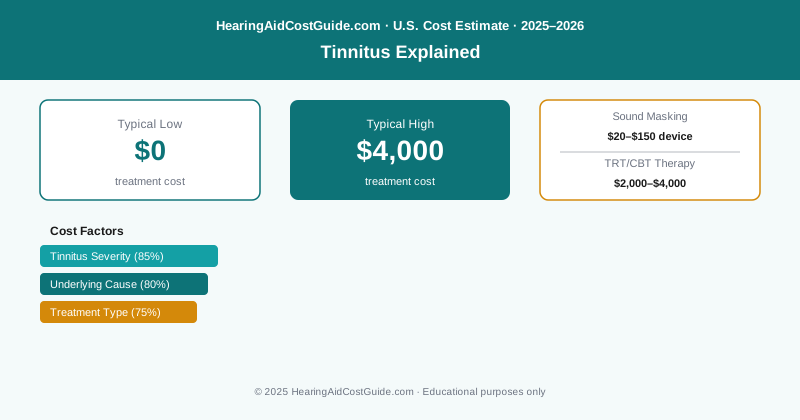
| Tinnitus retraining therapy (TRT) | $2,000–$4,000 | Good long-term data | Chronic, intrusive tinnitus |
| Lenire device | ~$4,000 | FDA-cleared; positive trial data | Moderate–severe, chronic tinnitus |
| Audiologist evaluation | $100–$250 | Essential first step | Anyone with persistent tinnitus |
The Tinnitus-Hearing Loss Connection
About 80% of people with clinically significant tinnitus have measurable hearing loss, even if they haven’t noticed it. This is why an audiological evaluation is the right starting point for anyone with persistent tinnitus.
The audiogram identifies whether hearing loss is present, what type and degree it is, and whether hearing aids might address both problems simultaneously. It’s also how the audiologist distinguishes between the common patterns of noise/age-related tinnitus and the rarer patterns that need ENT evaluation.
While pursuing longer-term treatment, these strategies genuinely reduce tinnitus intrusiveness for most people:
- Never be in silence. Background sound is the simplest form of masking. Keep something on — a fan, soft music, a podcast — especially during sleep.
- Limit caffeine and salt — both can temporarily worsen tinnitus in some people.
- Protect your remaining hearing — every additional noise exposure risks making tinnitus worse. Use hearing protection reliably.
- Manage stress — anxiety amplifies tinnitus perception significantly. Regular exercise, mindfulness, and adequate sleep all reduce the brain’s distress response to tinnitus.
- Tell your prescribers. If you start a new medication and tinnitus worsens noticeably within days, that’s important information. Never stop a medication on your own, but do report the change.
Tinnitus is manageable. Not always curable, but genuinely manageable. The path through it involves an accurate diagnosis, realistic expectations, and consistent use of strategies that actually have evidence behind them. That path starts with a proper audiological evaluation — not supplements, not ear candles, and not another year of hoping the ringing just stops on its own.