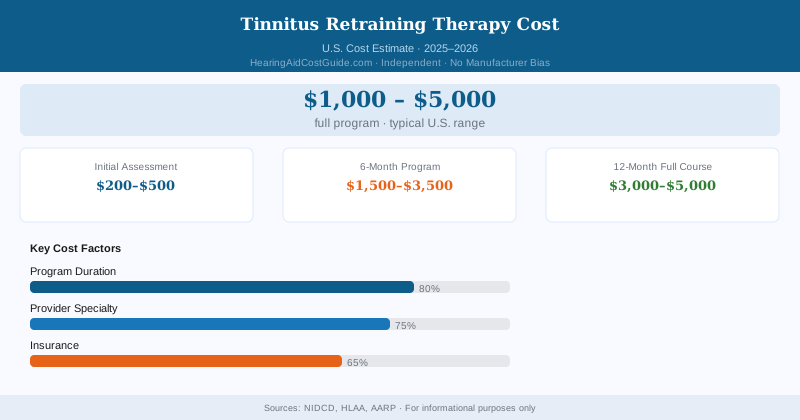
There’s a difference between tinnitus that’s annoying and tinnitus that’s disabling. Most people with chronic tinnitus fall somewhere on a spectrum — and for the subset who find it genuinely disabling, Tinnitus Retraining Therapy may be the most structured, evidence-based path to relief.
It’s also one of the more expensive tinnitus treatments. So before you commit, here’s exactly what TRT costs, what you’re paying for, and whether it’s the right choice for your situation.
TRT Program Costs
| TRT Component | Cost Range |
|---|---|
| Initial tinnitus evaluation (TRT-specific) | $300–$600 |
| TRT counseling sessions (set of 6–12) | $1,500–$3,000 total |
| Sound therapy devices (in-ear generators) | $800–$2,500 per pair |
| Follow-up monitoring sessions | $150–$300 per session |
| Complete TRT program (12–18 months) | $2,500–$6,000 |
What TRT Actually Is — And What It’s Not
Tinnitus Retraining Therapy was developed in the 1990s by Pawel Jastreboff and Jonathan Hazell, based on a neurophysiological model of how tinnitus becomes distressing. The logic is important to understand, because it shapes why TRT works the way it does.
The model says this: the tinnitus sound itself isn’t the real problem. It’s the way the brain’s limbic system — the emotional center — has tagged it as threatening. Once something gets tagged as threatening, your brain prioritizes it. That’s why you can’t stop noticing it. TRT’s goal isn’t to eliminate the sound. It’s to reclassify it as neutral background noise — the way you don’t consciously hear a refrigerator hum until someone mentions it.
Component 1: Directive Counseling
Sessions with a TRT-trained audiologist explain the neurophysiological model in detail — repeatedly, as you work through it. Understanding why your brain is reacting the way it is genuinely reduces the anxiety and negative emotional reaction that make tinnitus worse. Sessions typically number 6–12 over 12–18 months.
Component 2: Sound Therapy
Continuous broadband noise at low levels — just below your tinnitus loudness — is played throughout the day. The goal isn’t to cover the tinnitus (that’s masking, which is different). It’s to reduce the contrast that makes the tinnitus signal stand out. Less contrast, less neural reactivity.
Sound therapy devices:
- Wearable sound generators (in-ear): Worn like hearing aids; generate continuous broadband noise. Cost: $800–$2,500 per pair
- Combination devices (hearing aid + sound generator): For people with co-occurring hearing loss. Cost: $2,000–$4,500 per pair
- Tabletop sound enrichment: At home, particularly at night, to reduce silence
TRT is not a quick fix — and that’s the most important thing to understand before starting:
- Months 1–3: Counseling-based understanding begins to reduce tinnitus distress
- Months 3–6: Sound therapy reduces neural hyperactivity
- Months 6–18: Progressive habituation — tinnitus awareness decreases
- 18–24 months: Full habituation achieved in approximately 80% of dedicated participants
Patients often ask “am I cured?” The goal isn’t elimination of the tinnitus sound. It’s elimination of the distress it causes. Many people at the end of TRT still hear the tinnitus if they focus on it — but don’t think about it during the day. That’s the outcome.
Who TRT Is Best For
TRT has the clearest benefit for people who are:
- Significantly distressed by tinnitus (a THI score above 38, indicating moderate-to-severe impact on daily life)
- Dealing with at least 6 months of chronic tinnitus — not recent onset
- Willing to commit to a 12–18 month protocol
- Without significant untreated depression, anxiety disorder, or hyperacusis that should be addressed first
TRT uses a classification system (Categories 0–4, plus hyperacusis categories) to determine the specific protocol. Your TRT audiologist determines your category at the initial evaluation.
The American Tinnitus Association — which estimates that 50 million Americans experience tinnitus to some degree — lists TRT alongside CBT as one of the two most evidence-supported behavioral approaches to tinnitus management.
TRT vs. CBT: The Comparison That Actually Matters
Both TRT and CBT for tinnitus are supported by clinical evidence and recommended by the American Academy of Audiology. The comparative evidence is genuinely mixed:
- CBT has stronger evidence for reducing tinnitus distress and quality-of-life impact
- TRT has stronger evidence for reducing tinnitus awareness and intrusion
- Modern tinnitus programs increasingly incorporate elements of both
The British NICE guidelines recommend CBT as the first-line psychological intervention. US audiology guidelines recommend both as appropriate depending on the individual. In practice, the best fit comes down to whether you’re more bothered by how intrusive the sound is (TRT may be better) or how much emotional distress it causes (CBT may be better).
Insurance Coverage for TRT
Coverage is inconsistent, which frustrates most people going through this:
- The counseling component may be billable under mental health or behavioral health benefits — coverage varies widely by plan
- The sound therapy devices are typically not covered (treated as hearing aids or durable medical equipment)
- Some Medicare Advantage plans include tinnitus management benefits
- VA healthcare covers TRT through the Progressive Tinnitus Management (PTM) program at no cost to eligible veterans
That last point is significant. The VA’s PTM program is based on TRT principles and is free for eligible veterans — it’s the single best-resourced tinnitus program in the US for those who qualify.
Verify that any clinician offering TRT has specific TRT training. True TRT uses the Jastreboff protocol with specific directive counseling content — it’s different from general tinnitus sound therapy with no formal structure. Ask specifically whether the audiologist has completed TRT training through the Tinnitus Practitioners Association or equivalent. Don’t accept vague answers.
Alternatives If the Full Program Cost Is Prohibitive
You don’t have to commit $4,000+ to start getting relief. Lower-cost options with genuine evidence:
- VA PTM (veterans only): Free — and genuinely excellent
- Online CBT programs: $0–$50 per month (Kalmia, Tinnitus Cognitive)
- iCBT for tinnitus: $15–$50 per month; good evidence base
- Hearing aids with built-in sound therapy: When you need hearing aids anyway, tinnitus programs add no marginal device cost — they’re software features
- ATA resources: Free counseling materials, peer support groups, and provider directory at ata.org