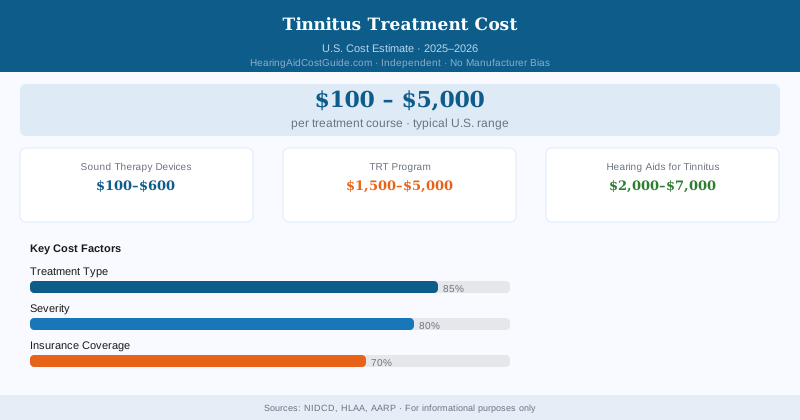
The American Tinnitus Association estimates that 50 million Americans experience tinnitus — the perception of ringing, buzzing, hissing, or roaring in the ears without any external sound. For about 20 million of those people, it’s chronic and burdensome. For 2 million, it’s debilitating enough to interfere with daily functioning.
There is no universal cure. That’s the hard truth. But effective management is achievable, and the cost range is enormous — from free apps to $4,000+ clinical programs. Here’s how to match the right approach to your situation without overspending.
Tinnitus Treatment Costs
| Treatment | Cost | Evidence Level |
|---|---|---|
| Sound masking apps (free/low cost) | $0–$15/month | Moderate |
| Tabletop sound machines | $25–$100 | Moderate |
| In-ear sound masking devices | $200–$800 | Moderate |
| Hearing aids with tinnitus program | $1,500–$7,000 | High (with co-occurring hearing loss) |
| Tinnitus Retraining Therapy (TRT) | $2,500–$4,500 | High |
| CBT for tinnitus (therapist-led) | $1,500–$5,000 | High |
| Progressive Tinnitus Management (PTM) | $500–$2,000 | High |
| Neuromodulation devices (Lenire) | $2,500–$4,000 | Emerging |
| Dental/TMJ evaluation | $150–$500 | Case-dependent |
| ENT/neurology evaluation | $200–$450 | Recommended first |
Step One: Get an Evaluation Before Spending Anything
Tinnitus is a symptom, not a diagnosis. Before you spend a dollar on any treatment, get a proper evaluation to rule out causes that can actually be fixed:
- Earwax impaction — professional cleaning runs $50–$150 and sometimes eliminates tinnitus entirely
- Eustachian tube dysfunction — often treated with decongestants or ear tubes
- Acoustic neuroma — a benign tumor requiring imaging and possibly surgery
- Ototoxic medication side effects — may resolve with medication adjustment
- High blood pressure — treat the BP, and tinnitus often improves
- TMJ (jaw joint) disorder — treated by a dentist or oral surgeon
- Middle ear fluid — often resolved with medication or tubes
Up to 10–15% of tinnitus cases have a treatable underlying cause. Identify and treat those first. Don’t spend $3,000 on sound therapy if your tinnitus is coming from earwax.
Sound Masking: The First-Line Approach
Sound masking reduces the perceived loudness and intrusiveness of tinnitus by introducing external sound that partially or fully covers it. It doesn’t cure anything — but it makes life more manageable, and it costs almost nothing to try.
Free options: Smartphone apps (White Noise, myNoise, Calm, YouTube soundscapes) offer unlimited sound variety at zero cost. Effective for many people, especially at night when quiet environments make tinnitus worse.
Tabletop sound machines: LectroFan, Marpac Dohm ($25–$80). Simple, reliable, no screen involved. Good for the bedside.
In-ear sound generators: Prescription-grade in-ear devices producing customized masking sounds in the ear canal — often combined with hearing aids as combination units.
Hearing Aids for Tinnitus: The Most Evidence-Based Approach
Here’s a fact worth knowing: roughly 80% of people with chronic tinnitus also have measurable hearing loss. For that group, hearing aids are often the most effective tinnitus management tool available. They work on multiple levels simultaneously:
- Amplifying environmental sounds that mask or cover tinnitus naturally
- Reducing the silence that makes tinnitus more prominent
- Providing built-in tinnitus sound therapy programs — available in Widex, Starkey, Oticon, Phonak, and Signia devices
Cost: standard hearing aid pricing ($1,500–$7,000 per pair) with tinnitus programming at no extra device cost. The tinnitus programs are software features, not hardware additions.
Widex’s Zen Fractal tone technology plays soft, randomized fractal music tones through the hearing aid — specifically designed to be pleasant but non-repetitive enough to prevent habituation. Multiple clinical studies show Widex Zen reduces tinnitus distress scores over time. Signia’s notch therapy and Oticon’s Tinnitus SoundSupport work on different mechanisms but toward the same goal: helping the brain de-prioritize the tinnitus signal.
CBT for Tinnitus: The Strongest Evidence
Cognitive Behavioral Therapy adapted for tinnitus has the strongest overall evidence base for reducing tinnitus-related distress and improving quality of life. It doesn’t reduce the perceived loudness of the ringing — but it changes the emotional reaction to it, which is where most of the disability actually comes from. The NIDCD supports CBT as a recommended treatment approach for chronic, distressing tinnitus.
In-person CBT: 6–12 sessions with a clinical psychologist trained in tinnitus. Cost: $150–$300 per session → $900–$3,600 total.
Digital CBT programs: Apps like Tinnitus Cognitive (UK), Kalmia, and programs through the VA’s tinnitus management initiative. Cost: $0–$50 per month. Good evidence, much more accessible.
Neuromodulation: Emerging Options
Lenire (Neuromod): FDA-cleared in 2023. A bimodal neuromodulation device that pairs sound through headphones with mild electrical stimulation to the tongue. 12-week home treatment protocol. Cost: $2,500–$4,000 through audiologist. Clinical trial results showed significantly better outcomes than sound therapy alone.
Desyncra (acoustic CR neuromodulation): Requires prescription and audiologist fitting; limited US availability. Cost: $3,000–$5,000.
These aren’t mainstream yet — but they represent the direction tinnitus treatment is heading.
No supplement, vitamin, or herbal remedy has been proven to reduce tinnitus in rigorous clinical trials. Ginkgo biloba, zinc, and magnesium are commonly marketed for tinnitus — the ATA (American Tinnitus Association) does not endorse any supplement for tinnitus treatment based on current evidence. Some of these products cost hundreds of dollars per year. Save your money for approaches that actually have evidence behind them.
Tinnitus Action Plan: Low-Cost First Steps
You don’t need to spend thousands to start getting relief tonight. Work through this in order:
- Download a free sound app — start sleeping better tonight. Cost: $0
- See your doctor — rule out treatable causes, check blood pressure and current medications
- Get an audiogram — free at Costco, or $150–$350 at an audiologist. Most people with tinnitus don’t know how significant their hearing loss is
- Try CBT-based techniques — free resources from the ATA (ata.org) and the VA are genuinely good
- Consider hearing aids if you have hearing loss — the most effective long-term approach for most people
- Explore TRT or Lenire if sound and CBT approaches alone aren’t providing enough relief after 3–6 months
Frequently Asked Questions
White noise machines and basic sound maskers range from $30–$200, while prescription-grade tinnitus maskers and hearing aid-integrated sound therapy devices cost $1,500–$4,000+. Smartphone apps offering sound masking are typically free or $5–$15 per month.
Most health insurance plans do not cover tinnitus-specific treatments like Tinnitus Retraining Therapy (TRT), though some cover audiologist consultations at $100–$300 per visit. Hearing aids prescribed for tinnitus management may be partially covered if hearing loss is present, but coverage varies by plan and typically requires 20–50% out-of-pocket cost.
TRT typically requires 12–24 months of consistent treatment, with weekly or bi-weekly audiologist sessions ($100–$300 per visit) plus daily use of sound masking devices at home. Total cost ranges from $2,000–$4,000 depending on session frequency and device choice, but many patients report meaningful improvement within 6–12 months.