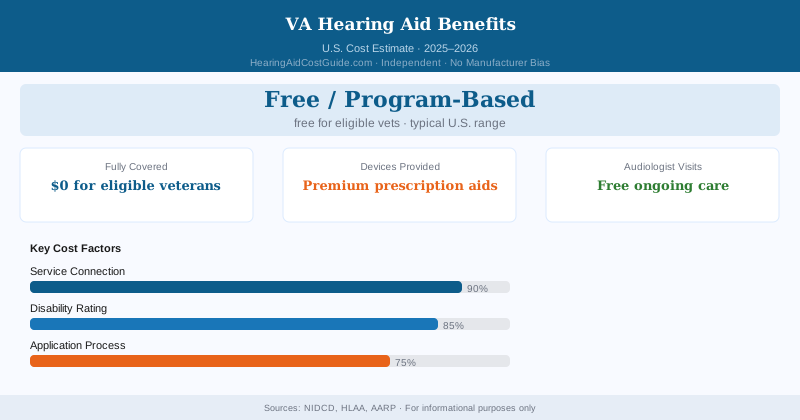
Here’s a number worth sitting with: the VA dispensed more than 900,000 hearing aids to veterans in fiscal year 2023 — at zero cost to the veterans who received them. And yet, a substantial number of veterans with service-connected hearing loss aren’t using these benefits simply because they don’t know they qualify.
If you served, and you have any degree of hearing difficulty, this may be the most valuable healthcare benefit you’re not using.
What the VA Hearing Benefit Covers
| Service | VA Cost to Veteran |
|---|---|
| Comprehensive audiological evaluation | $0 |
| Prescription hearing aids (both ears) | $0 |
| Hearing aid batteries (annual supply) | $0 |
| Hearing aid repairs and adjustments | $0 |
| Replacement hearing aids | $0 |
| Cochlear implant evaluation | $0 |
| Cochlear implant surgery and device | $0 (eligible veterans) |
| Tinnitus evaluation and treatment | $0 |
| Auditory rehabilitation programs | $0 |
The VA dispenses premium hearing aids — Phonak, Oticon, Signia, Starkey — to eligible veterans. Not budget devices. Not stripped-down versions. Rechargeable hearing aids with Bluetooth connectivity are dispensed when clinically appropriate. There’s no copay for hearing aids through the VA for service-connected conditions.
Hearing loss and tinnitus have been the #1 and #2 most-compensated service-connected disabilities among veterans for over a decade, according to VA data. If you spent time near aircraft engines, gunfire, explosions, or heavy machinery, your ears paid a price.
Who Qualifies: Three Pathways
Pathway 1: Service-Connected Hearing Loss or Tinnitus
Veterans with a VA disability rating for hearing loss or tinnitus receive hearing aids at no cost — regardless of income or priority group. Critically, a 0% disability rating (acknowledged but not considered significantly disabling) still establishes eligibility for hearing care benefits.
Don’t underestimate tinnitus here. A tinnitus rating alone — which can be as low as 10% — establishes hearing care eligibility. The American Tinnitus Association estimates that tinnitus affects a disproportionate share of military veterans compared to the general population, largely due to noise exposure during service.
Pathway 2: Priority Groups 1–6
Veterans enrolled in VA healthcare at priority groups 1–6 receive hearing aids if hearing loss affects their functioning. Higher priority (lower priority group number) generally means more comprehensive coverage.
Pathway 3: Hearing Loss That Affects Daily Function
Veterans with significant hearing loss affecting their ability to function — even without a formal service-connection rating — may receive hearing aids through VA healthcare. This is worth asking about directly at your VA audiology clinic. “Without a rating” doesn’t automatically mean “without benefits.”
If you have hearing loss but no VA disability rating for it yet:
- File a claim at VA.gov or through a VSO (Veterans Service Organization)
- Provide military records showing noise exposure — MOS records, deployment records, or buddy statements work
- Complete a VA Compensation & Pension (C&P) exam — the VA audiologist tests your hearing and documents the disability
- A rating of 0% or higher establishes hearing aid eligibility
VSOs — DAV, VFW, American Legion, VetsHQ — help veterans file claims for free. Tinnitus alone qualifies for a 10% rating and establishes hearing care eligibility. If you’ve been living with ringing in your ears since your service years, this is worth filing.
The VA Dispensing Process: Step by Step
- Enroll in VA healthcare: Apply at va.gov/health-care/apply or call 877-222-8387
- Request an audiology appointment: Through your VA primary care provider or directly — most VA facilities accept self-referral to audiology
- Complete audiological evaluation: Full audiogram, speech testing
- Hearing aid fitting: VA audiologist selects and programs devices matched to your audiogram
- Follow-up care: Ongoing care and adjustments at no cost
Wait times vary by facility. Many VA sites now offer community care referrals to private audiologists when wait times exceed 20 days or when no VA audiologist is locally available — that’s the MISSION Act, and it’s worth knowing about.
VA Hearing Aid Technology
The VA uses a contract system to purchase hearing aids. As of 2025, the VA’s primary contracts include:
- Phonak (Sonova): Multiple models including the Audéo platform
- Starkey: Multiple premium-tier models
- Oticon (Demant): Available at most facilities
- Signia (WSA): Available at most facilities
Veterans receive devices appropriate to their hearing loss profile — not the cheapest available option. Premium rechargeable devices with Bluetooth are dispensed when clinically appropriate.
Tinnitus Programs at the VA
The VA developed Progressive Tinnitus Management (PTM) — a group-based, evidence-based tinnitus management program available at most VA facilities. PTM uses a stepped-care model, beginning with self-help resources and escalating to specialist care based on need. It’s free for eligible veterans, and according to the NIDCD, the VA’s tinnitus program infrastructure is among the most developed in the country.
If you’ve been managing ringing ears on your own for years, PTM may offer structured relief you didn’t know was available to you.
VIST and Dual Sensory Loss
Veterans with both vision and hearing loss can access coordinated care through VA’s Visual Impairment Services Teams (VIST) and specialized assistive technology evaluation — another set of benefits that often goes underused.
Many veterans with service-connected hearing loss aren’t using their VA hearing benefits because they don’t know they qualify — or they assume a 0% rating means nothing. If you served, especially in a combat role or a noise-heavy MOS, and you have any degree of hearing difficulty, contact your nearest VA audiology clinic or call 877-222-8387. The benefits are real, the devices are high quality, and the cost to you is zero.
Community Care and Telehealth
Through the MISSION Act, VA community care allows eligible veterans to see non-VA audiologists when VA care isn’t reasonably accessible. The VA pays the community provider directly — the veteran pays nothing. Telehealth audiology appointments for hearing aid programming and follow-up visits are also available at many VA facilities through VA Video Connect, making care accessible even for veterans in rural areas far from a VA campus.
Frequently Asked Questions
VA hearing aids are completely free for eligible veterans with service-connected hearing loss. There are no out-of-pocket costs, copayments, or deductibles—the VA covers 100% of the cost of the devices, fittings, and adjustments. Veterans who purchase hearing aids outside the VA typically pay between $1,000 and $6,000 per device.
Yes, VA coverage includes ongoing follow-up appointments, adjustments, repairs, and eventual replacement of hearing aids at no cost to the veteran. The VA will replace devices when they can no longer be repaired or when your hearing needs change, ensuring continuous coverage throughout your life.
After approval, most veterans receive their hearing aids within 4 to 8 weeks, though this can vary by VA facility. The process starts with a hearing test at your local VA medical center, followed by device fitting and customization once your eligibility is confirmed.